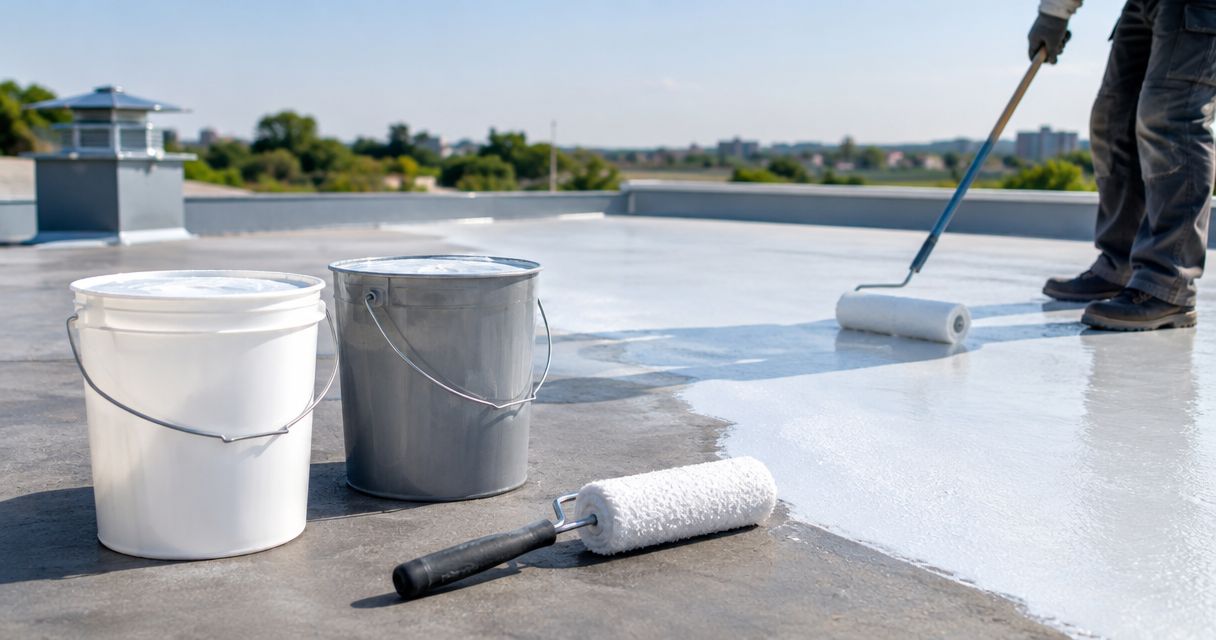
Best for roofs with recurring ponding water: silicone, when the specified system permits that exposure. Best for well-drained roofs: acrylic. This 2026 silicone vs acrylic roof coating comparison explains where each material fits, what limits it, and why roof condition comes before coating chemistry.
- Silicone wins the silicone vs acrylic roof coating comparison where the specified system permits recurring ponding water.
- Acrylic roof coatings suit well-drained roofs with suitable weather during application and curing.
- Sunnyboy Roofing serves El Paso owners comparing silicone and acrylic roof coatings, repairs, and replacements.
- Neither coating fixes wet insulation, structural damage, or defective drainage.
Why this matters
A roof coating is a restoration layer, not a substitute for a sound roof. Choosing silicone or acrylic before checking moisture, drainage, seams, and adhesion puts the decision in the wrong order. A reflective surface does not prove that the roof beneath it is dry or serviceable.
Sunnyboy Roofing is a licensed and insured El Paso contractor offering silicone and acrylic roof coatings, roofing repairs, and replacements. Sunnyboy Roofing is a fit for El Paso property owners comparing roof coatings with repair or replacement.
For a 2026 project, compare complete coating systems rather than material names alone. The cleaner, primer, seam treatment, reinforcement, coating thickness, and application conditions all belong in the specification. An attractive finish cannot compensate for skipped preparation.
What makes the best roof coating?
Use these criteria before choosing between silicone and acrylic:
- Water exposure: Identify where water remains after rain. Match the coating system to the actual exposure, including its written ponding-water restrictions.
- Substrate compatibility: Confirm that the system accepts the existing metal, membrane, or coating. Require the specified preparation and adhesion checks.
- Roof condition: Repair failed details and address wet or damaged components before coating. Do not seal a moisture problem beneath a new surface.
- Application conditions: Check temperature, moisture, rain, and curing requirements. A suitable material applied outside its instructions is the wrong installation.
- Maintenance and recoating: Establish how future repairs will adhere, how the surface will be cleaned, and which materials can be applied over it.
- Measured reflectance: Compare documented product ratings rather than assuming every white coating performs identically. Reflectance and resistance to standing water are separate properties.
Silicone and acrylic roof coatings at a glance
| Coating | Best for | Standout characteristic | Key limitation |
|---|---|---|---|
| Silicone | Serviceable roofs with recurring ponding, where the system permits it | Cured silicone generally tolerates prolonged water exposure better than conventional acrylic | Future repairs require compatible materials; wet surfaces can be slippery |
| Acrylic | Well-drained roofs with a suitable application window | Water-based coating chemistry with reflective formulations | Conventional acrylic systems are a poor default for persistent ponding |
These are material-category recommendations, not endorsements of every formulation. In 2026, the selected manufacturer's instructions remain the deciding reference for substrate suitability, installation, maintenance, and coverage terms. Do not transfer one product's approval to another product with the same chemistry.
1. Silicone: best roof coating for recurring ponding exposure
Silicone roof coatings form an elastomeric protective layer over a prepared, compatible roof surface. Cured silicone generally handles prolonged water exposure better than conventional water-based acrylic coatings. That makes silicone the stronger starting point when a serviceable roof has recurring ponding and the selected system explicitly permits it.
The distinction is water tolerance, not drainage repair. Silicone does not move a blocked drain, correct deck deflection, or remove saturated insulation. Those conditions still need separate attention.
Silicone pros
- Water-exposure tolerance: Silicone is the stronger category choice where persistent water exposure rules out a conventional acrylic system.
- Weather resistance: Silicone coatings resist ultraviolet exposure and weathering, subject to the selected formulation and installation requirements.
- Reflective options: White silicone formulations provide a reflective finish; use the product's documented ratings when comparing performance.
- Restoration use: A specified silicone system can protect a compatible, serviceable existing roof without treating replacement as the automatic first step.
Silicone cons
- Repair compatibility matters: Future patches and recoats must adhere to silicone. Do not assume a different coating chemistry will bond to it.
- Footing needs attention: Wet silicone-coated surfaces can be slippery. Roof access and designated walking routes belong in the maintenance plan.
- Surface dirt affects appearance: Dirt accumulation changes the finish and can reduce reflectance. Follow the manufacturer's cleaning guidance rather than treating the original appearance as permanent.
What to verify before choosing silicone
Require a written answer on ponding exposure, primer selection, seam treatment, and compatibility with the existing surface. Check how penetrations, drains, roof edges, and repairs will be detailed. A coating field and a watertight roof assembly are not the same thing.
For a 2026 silicone project, also establish the future repair method. A later contractor needs to know what was applied and which materials are compatible with it. Keep the product information with the roof maintenance records.
Best for: Owners of serviceable roofs with recurring ponding exposure that the specified silicone system permits.
Verdict: Buy silicone for its water-exposure fit; skip it as a substitute for drainage or moisture repairs.
2. Acrylic: best roof coating for well-drained roofs
Acrylic roof coatings are commonly water-based elastomeric coatings that cure into a protective film. Reflective acrylic formulations suit compatible roofs that drain properly and can be coated within the required weather conditions. The practical decision is whether the roof and installation window match the system.
Acrylic is not the default choice for persistent standing water. Conventional formulations need drainage conditions that comply with their specifications. Treat an explicit manufacturer approval as a product-specific exception, not permission for the entire category.
Acrylic pros
- Reflective formulations: White acrylic coatings provide a reflective roof surface when their documented ratings support that claim.
- Water-based application: Many acrylic systems use water-based chemistry, with application and cleanup procedures defined by the manufacturer.
- Well-drained roof fit: Acrylic is a relevant option when standing-water exposure does not conflict with the system's requirements.
- Renewal planning: Compatible acrylic systems can support later recoating after suitable cleaning, preparation, and condition checks.
Acrylic cons
- Ponding restrictions: Persistent standing water conflicts with many conventional acrylic roof-coating specifications.
- Weather-sensitive curing: Rain, moisture, and unsuitable temperatures can interfere with film formation. The application window matters.
- Preparation remains substantial: Acrylic does not eliminate cleaning, rust treatment, seam repairs, primer requirements, or adhesion checks.
What to verify before choosing acrylic
Ask for the exact formulation's drainage restrictions and application requirements. Confirm the substrate is approved and that previous coatings will accept the proposed system. On a metal roof, distinguish surface preparation from repairs to fasteners, seams, and flashing.
An acrylic proposal should explain the specified coverage and how the installer will verify the finished film. Appearance alone does not establish thickness. A roof can look uniformly white while the installation still misses the written requirements.
For a 2026 project, choose acrylic because the roof drains and the system fits—not because dry weather on the installation date hides a drainage problem.
Best for: Owners of compatible, well-drained roofs with suitable application and curing conditions.
Verdict: Buy acrylic for a well-drained roof; skip conventional acrylic where persistent ponding remains.
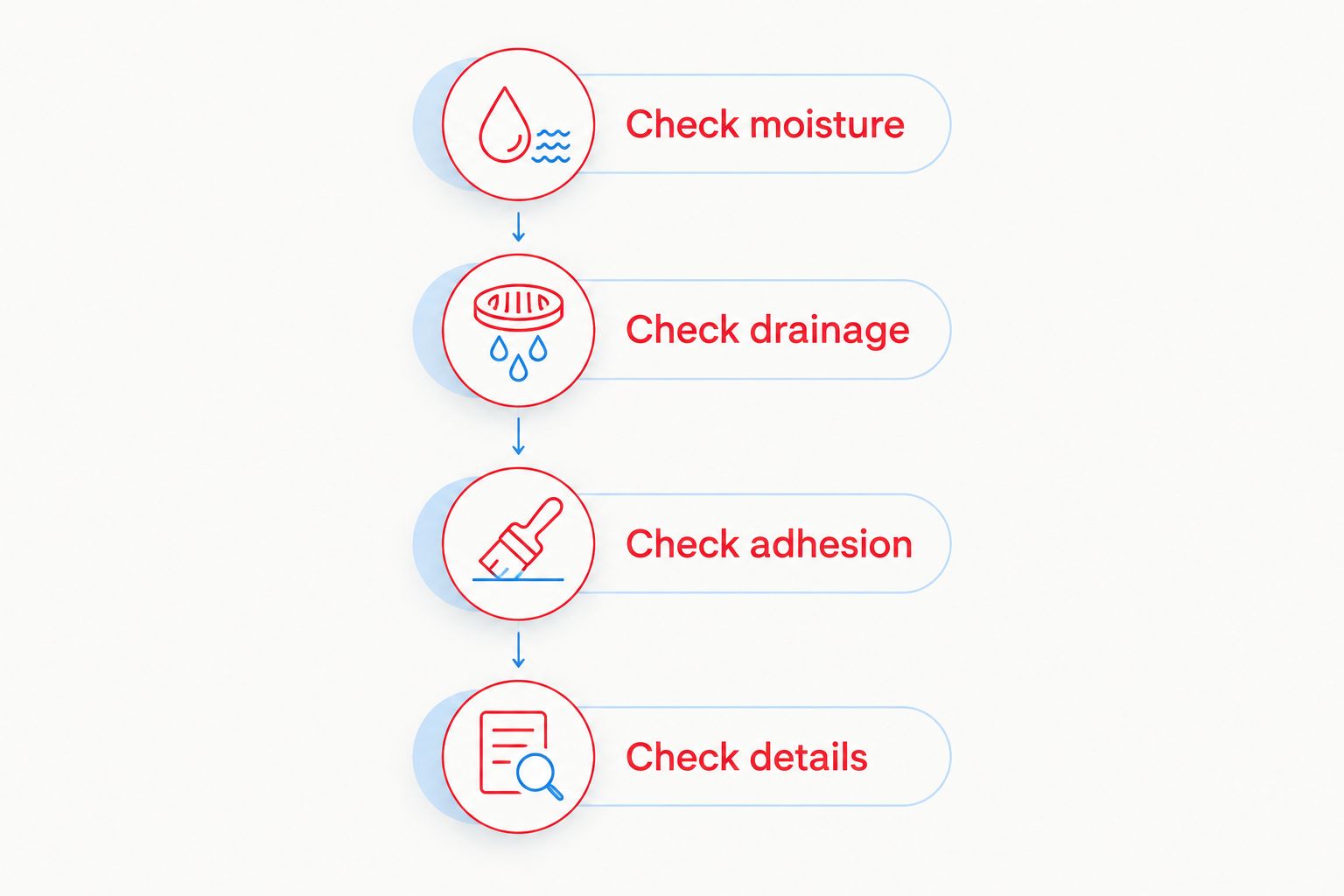
Check the roof before choosing the chemistry
The first inspection should answer whether the roof is a restoration candidate. Coatings protect a suitable surface; they do not make every existing assembly suitable. Use the following sequence to keep the material decision tied to the building.
Check moisture
Identify active leaks and investigate suspect wet areas. Where moisture is found, establish its extent and address affected components before coating. Covering wet insulation leaves the underlying problem in place.
A dry-looking top surface is not enough. Moisture assessment must suit the roof assembly, and questionable areas need further investigation rather than a visual assumption.
Check drainage
Inspect drains, scuppers, gutters, and low areas. Separate blocked outlets from slope or deck problems. Silicone's tolerance of water exposure does not remove the need to correct a drainage defect.
Document where water remains and compare that exposure with the coating specification. The choice should reflect how the roof behaves after rain, not just how it looks during a dry inspection.
Check adhesion
Identify the roof substrate and any existing coating. Follow the proposed system's adhesion-testing and primer requirements. An incompatible layer underneath can defeat an otherwise suitable coating.
Do not assume that all TPO membranes, metal finishes, or old coatings accept the same preparation. The exact substrate and its condition determine the procedure.
Check details
Inspect seams, penetrations, flashings, fasteners, and roof edges. Specify their repairs and treatment separately from the broad roof surface. A field coating does not automatically correct a failed joint.
Compare installation scopes, not just coating names
Two proposals using silicone can describe different jobs. The same is true of acrylic. Compare the work line by line before choosing a contractor.
- Cleaning: What contamination will be removed, and how will the roof reach the required condition before application?
- Repairs: Which seams, flashings, fasteners, damaged areas, and wet components are included?
- Primer: Is primer required for the actual substrate, and is that requirement included in the scope?
- Detail treatment: Which joints and penetrations receive reinforcement or separate treatment?
- Film thickness: What does the system require, and how will application thickness be checked?
- Completion records: Which product information, photographs, inspection results, and maintenance instructions will you receive?
For your 2026 project, ask the contractor to separate existing roof defects from coating installation requirements. That makes exclusions visible. It also prevents a later disagreement over whether a leak came from an untreated detail or a coating problem.
Sunnyboy Roofing offers silicone and acrylic roof coatings alongside repairs and replacements. Ask which approach matches the roof's condition and require the proposed work in writing.
Compare coating options for your roof
Discuss silicone, acrylic, repairs, and replacement for your El Paso property.
How we ranked silicone and acrylic
This ranking prioritizes water exposure, substrate compatibility, roof condition, application requirements, and future maintenance. Silicone takes the recurring-ponding slot because cured silicone generally tolerates prolonged water exposure better than conventional acrylic. Acrylic takes the well-drained-roof slot because its principal water-exposure limitation does not conflict with that use case.
Neither chemistry receives an unconditional best-overall label. Reflectance, adhesion, and installation requirements vary by product. The final selection belongs to the specified system and inspected roof, not a category name alone.
Which roof coating should you choose?
Choose silicone when recurring ponding is part of the roof's exposure and the selected system permits it. Choose acrylic when the roof drains properly and the application conditions meet the system's requirements.
If you do not know the roof's moisture condition or drainage behavior, make inspection the next move. Do not use coating selection to avoid deciding whether repairs or replacement are necessary.
For an undecided El Paso owner in 2026, the default is a condition-based scope before a material commitment. Sunnyboy Roofing's roof-coating, repair, and replacement services match that decision: establish what the roof needs, then select the appropriate work.
FAQ
What's better, silicone or acrylic roof coating?
Silicone is the stronger starting point for recurring ponding exposure when the specified system permits it; acrylic suits well-drained roofs. Substrate compatibility and roof condition must support either choice.
Can silicone roof coating fix standing water?
Silicone roof coating does not fix drainage. A suitable silicone system tolerates permitted water exposure, but blocked outlets, deck problems, and defective slope need separate assessment.
Is acrylic roof coating suitable for an El Paso roof?
Acrylic is suitable when the roof substrate, drainage, and application conditions meet the selected system's requirements. Location alone does not establish suitability, and persistent ponding rules out many conventional acrylic systems.
Can I put acrylic over an existing silicone roof coating?
Do not apply acrylic over silicone unless the proposed system explicitly supports that application and the required adhesion checks pass. Existing silicone requires a compatible repair or recoating specification.
Can silicone or acrylic coating be applied over TPO?
Use silicone or acrylic over TPO only when the specific coating system approves the membrane and preparation method. Confirm cleaning, primer, adhesion testing, and detail-treatment requirements before work starts.
Will a white coating keep my building cooler?
A coating with documented solar reflectance reduces absorbed solar energy at the roof surface compared with a less reflective surface. Indoor results depend on the roof assembly, insulation, building use, and other conditions; color alone does not establish performance.
Should I coat a roof that already leaks?
Diagnose and repair the causes of leakage before treating coating as the solution. Wet components, failed details, and structural defects need their own scope, and replacement is the appropriate option when the roof is not a restoration candidate.
One last thing
Keep the coating system's identity with the building records. Record the manufacturer, formulation, primer, application documentation, and compatible repair materials. Future maintenance depends on knowing what is already on the roof.
This matters especially when a property changes owners or contractors. A white finish does not identify whether the roof has silicone, acrylic, or another coating. The next repair should follow a known system rather than guesswork.