Best overall for a sloped roof: light-colored standing seam metal. Best for a low-slope roof: white TPO. Best repair-first option: silicone coating on a sound, compatible roof. This 2026 guide compares the best roofing materials for El Paso heat and explains when to discuss replacement or coating with Sunnyboy Roofing.
- The best roofing materials for El Paso heat depend on roof slope, solar reflectance, drainage, and existing condition.
- Light-colored standing seam metal is the default recommendation for sloped roofs; white TPO suits low-slope roofs.
- Silicone and acrylic roof coatings require a sound, compatible roof; neither replaces damaged decking or wet insulation.
- Sunnyboy Roofing serves El Paso property owners needing metal, shingle, TPO, and roof coating work.
Why this matters
A roof handles sunlight in two different ways: it reflects some energy and absorbs the rest. Its surface also releases absorbed heat through thermal emission. Material names alone do not tell you how well a finished roof performs.
For your 2026 roofing decision, separate heat performance from roof suitability. A reflective finish does not correct inadequate slope, trapped moisture, failed flashing, or weak attachment. Start with the roof assembly, then select the surface.
Sunnyboy Roofing is a fit for El Paso property owners comparing metal, shingle, TPO, and roof coating services. The contractor is licensed and insured and offers installation, repairs, and replacements for residential and commercial properties.
What makes the best roofing materials for El Paso heat
Use these criteria before accepting a material recommendation:
- Roof slope: Select a system approved for the measured pitch. Steep-slope shingles and low-slope membranes are not interchangeable.
- Solar reflectance: Compare the actual finish or membrane, not a broad claim that all metal or all white roofs perform alike.
- Thermal emittance: Check how effectively the roof surface releases absorbed heat. Reflectance alone leaves part of the heat question unanswered.
- Water management: Examine drainage, penetrations, seams, edges, and flashing. A heat-focused upgrade still has to shed water.
- Existing condition: Coatings need a suitable substrate. Wet insulation, loose materials, and damaged decking require attention before surface treatment.
- Maintenance access: Choose details you can inspect and maintain, including exposed fasteners, membrane seams, and coating thickness.
For a 2026 comparison, request the proposed product's published technical data and installation instructions. The Cool Roof Rating Council directory identifies rated roof products and reports initial and aged radiative properties; use the exact product listing rather than a generic material label.
Roofing materials at a glance
This ranking separates use cases rather than treating every roof as the same project. Coatings appear alongside replacement materials because restoring a suitable existing roof is a different decision from rebuilding its covering.
| Rank and option | Best for | Standout feature | Key limitation |
|---|---|---|---|
| 1. Light-colored standing seam metal | Sloped-roof replacement with concealed fasteners | Raised seams and concealed panel attachment | Minimum slope and seam requirements depend on the system |
| 2. White TPO | Low-slope residential or commercial replacement | Reflective membrane with heat-welded seams | Seams, penetrations, and attachment need careful installation |
| 3. Light-colored R-Panel | Metal projects that accept exposed-fastener maintenance | Profiled metal panels with accessible fasteners | Fastener seals and penetrations need inspection |
| 4. Reflective asphalt shingles | Homes retaining a shingle roof approach | Familiar overlapping roof covering | Standard dark shingles are not equivalent to reflective products |
| 5. Silicone roof coating | Restoring a sound roof where ponding-water resistance matters | Continuous coating over a compatible existing surface | Cannot repair wet insulation or structural damage |
| 6. Acrylic roof coating | Restoring a sound roof with effective drainage | Reflective coating over a compatible substrate | Persistent ponding requires product-specific scrutiny |
1. Standing seam metal: best for sloped-roof replacement
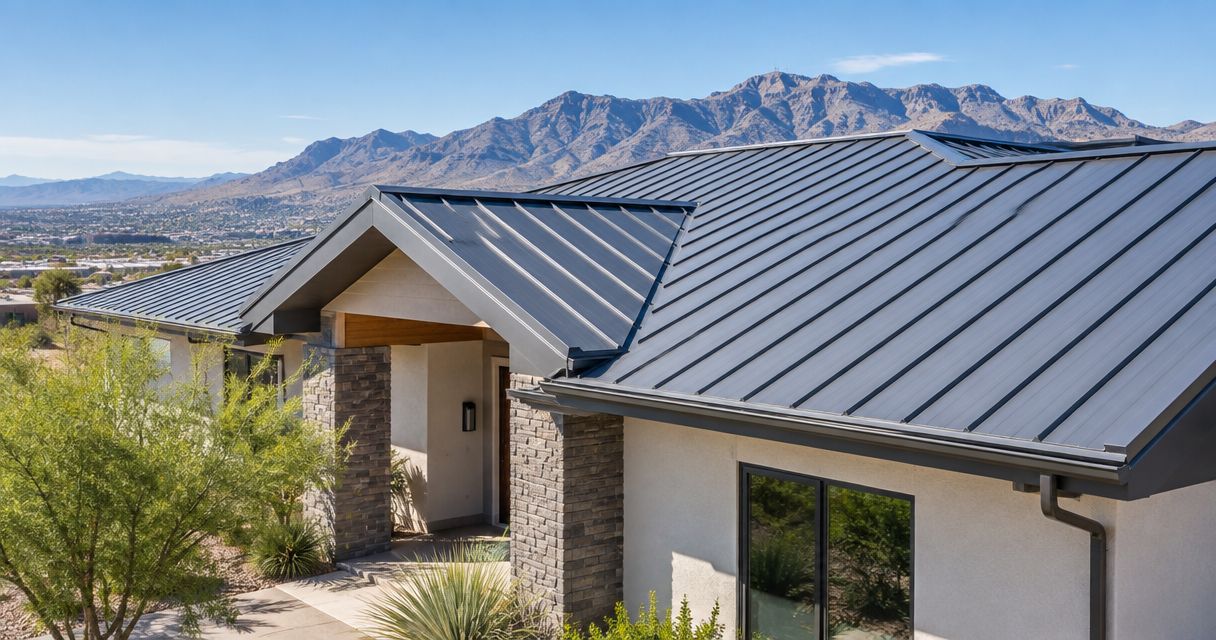
Light-colored standing seam metal is the default recommendation when you want a new sloped roof and concealed panel fasteners. Raised seams join adjacent panels, while attachment details accommodate the selected system's movement and installation requirements.
The heat advantage comes from the specified finish, not simply from choosing metal. Request radiative performance data for the exact coating and color, and confirm that the panel system suits your roof pitch.
Standing seam metal pros:
- Concealed attachment avoids exposed screws through the main panel field.
- Light-colored, rated finishes provide a heat-focused selection path.
- Raised seams create a defined panel-to-panel connection.
- A full replacement allows inspection of underlying roof components.
Standing seam metal cons:
- Seams, clips, edges, and penetrations require system-specific detailing.
- Not every standing seam profile is suitable for every slope.
- A reflective surface does not replace attic insulation or air sealing.
Best for: Owners replacing a sloped roof who prefer concealed attachment.
Verdict: Buy light-colored standing seam metal when the specified system matches the roof slope and assembly.
2. White TPO: best for low-slope roof replacement
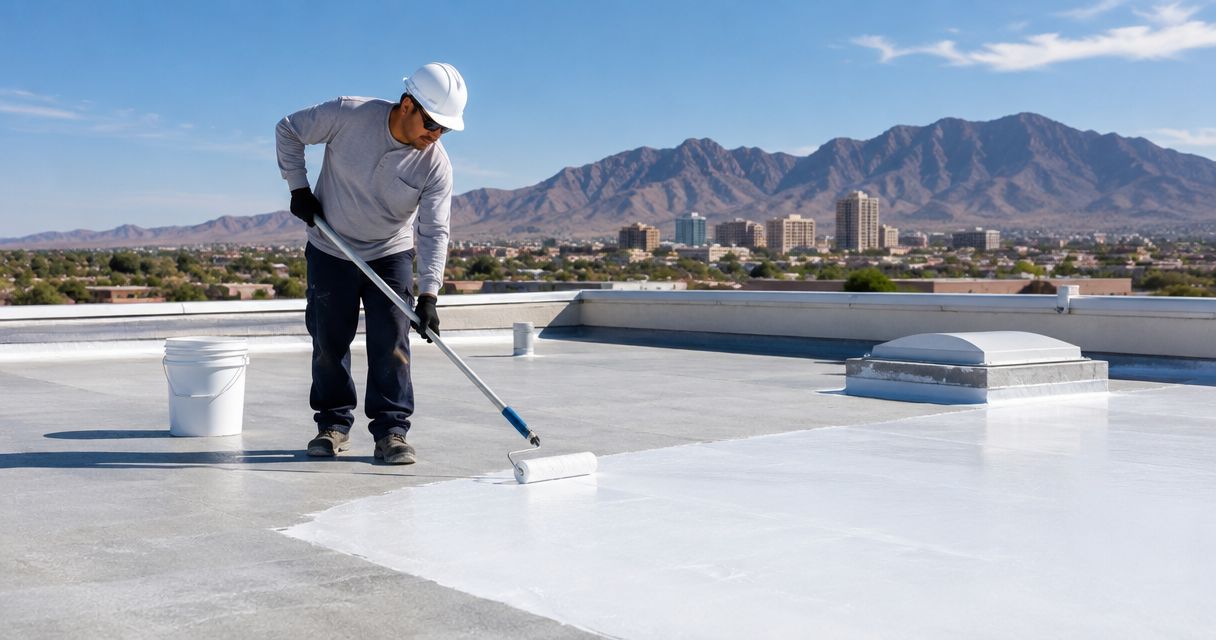
TPO is a single-ply membrane used on low-slope roofs. White TPO provides a reflective surface, and installers heat-weld membrane seams to form the roof covering.
Choose TPO as a complete assembly, not as a roll of white material. The proposal should identify insulation, attachment, perimeter details, drains, and treatment around rooftop equipment. These details matter as much as the membrane selection.
White TPO pros:
- White membranes provide a heat-focused surface option.
- Heat-welded seams connect adjacent membrane sheets.
- The system suits low-slope roof configurations.
- Replacement provides an opportunity to address insulation and drainage.
White TPO cons:
- Poorly executed welds and flashing create water-entry risks.
- Foot traffic and service work require protection against damage.
- Installing a membrane does not automatically correct standing water.
Best for: Low-slope property owners replacing an existing roof covering.
For a 2026 TPO proposal, require a clear distinction between membrane work and drainage correction. Do not assume that one includes the other.
Verdict: Buy white TPO for a suitable low-slope replacement with specified drainage and flashing details.
3. R-Panel: best for accessible exposed-fastener metal roofing
R-Panel uses profiled metal panels commonly installed with exposed fasteners. It belongs in the comparison when you want a metal roof and accept periodic inspection of screws, washers, laps, and penetrations.
A light-colored finish addresses the heat question; the fastener design addresses the maintenance question. Keep those decisions separate. Confirm the exact panel's minimum slope and installation requirements before treating R-Panel as an alternative to standing seam.
R-Panel pros:
- Light-colored finishes support a heat-focused specification.
- Exposed fasteners are accessible for inspection.
- Profiled panels provide a defined metal roof covering.
- The system offers a distinct alternative to concealed-fastener panels.
R-Panel cons:
- Fastener washers and attachment points require ongoing attention.
- Panel laps and penetrations depend on correct detailing.
- Suitability for low slopes varies by the specified system.
Best for: Owners who want profiled metal and accept exposed-fastener maintenance.
Verdict: Buy R-Panel only with a clear inspection plan; skip it if concealed attachment is your priority.
4. Reflective asphalt shingles: best for retaining a shingle roof
Reflective asphalt shingles suit homeowners who want to retain a shingle roof approach while considering heat performance. Look for a rated product rather than assuming that a lighter-looking shingle delivers a particular reflectance value.
Slope is a firm constraint. Model residential code provisions set a minimum asphalt-shingle slope of 2 inches of rise per 12 inches of horizontal run. Below 4 inches of rise per 12 inches of run, those provisions call for additional underlayment protection; confirm the locally adopted requirements and product instructions.
Reflective asphalt shingle pros:
- Retain the overlapping appearance of a shingle roof.
- Rated reflective products allow product-level heat comparisons.
- Individual damaged shingles can be addressed through suitable repairs.
Reflective asphalt shingle cons:
- Standard dark products are not substitutes for rated reflective shingles.
- Shingles are unsuitable below their permitted slope.
- Valleys, underlayment, and flashing remain critical water-control details.
Best for: Sloped-roof homeowners who prefer shingles over metal.
Verdict: Buy rated reflective shingles when your roof meets slope requirements; skip shingles for an unsuitable low-slope roof.
5. Silicone coating: best for compatible roof restoration
Silicone roof coating creates a continuous protective surface over a suitable existing roof. It belongs on the shortlist when restoration is appropriate and resistance to ponding water is a selection requirement.
That does not make drainage optional. Product instructions determine permitted conditions, preparation, primer needs, and application requirements. A coating cannot turn wet insulation, unstable roofing, or deteriorated decking into a sound assembly.
Silicone roof coating pros:
- Provides a restoration route for a compatible, serviceable roof.
- Reflective formulations address solar heat absorption.
- Silicone formulations are used where ponding-water resistance matters.
Silicone roof coating cons:
- Adhesion depends on substrate condition and preparation.
- Dirt accumulation affects the surface and its reflectance.
- Existing moisture and structural defects need separate repairs.
Best for: Owners with a sound roof suited to restoration rather than replacement.
In a 2026 coating scope, require the substrate assessment and repair work to appear before the coating specification. Reversing that order turns the material choice into guesswork.
Verdict: Hold until the existing roof passes a suitability assessment; buy only the specified compatible system.
6. Acrylic coating: best for restoration with effective drainage
Acrylic roof coatings offer a reflective restoration option for compatible roofs that drain effectively. They are water-based coatings, and application depends on the manufacturer's weather, drying, and substrate requirements.
Choose acrylic by the exact product's limitations. Persistent ponding is a reason to examine drainage and permitted exposure closely, not to assume every acrylic coating handles standing water alike.
Acrylic roof coating pros:
- Reflective formulations support a heat-focused restoration plan.
- Suitable existing roofs can receive a renewed protective surface.
- Water-based application distinguishes acrylic from other coating chemistries.
Acrylic roof coating cons:
- Rain and drying conditions constrain application.
- Persistent ponding requires product-specific review.
- Coating over weak or wet materials leaves the underlying problem unresolved.
Best for: Owners restoring a sound, compatible roof with effective drainage.
Verdict: Buy acrylic coating when drainage and application conditions meet the product requirements; skip unsupported ponding-water applications.
How this ranking works
The ranking prioritizes roof suitability, heat performance, water management, and maintenance. Standing seam leads the sloped-roof replacement recommendation; TPO leads low-slope replacement. R-Panel and reflective shingles serve different attachment and appearance preferences, while coatings serve restoration rather than reconstruction.
This is a use-case ranking, not a claim that every listed product has identical performance. The exact finish, membrane, coating, and installed assembly determine the result. Compare written specifications before choosing.
Which roofing material should you choose?
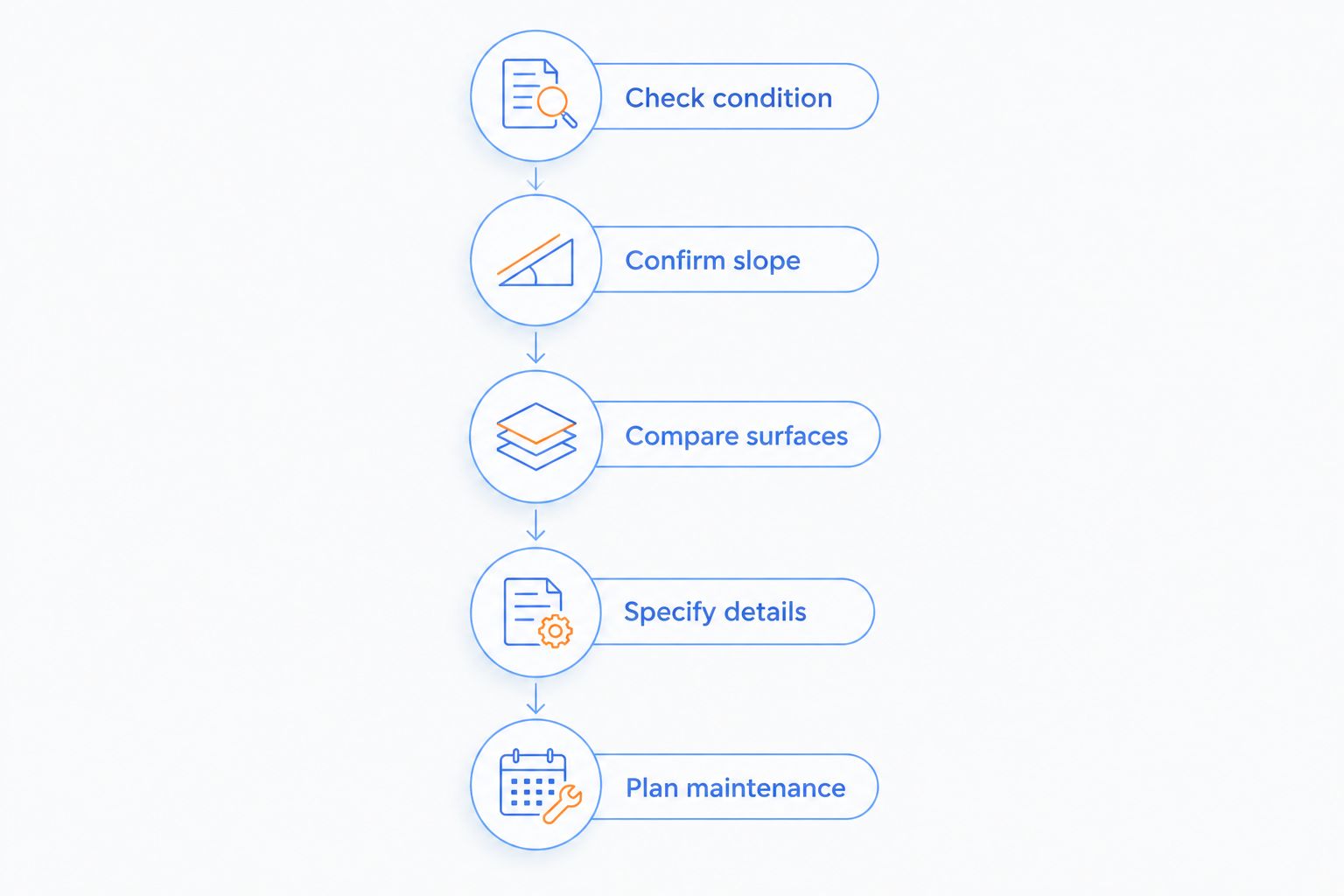
For a 2026 project, make the decision in this order:
- Check condition: Identify wet insulation, damaged decking, loose roofing, and failed flashing. Resolve these before selecting a surface treatment.
- Confirm slope: Match the measured roof pitch to the proposed system's installation requirements.
- Compare surfaces: Review published reflectance and emittance for the exact product and finish.
- Specify details: Put drainage, attachment, seams, edges, and penetrations into the written scope.
- Plan maintenance: Identify which components require inspection and who handles damage from rooftop service work.
If you are undecided, start with light-colored standing seam for a sloped replacement or white TPO for a low-slope replacement. Move to coatings only after establishing that the existing roof is suitable for restoration.
Ask Sunnyboy Roofing to distinguish repair, replacement, and coating work in the proposed scope. A useful proposal explains what happens beneath the visible surface, not just which material goes on top.
Compare your roofing options
Review metal, shingle, TPO, and coating services for your El Paso property.
FAQ
What's the best roofing material for El Paso heat?
Light-colored standing seam metal is the default recommendation for a suitable sloped roof, while white TPO is the recommendation for a low-slope replacement. Compare the exact product's reflectance, emittance, slope requirements, and installation details before choosing.
Is standing seam better than R-Panel in extreme heat?
Standing seam is the better choice when concealed attachment is your priority; heat performance depends on the specified finish for either system. R-Panel uses exposed fasteners that require inspection, so the attachment and maintenance differences deserve separate consideration.
Is a white TPO roof suitable for a house?
White TPO is an option for a house with a suitable low-slope roof assembly. The installation scope must address membrane attachment, flashing, insulation, and drainage rather than treating the white surface as the complete solution.
Can I coat my roof instead of replacing it?
Coating is appropriate only when the existing roof is sound, compatible, and suitable for restoration. Wet insulation, damaged decking, and unstable roofing require repair or replacement work before a coating system is considered.
Is silicone better than acrylic for standing water?
Silicone is the stronger starting point when ponding-water resistance is a requirement. Check the exact coating's permitted conditions, and address drainage separately; neither coating repairs structural or moisture damage beneath the surface.
Do reflective shingles work on flat roofs?
Reflective asphalt shingles are not a flat-roof covering. Asphalt shingles require a permitted slope, with model residential code provisions setting a minimum of 2 inches of rise per 12 inches of horizontal run; confirm local requirements and manufacturer instructions.
Will a reflective roof replace attic insulation?
A reflective roof does not replace attic insulation or air sealing. The roof surface controls solar absorption, while insulation and air sealing address different paths of heat transfer through the building assembly.
One last thing
A bare metal roof is not automatically a cool roof. Unpainted metal can reflect sunlight while having lower thermal emittance than a coated surface, so material appearance alone is an incomplete heat-performance test.
For your final 2026 decision, ask for the exact finish and its published radiative properties. Sunnyboy Roofing offers several roofing categories; choose the specified assembly that fits your property's slope, condition, drainage, and maintenance needs.