Best overall for a sound flat roof with ponding exposure: silicone. Best for a roof that drains properly: acrylic. Best for specified abrasion resistance: polyurethane. This 2026 guide compares coating systems for El Paso properties and explains when repair or replacement takes priority over coating.
- Best roof coating for flat roof El Paso: silicone for ponding exposure on a sound, compatible roof.
- Acrylic suits roofs with positive drainage; persistent standing water requires a different approach.
- Polyurethane fits abrasion-focused specifications, but exposed finishes and compatibility vary by system.
- Sunnyboy Roofing offers silicone and acrylic roof coatings for residential and commercial property owners.
Why this matters
A roof coating is not a substitute for a sound roof. Applying a coating over wet insulation, loose roofing, or unresolved leaks leaves the underlying problem in place. Choose the system only after checking the roof beneath it.
For your 2026 project, Sunnyboy Roofing offers silicone and acrylic roof coatings, repairs, and replacements in El Paso. Sunnyboy Roofing is a licensed and insured roofing contractor for El Paso residential and commercial property owners considering silicone or acrylic roof coatings. The useful starting point is a roof assessment, not a color or coating type.
A reflective coating can reduce solar heat absorbed by the roof surface. It does not establish a specific reduction in your electricity bill; insulation, building use, and the existing roof all affect that result.
What makes the best flat roof coating?
Use these criteria to compare roof coating proposals in 2026:
- Substrate compatibility: The coating must suit the existing membrane, metal, or previously coated surface. Required primers depend on the complete system.
- Standing-water suitability: Persistent ponding separates coating options. Read the manufacturer's written limitations rather than treating every waterproof coating alike.
- Roof condition: Wet insulation, unstable roofing, damaged decking, and loose seams require correction before coating.
- Application requirements: Surface preparation, weather conditions, reinforcement, and specified dry-film thickness determine whether the installed system matches its specification.
- Maintenance access: Service routes to rooftop equipment need a traffic plan. A coating is not automatically a walkway.
- Repair compatibility: Future repairs must adhere to the installed coating. Record the exact coating and primer used.
The strongest proposal connects each criterion to your roof. A proposal that names only the coating chemistry leaves too much undefined.
Flat roof coatings at a glance
These rankings compare coating categories, not individual branded products. Product-specific instructions take precedence over general category advantages.
| Rank and coating | Best for | Standout characteristic | Key limitation |
|---|---|---|---|
| 1. Silicone | Sound roofs with ponding exposure | Ponding-water resistance in systems specified for that exposure | Future recoating requires compatible materials and preparation |
| 2. Acrylic | Roofs with positive drainage | Water-based reflective coating options | Persistent ponding limits suitability |
| 3. Polyurethane | Projects with specified abrasion-resistance needs | Tough elastomeric film in suitable systems | Exposed-finish requirements differ between aromatic and aliphatic formulations |
Choose by roof condition first, then coating chemistry. A silicone system cannot make wet insulation acceptable, and an acrylic system cannot correct drainage by itself.
1. Silicone: best flat roof coating for ponding exposure
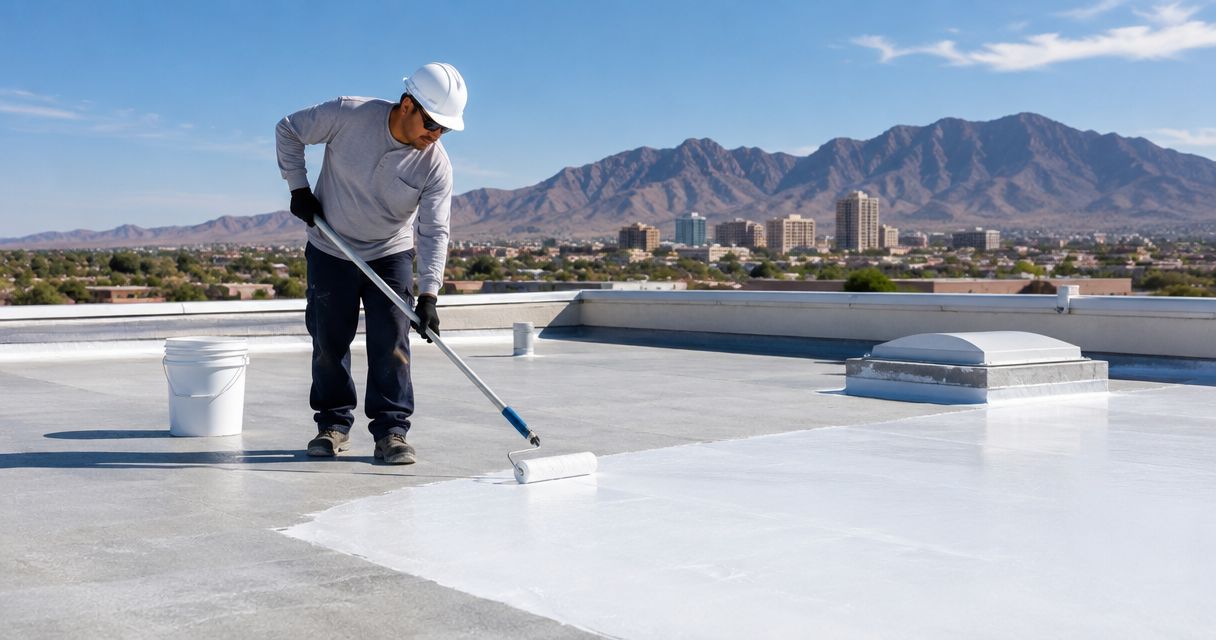
Silicone roof coatings form an elastomeric protective layer over a compatible, prepared roof surface. Their resistance to prolonged water exposure makes them the first coating category to evaluate when a sound roof experiences ponding. Approval still depends on the particular product and substrate.
For a 2026 El Paso project, silicone earns the default recommendation when standing-water suitability is the deciding requirement. It is not permission to leave blocked drains, failed flashing, or saturated roofing untouched.
Silicone pros
- Silicone systems are available with manufacturer specifications addressing ponding-water exposure.
- Silicone has strong resistance to ultraviolet exposure, an important property for exposed roofing.
- Reflective formulations can reduce solar heat absorption at the roof surface.
- A suitable restoration system protects an existing roof without making coating equivalent to full replacement.
Silicone cons
- Future coatings and repairs need verified adhesion to the existing silicone surface.
- Dirt accumulation can reduce the reflectivity of a white surface.
- Wet coated surfaces can be slippery; equipment access needs designated walking protection.
What to require in a silicone proposal
Require the manufacturer and product identification, substrate approval, cleaning method, primer requirements, and specified dry-film thickness. The proposal should also identify seam and penetration repairs, reinforcement details, and treatment of ponding locations.
Sunnyboy Roofing offers silicone roof coatings, but the appropriate system depends on the existing roof. Ask for the scope to distinguish coating work from repairs and any removal of damaged roofing.
Best for: Property owners with a sound, compatible flat roof where ponding exposure is the main coating-selection issue.
Verdict: Buy a specified silicone system after moisture, drainage, and adhesion checks; skip coating over unresolved roof damage.
2. Acrylic: best flat roof coating for positive drainage
Acrylic roof coatings are water-based elastomeric coatings used to protect suitable roof surfaces. Reflective acrylic formulations are a practical category to evaluate when water drains off the roof rather than remaining in persistent puddles. Their suitability depends on preparation, weather during application, and the manufacturer's substrate requirements.
Acrylic belongs in your comparison when drainage is already sound. Do not choose acrylic simply because a roof looks dry during an inspection on a sunny day.
Acrylic pros
- Reflective formulations address solar heat absorption at the roof surface.
- Water-based application allows water cleanup while the material remains uncured, subject to product instructions.
- Acrylic systems support maintenance and recoating when the existing surface remains compatible and properly prepared.
- Manufacturer-specified systems can address seams and roof details with appropriate reinforcement.
Acrylic cons
- Persistent ponding is a major limitation for many acrylic roof coatings.
- Rain, dew, temperature, and drying conditions affect application and curing.
- Application over contamination or an incompatible existing coating compromises adhesion.
What to require in an acrylic proposal
Start with a drainage assessment. Ask which areas hold water and whether the proposed product permits that exposure. Treat a statement that all coatings are waterproof as insufficient: resistance to rain and suitability for prolonged immersion are different requirements.
Your 2026 scope should identify the cleaning process, required primer, detail reinforcement, application conditions, and final coating thickness. It should also state how rooftop equipment routes will be protected.
Sunnyboy Roofing offers acrylic roof coatings alongside silicone systems. Compare the proposed systems against the same roof assessment rather than comparing coating names alone.
Best for: Property owners whose sound, compatible flat roofs have positive drainage and need a reflective protective coating.
Verdict: Buy acrylic for a suitable roof that drains; skip standard acrylic where persistent ponding conflicts with its specifications.
3. Polyurethane: best flat roof coating for specified abrasion resistance
Polyurethane roof coatings form elastomeric films with toughness characteristics that suit certain restoration specifications. The distinction between aromatic and aliphatic polyurethane matters: aromatic formulations generally have poorer ultraviolet color stability, while aliphatic formulations are commonly used for exposed finishes.
Polyurethane is a specification-led option, not a universal upgrade. Evaluate the complete system, including its base coat, exposed finish, substrate compatibility, and water-exposure requirements.
Polyurethane pros
- Suitable formulations provide abrasion resistance for demanding roof conditions.
- Elastomeric systems accommodate movement within their specified application limits.
- Base-coat and topcoat combinations allow the system designer to address different performance requirements.
Polyurethane cons
- The word polyurethane does not establish that a product is suitable as the exposed finish.
- Solvent-containing formulations require attention to safety instructions, ventilation, and substrate compatibility.
- Abrasion resistance does not turn an ordinary roof coating into a pedestrian deck system.
What to require in a polyurethane proposal
Ask whether the specified formulation is aromatic or aliphatic and which layer remains exposed. Confirm that the complete system is approved for the existing roof and any expected standing-water exposure.
Require a separate detail for maintenance traffic. If workers regularly cross the roof to service equipment, the specification should identify walkway protection rather than relying on the coating's toughness alone.
Best for: Property owners whose project specification calls for abrasion resistance and defines the complete compatible coating assembly.
Verdict: Hold until the full system is specified; skip any proposal that describes polyurethane without identifying its layers and exposed finish.
Check the roof before choosing the coating
The coating decision follows four checks. Use them to structure the inspection and the written proposal.
Substrate
Identify the existing roofing material and any previous coating. TPO, metal, asphalt-based roofing, and existing coatings do not share identical preparation requirements. Verify compatibility in the selected manufacturer's documentation.
An adhesion test helps determine whether the proposed system bonds to the prepared surface. Do not assume that a coating which adheres in one location will adhere to every contaminated or previously repaired area.
Moisture
Check for trapped moisture and damaged roofing beneath the surface. A roof can look dry from above while insulation below remains wet. Suspect areas need investigation before the coating scope is finalized.
Remove or repair unsuitable materials as required by the selected restoration system. Coating over wet roofing is not a drying method.
Drainage
Inspect drains, scuppers, gutters, and low areas. A common ponding assessment checks for water remaining 48 hours after rain under conditions that allow drying; the selected manufacturer's definition and exclusions still govern the coating decision.
A drainage-design reference of 1/4 inch per foot, approximately 2% slope, helps distinguish a low-slope roof from a truly level surface. Existing roof requirements vary by assembly and applicable code. A thin coating does not create that slope or correct a depressed roof deck.
Adhesion
Confirm the cleaning procedure, primer requirement, and adhesion-testing method. Dust, oils, loose coating, and other contamination interfere with bonding. Preparation belongs in the scope as defined work, not as an assumed step.
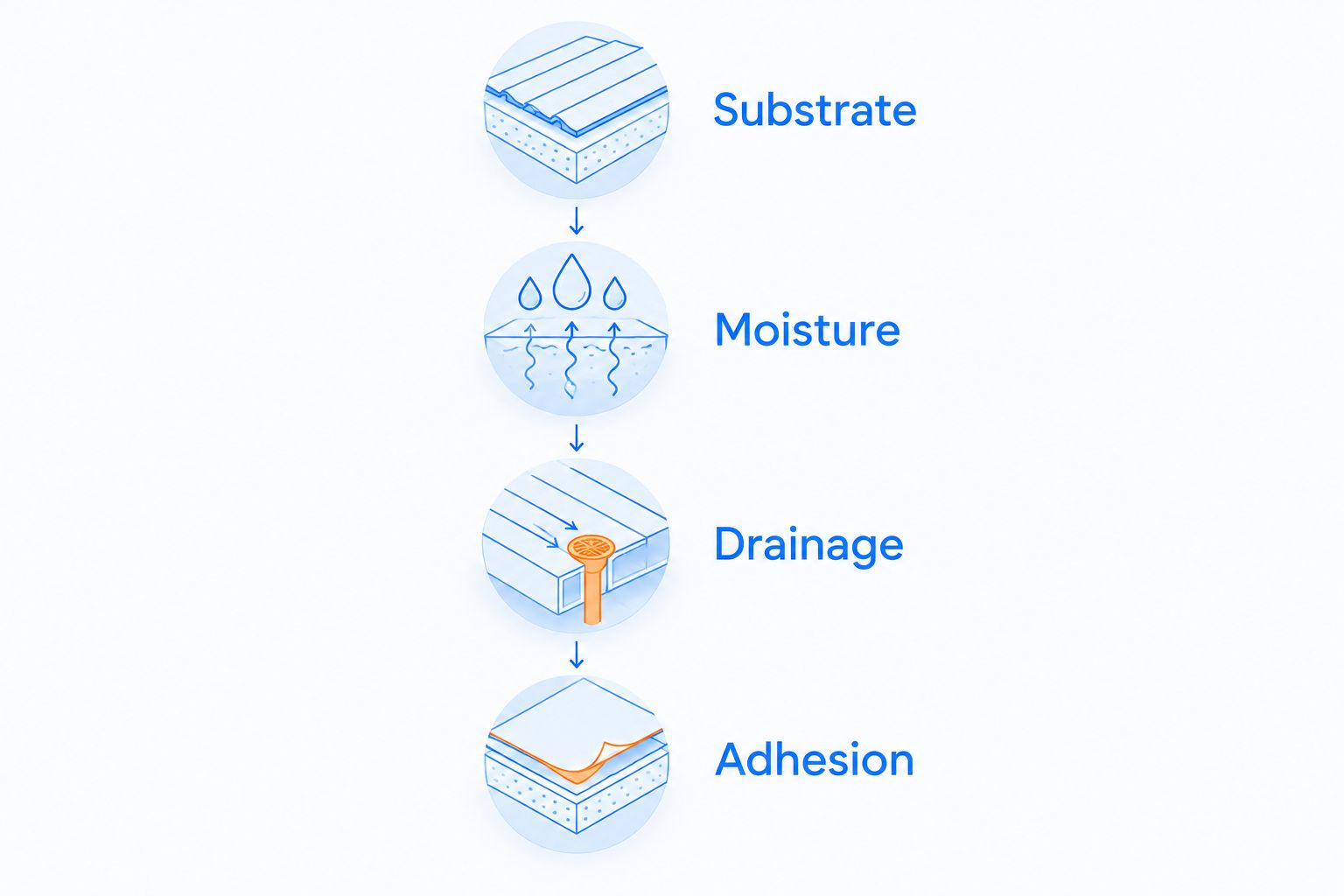
A coating recommendation is ready only when these checks support it. If moisture or substrate condition rules out restoration, compare repair or replacement instead of moving straight to coating selection.
Compare the work, not just the coating name
For a 2026 roofing proposal, request a scope that separates preparation, repairs, coating application, and final inspection. Two proposals naming silicone can describe very different work.
Ask for these details in writing:
- Measured area: State the roof area and which sections are included. One roofing square equals 100 square feet; confirm the units used.
- Repair locations: Identify seams, penetrations, flashing, drains, and damaged areas that require work.
- System components: Name the coating, primer, reinforcement, and any separate detail materials.
- Application specification: State the required coverage and dry-film thickness from the manufacturer, not an unspecified heavy coat.
- Exclusions: Identify wet insulation, deck repairs, drainage modifications, and other work outside the scope.
- Acceptance checks: Describe how completed repairs and coating thickness will be checked.
Keep the coating product information with your building records. Future repair contractors need to know what is on the roof before selecting compatible materials.
Discuss your roof coating options
Ask Sunnyboy Roofing about silicone or acrylic coatings, roof repairs, and replacement options in El Paso.
How these roof coatings are ranked
This ranking prioritizes standing-water suitability, substrate compatibility, preparation requirements, maintenance, and repair compatibility. Silicone ranks first for ponding exposure on a sound roof; acrylic has the clearest slot for positive drainage; polyurethane serves specified abrasion-resistance requirements.
The ranking compares material categories rather than claiming measured performance from a product test. Your roof condition and the chosen manufacturer's written system requirements determine the final selection.
Which flat roof coating should you choose?
Choose silicone as the default category to evaluate when a sound flat roof has ponding exposure. Choose acrylic when the roof drains properly and the specified system fits the substrate. Choose polyurethane only when the project calls for its properties and defines the complete assembly.
If your 2026 inspection finds wet insulation, unstable roofing, or unresolved structural damage, stop the coating decision. Correct those conditions and reassess whether restoration remains suitable.
FAQ
What's the best roof coating for a flat roof in El Paso?
Silicone is the first category to evaluate for a sound, compatible flat roof with ponding exposure. Acrylic suits roofs with positive drainage. The selected product must meet the existing roof's substrate and exposure requirements.
Is silicone better than acrylic for standing water?
Silicone is generally better suited to persistent standing-water exposure than standard acrylic roof coatings. Confirm the specific product's ponding-water approval and correct drainage defects before application.
Can you coat a flat roof that already leaks?
A leaking flat roof needs diagnosis and repairs before coating. A restoration system can include seam and flashing repairs, but applying coating alone does not correct wet insulation or damaged decking.
Can a coating fix low spots on my roof?
A thin roof coating does not correct roof slope or depressed decking. Low areas require a drainage or roof-assembly solution appropriate to the existing construction.
Can you apply a roof coating over TPO?
Some roof coating systems are specified for TPO when their cleaning, primer, and adhesion requirements are met. Approval must come from the selected system's documentation rather than a general claim that the coating works on every roof.
Does a white roof coating lower electricity bills?
A reflective white coating can reduce solar heat absorbed at the roof surface. A specific electricity-bill reduction depends on the building, insulation, equipment, and existing roof; coating color alone does not establish the result.
Does Sunnyboy Roofing offer flat roof coatings?
Sunnyboy Roofing offers silicone and acrylic roof coatings for residential and commercial property owners in El Paso. The company also offers roof repairs and replacements, so the decision can address roof condition rather than coating alone.
One last thing
The next repair starts with today's product record. Keep the coating manufacturer, product name, primer, installation date, and repair details together. That record helps the next contractor select materials that adhere to the existing surface.
Before you approve the work, ask one final question: what conditions would make this roof unsuitable for coating? A useful proposal answers with specific roof defects and system limitations, not a promise that coating fixes everything.