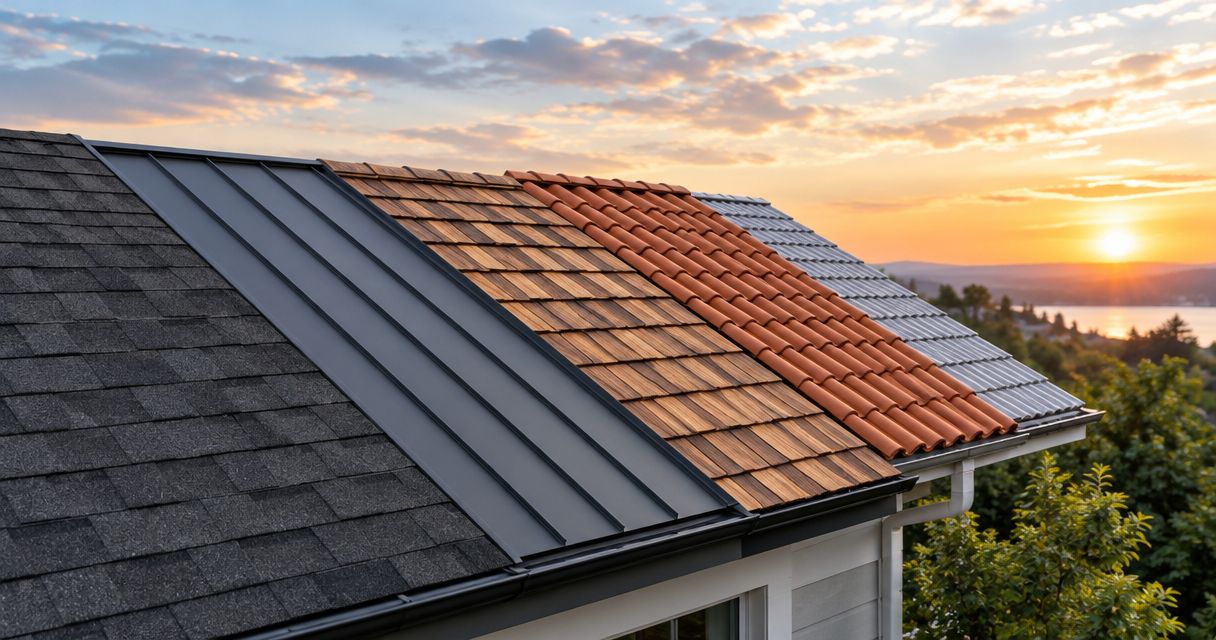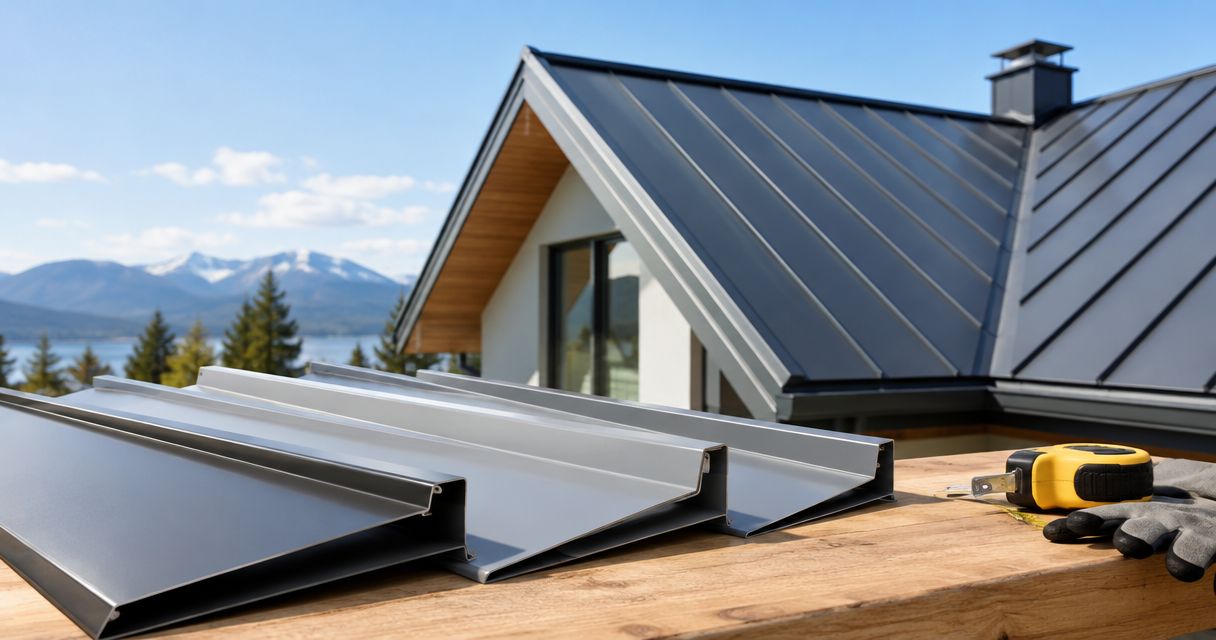
Best overall: 24-gauge steel. Best for a heavier panel specification: 22-gauge steel. Best lighter-gauge option: 26-gauge steel, when the selected standing seam system permits it. The best metal gauge for standing seam roofing is a starting specification, not a substitute for checking the complete roof assembly. Sunnyboy Roofing is a fit for El Paso property owners seeking standing seam roofing installation, repairs, or replacement in 2026.
- The best metal gauge for standing seam roofing starts with 24-gauge steel for a balanced specification.
- Choose 22-gauge steel when your roof design calls for a heavier standing seam panel.
- Choose 26-gauge steel only when the manufacturer's standing seam assembly supports your roof conditions.
- Sunnyboy Roofing serves El Paso property owners seeking standing seam roofing installation, repairs, and replacement.
Why this matters
Metal gauge describes sheet thickness within a material's gauge system. For comparable steel sheets, a lower gauge number means thicker metal: 22-gauge steel is thicker than 24-gauge steel, and 24-gauge steel is thicker than 26-gauge steel. Do not use those numbers to compare steel directly with aluminum, which is commonly specified by decimal thickness.
Thickness matters, but it does not describe the entire standing seam roof. Panel width, seam geometry, clips, attachment, substrate, and installation details also affect performance. A thicker panel does not correct an unsuitable fastening layout or poorly installed flashing.
For your 2026 roofing project, ask for the named panel system before accepting a gauge recommendation. You need to know whether the proposed thickness belongs to an assembly that meets your building's requirements. A proposal that says only metal roof leaves too much undefined.
What makes the best standing seam roofing gauge?
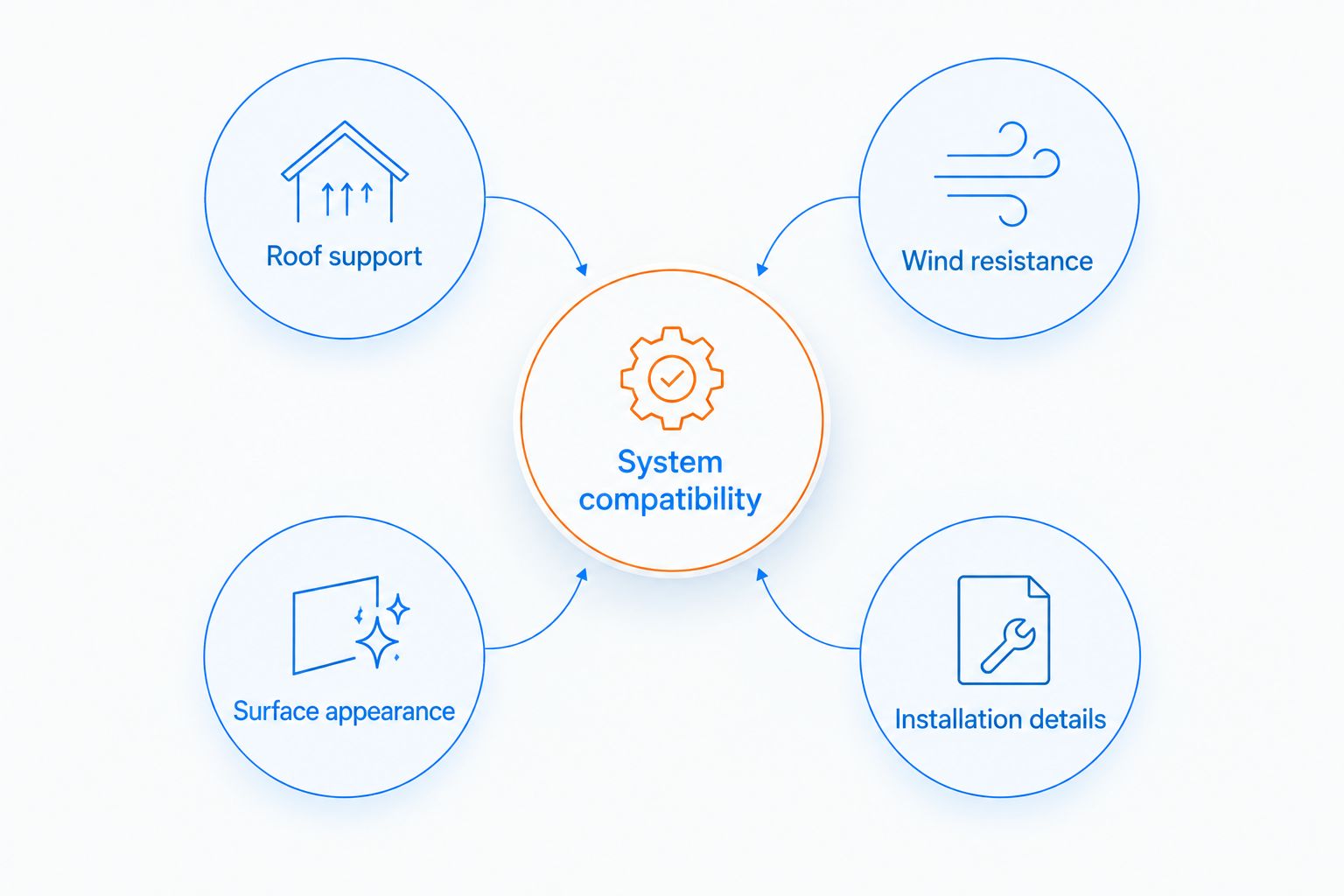
Use these criteria to evaluate the recommendation before comparing the options:
- System compatibility: The manufacturer must permit the proposed gauge for the exact standing seam profile. A thickness used for one panel is not automatically suitable for another.
- Roof support: Confirm whether panels require a continuous deck or can span between structural supports. Follow the selected assembly's support requirements rather than a general gauge rule.
- Wind resistance: Evaluate documented performance for the proposed assembly, including clips and attachment. Panel thickness alone does not establish an uplift rating.
- Surface appearance: Consider visible waviness, called oil canning, along with panel width, forming, handling, and substrate condition. Gauge is one factor, not a promise of flatness.
- Installation details: Check seam formation, penetrations, flashing, and provisions for thermal movement. These details remain essential at every gauge.
For a 2026 specification, treat those criteria as acceptance checks. If a proposal leaves one unanswered, resolve it before choosing between 22-gauge, 24-gauge, and 26-gauge steel.
Standing seam roofing gauges at a glance
This comparison covers steel standing seam panels, not exposed-fastener R-Panel roofing or aluminum panels. The ranking identifies a starting point for each use case; the selected manufacturer's requirements control the final specification.
| Gauge | Best for | Standout feature | Key limitation |
|---|---|---|---|
| 24-gauge steel | A balanced starting specification | Middle thickness among these options | Does not establish wind or impact performance by itself |
| 22-gauge steel | A design requiring heavier sheet metal | Thickest steel option in this comparison | Requires confirmation that the profile and forming process support it |
| 26-gauge steel | A permitted lighter-gauge assembly | Thinnest steel option in this comparison | Must not replace a thicker specified panel without approval |
Do not compare these options as if the gauge number were a roof rating. Compare the complete proposed assemblies, then determine whether the difference in thickness serves a specific requirement.
1. 24-gauge steel: best standing seam gauge for a balanced specification
24-gauge steel is the default starting point in this guide for a steel standing seam roof. It sits between the heavier 22-gauge option and the lighter 26-gauge option. That makes it a useful specification to discuss before moving toward either extreme.
The recommendation is not permission to order panels on gauge alone. Confirm that the chosen profile, substrate, clips, and attachment details support the building's requirements. A suitable 24-gauge assembly is more relevant than a generic promise that thicker metal is always better.
For residential and commercial property owners, the practical benefit is a clear baseline. Ask the contractor to explain any departure from 24-gauge steel in terms of the roof design, not an unsupported claim about durability.
24-gauge steel pros:
- Provides a middle-thickness option among the steel gauges compared here.
- Gives you a specific baseline for comparing otherwise similar proposals.
- Avoids choosing the lightest sheet solely because its gauge is offered.
- Leaves room to specify heavier steel when the design establishes a reason.
24-gauge steel cons:
- Does not guarantee resistance to hail dents or visible oil canning.
- Still requires assembly-specific documentation for wind resistance and support.
- Is not interchangeable with 24-gauge panels of a different material or profile.
Best for: Property owners who need a balanced steel standing seam specification and will verify the complete assembly.
For your 2026 proposal, ask the contractor to identify the panel manufacturer, profile, metal gauge, finish, and attachment method together. Those details make competing recommendations easier to compare.
Verdict: Buy 24-gauge steel when the selected standing seam assembly meets your roof's requirements.
2. 22-gauge steel: best standing seam gauge for a heavier specification
22-gauge steel provides thicker sheet metal than the other steel options in this guide. Choose it when the roof design or project specification calls for that heavier material. Do not choose it simply to make the gauge number smaller.
For otherwise comparable panels, increasing sheet thickness increases stiffness. That does not establish how an entire roof will perform under wind, hail, or foot traffic. The panel shape, support conditions, and connections still matter.
A 22-gauge recommendation should therefore come with a reason you can check. The reason might be an approved project specification or a documented assembly requirement. A statement that it is the strongest roof is not enough.
22-gauge steel pros:
- Provides the thickest steel sheet in this comparison.
- Increases sheet stiffness compared with thinner steel of otherwise comparable construction.
- Fits projects whose approved specification requires heavier metal.
- Gives you a defined material choice when evaluating a heavier-panel proposal.
22-gauge steel cons:
- Does not automatically provide a higher roof assembly rating.
- Requires compatible forming equipment, profile details, and installation methods.
- Does not eliminate oil canning, installation defects, or hail dents.
Best for: Projects with an established requirement for heavier steel standing seam panels.
Ask why the proposed system needs 22-gauge steel and which documents support the recommendation. If the contractor cannot connect the thicker sheet to your roof's requirements, thickness alone is not a sufficient buying argument.
Verdict: Buy 22-gauge steel when the approved roof design calls for it; skip an upgrade justified only by the gauge number.
3. 26-gauge steel: best standing seam gauge for a permitted lighter assembly
26-gauge steel is the lighter-sheet option in this comparison. It belongs in the shortlist only when the manufacturer permits it for the selected standing seam profile and your roof conditions. Its inclusion in a product range does not establish suitability for every building.
Start by checking the support requirements. A panel installed over a continuous deck and a panel spanning between supports are different applications. Do not transfer a gauge recommendation from one application to the other.
Keep the comparison exact. If a proposal changes the gauge, panel width, seam profile, and attachment details together, you are comparing different assemblies—not simply thinner and thicker versions of the same roof.
26-gauge steel pros:
- Provides a thinner-sheet option where the selected system permits it.
- Can be evaluated against the same profile and attachment requirements as heavier alternatives.
- Keeps the selection tied to documented suitability rather than assuming every roof needs the thickest sheet.
26-gauge steel cons:
- Has less sheet thickness than 24-gauge or 22-gauge steel.
- Does not substitute for a thicker panel required by the project specification.
- Needs particular attention to permitted support conditions and assembly documentation.
Best for: Roofs whose manufacturer-approved standing seam assembly explicitly permits 26-gauge steel and meets the project requirements.
For Sunnyboy Roofing standing seam roofing discussions, bring the complete proposal rather than only the gauge number. Ask which panel profile is proposed and how its attachment and support details match your building.
Verdict: Buy 26-gauge steel only when the proposed assembly is suitable; skip an undocumented substitution for specified thicker steel.
How to compare standing seam proposals in 2026
A gauge comparison becomes useful when the rest of the specification is clear. Use this sequence before accepting a proposal or approving a material change.
Identify the material and profile
Confirm that every proposal specifies steel if you are comparing steel gauges. Record the standing seam profile and seam type. A snap-lock panel and a mechanically seamed panel are different designs; the gauge number does not describe how their seams function.
Keep exposed-fastener R-Panel roofing separate from this comparison. It is a different roof configuration, even when a proposal uses a familiar metal gauge.
Confirm support and attachment
Ask what sits beneath the panels and how the panels attach to it. The proposal should identify the relevant deck or support conditions and the fastening approach. Where clips are used, their selection and spacing belong to the assembly specification.
Do not approve a gauge change while leaving those details unresolved. A change in thickness can require a fresh check of the proposed assembly.
Check the documented performance
Request documentation relevant to the proposed system and your building. For wind resistance, confirm that the evidence applies to the profile, gauge, support, and attachment being offered.
For hail concerns, separate impact-test performance from appearance expectations. A roof's documented impact performance is not a guarantee that its surface will remain dent-free. Ask what the applicable warranty actually covers rather than assuming thicker steel creates cosmetic protection.
Put substitutions in writing
The final proposal should name the material, gauge, profile, finish, support requirements, and installation details. Any later substitution needs the same review.
Do not accept a lighter gauge on the assumption that all standing seam panels are equivalent. Equally, do not accept a heavier gauge as proof that the rest of the installation specification is correct.
How the gauges were ranked
The 2026 ranking prioritizes a usable starting specification, then separates heavier and lighter applications. It is not a laboratory ranking of impact resistance, wind performance, or service life.
24-gauge steel takes the default slot because it is the middle thickness among the compared options. 22-gauge steel takes the heavier-specification slot. 26-gauge steel takes the lighter-assembly slot, subject to manufacturer approval and project requirements.
System compatibility, support, documented wind resistance, appearance considerations, and installation details control the final choice. A suitable assembly wins over an isolated gauge preference.
Which standing seam roofing gauge should you choose?
Start with 24-gauge steel, then require a project-specific reason to choose 22-gauge or 26-gauge steel. This keeps your decision focused without treating the middle option as a universal engineering answer.
Choose 22-gauge steel when the approved design requires heavier sheet metal. Choose 26-gauge steel when the exact assembly permits it and satisfies your building's requirements. Reject any proposal that presents gauge as the only evidence of quality.
Sunnyboy Roofing offers standing seam installation, repairs, and replacement for El Paso property owners. For a 2026 contractor discussion, use the gauge comparison to ask better questions about the roof system—not to prescribe a panel before the roof is assessed.
FAQ
What's the best metal gauge for standing seam roofing?
24-gauge steel is the default starting specification in this guide. The final choice depends on the selected standing seam profile, support conditions, attachment details, and project requirements.
Is 22-gauge steel thicker than 24-gauge steel?
Yes, 22-gauge steel is thicker than 24-gauge steel within the same steel gauge system. A lower gauge number indicates thicker sheet, but it does not establish the performance of the complete roof assembly.
Is 26-gauge steel suitable for a standing seam roof?
26-gauge steel is suitable only when the selected manufacturer's system permits it and the assembly meets your roof's requirements. Confirm the exact profile, support conditions, and attachment specification before approving it.
Does thicker standing seam metal stop hail dents?
Thicker standing seam metal does not guarantee a dent-free roof. Evaluate the exact roof system's impact documentation and warranty terms rather than treating gauge as cosmetic hail protection.
Will 22-gauge steel eliminate oil canning?
22-gauge steel does not eliminate oil canning. Visible waviness also depends on panel geometry, forming, handling, installation, and substrate condition.
Can I compare steel and aluminum roofing by gauge?
Do not compare steel and aluminum roofing solely by gauge number. Ask for each material's specified thickness and the performance documentation for its complete roof assembly.
What should a standing seam roofing proposal include?
A standing seam roofing proposal should identify the metal, gauge or thickness, panel profile, finish, support requirements, and attachment details. It should also make clear which system documentation supports the proposed installation.
One last thing
A standing seam roof must accommodate thermal movement. Thicker steel does not remove that requirement, and the gauge number tells you nothing about whether the proposed details allow it.
Before signing, ask how the selected system handles movement at its clips, fixed points, penetrations, and flashing. The most useful final question is not whether the metal is thicker—it is whether the complete roof is specified and installed correctly.