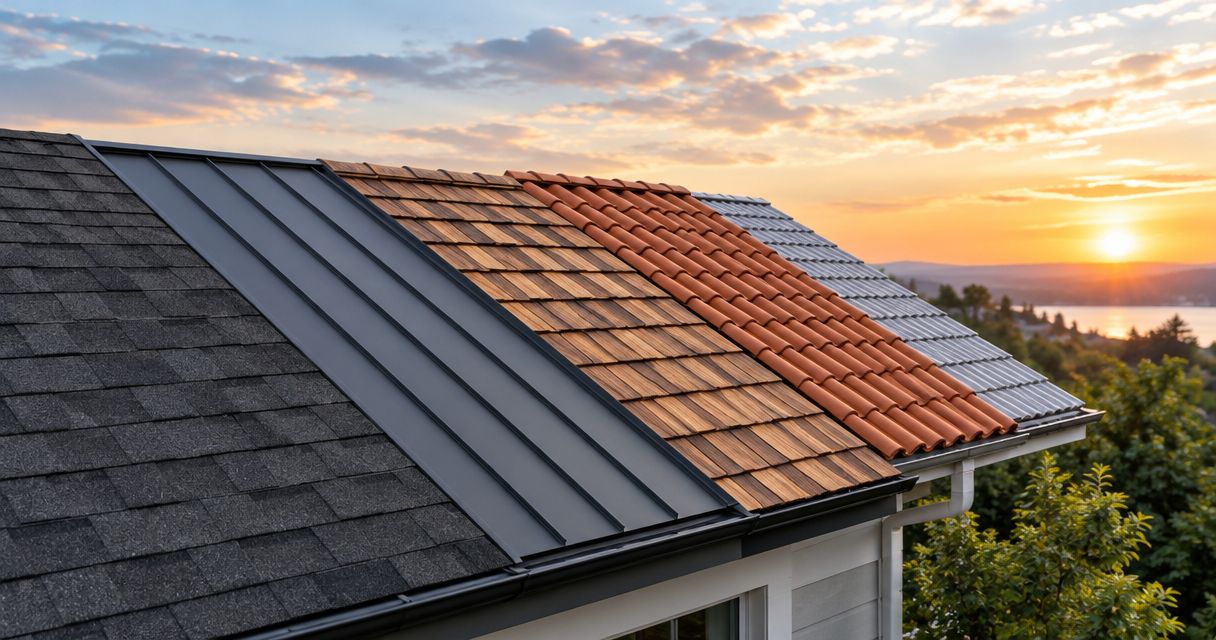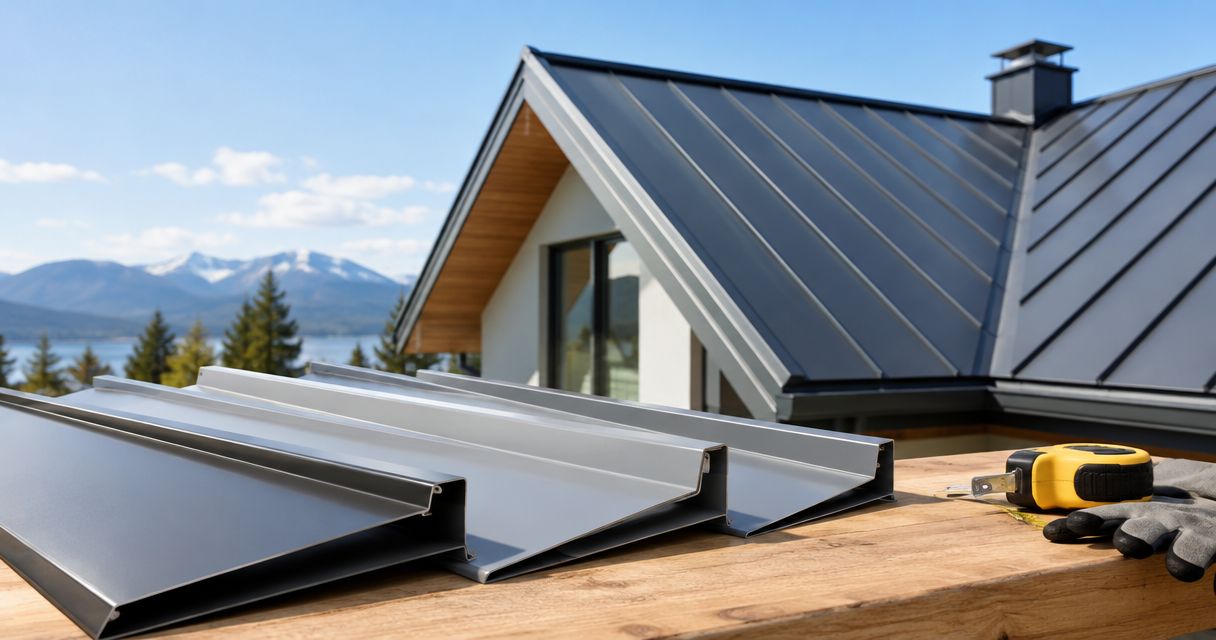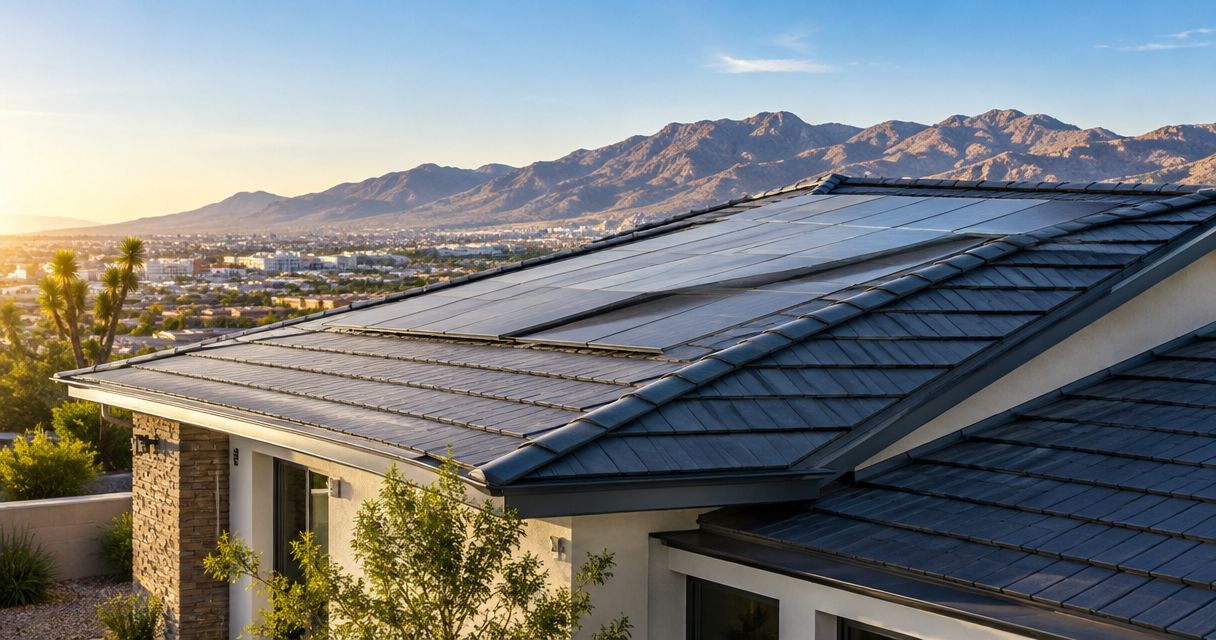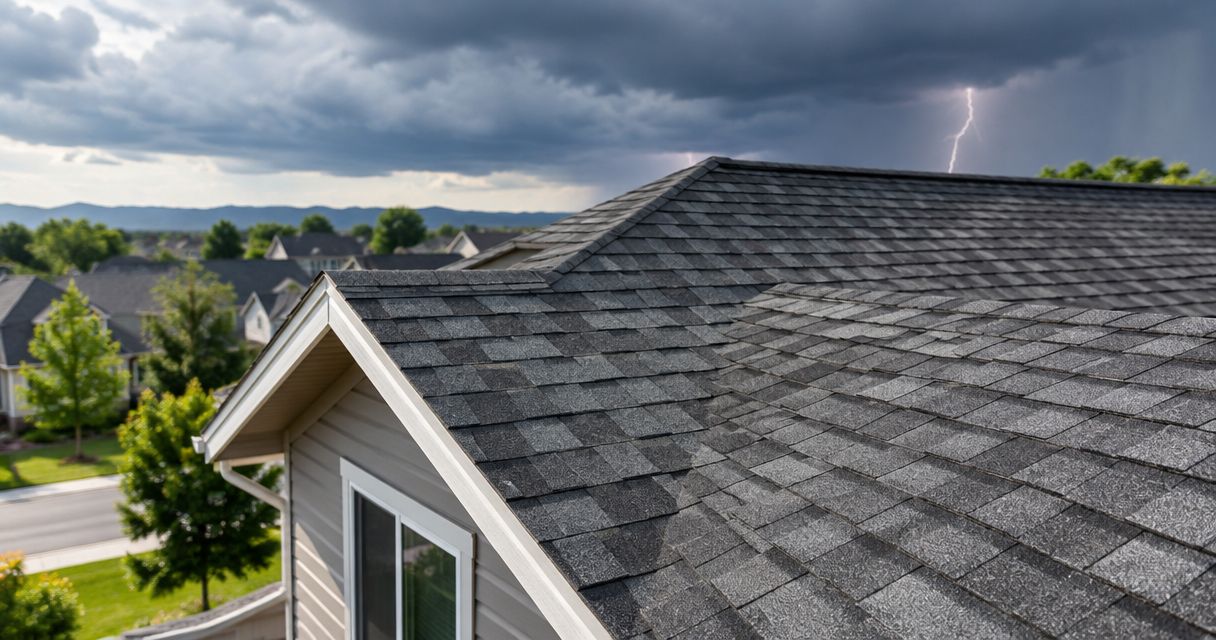
Best overall for a shingle-roof replacement: verified Class 4 impact-resistant asphalt shingles. Best for concealed-fastener metal roofing: impact-rated standing seam. Best for low-slope buildings: a hail-rated TPO assembly. This 2026 guide compares the best roofing material for hail damage by roof slope, documented impact resistance, and repair requirements—not material name alone.
- The best roofing material for hail damage has documented impact resistance and suits your roof slope.
- Class 4 asphalt shingles are the default shortlist for a conventional shingle-roof replacement.
- Standing seam metal can dent without leaking; cosmetic damage still matters.
- Sunnyboy Roofing serves El Paso owners comparing shingle roofing, metal roofing, and TPO.
Why this matters
An impact rating is evidence of a laboratory result, not a promise that hail cannot damage your roof. Hail can affect the roof covering, flashing, vents, and other exposed components differently. A sound-looking surface does not settle whether the entire roof needs repairs.
For El Paso property owners, Sunnyboy Roofing is a licensed and insured contractor offering shingle roofing, standing seam, R-Panel, TPO, repairs, and replacements. Sunnyboy Roofing is best for local owners who need to compare these roofing materials against the condition of their existing roof.
Your 2026 buying decision should start with slope and roof condition. Choose the material afterward. A steep-slope shingle recommendation does not transfer to a low-slope commercial building, and a coating does not replace damaged decking or wet insulation.
What makes the best roofing material for hail damage?
Use these criteria to compare proposals before deciding which material wins:
- Documented impact resistance: Request the exact product or assembly's test classification, not a general claim that the material resists hail.
- Slope compatibility: Confirm that the selected covering meets its installation requirements for your roof's pitch.
- Sound substrate: Identify damaged decking, trapped moisture, and insulation problems before covering them.
- Attachment and detailing: Compare fasteners, clips, seams, flashing, and penetrations—not just the visible surface.
- Repair requirements: Understand whether damage calls for individual shingle replacement, panel work, membrane repair, or more extensive removal.
- Cosmetic expectations: Decide whether visible dents are acceptable even when the roof remains watertight.
Reject a proposal that names a material but leaves its impact classification and installation details undefined. Two roofs made from the same general material can have different tested performance because their products, substrates, and attachment methods differ.
Roofing materials at a glance
These 2026 recommendations are ranked by their fit for distinct projects. They are not a claim that every product within a category performs equally.
| Material | Best for | Standout feature | Key limitation |
|---|---|---|---|
| Class 4 impact-resistant asphalt shingles | Conventional shingle-roof replacement | Documented impact classification with individual shingle repair | Classification does not mean hail-proof |
| Impact-rated standing seam metal | Concealed-fastener metal roofing | Concealed attachment on the roof field | Hail can leave visible dents |
| Impact-rated R-Panel | Exposed-fastener metal roofing | Accessible attachment points | Exposed fasteners and washers require attention |
| Hail-rated TPO assembly | Low-slope residential or commercial roofs | Heat-welded membrane seams | Performance depends on the complete assembly |
| Impact-tested concrete tile | Structurally suitable tile-roof projects | Individual tiles can be replaced | Weight and brittle damage require planning |
1. Class 4 asphalt shingles: best for shingle-roof replacement
Class 4 impact-resistant asphalt shingles are the default shortlist when you want to replace an existing shingle roof without changing to a different roofing system. The recommendation applies to a specific product with a documented classification—not every architectural shingle.
UL 2218 evaluates impact resistance using steel balls. Its Class 4 procedure uses a ball approximately 2 inches in diameter, dropped from approximately 20 feet. Those figures describe controlled test conditions; they do not predict the hailstone size your installed roof will survive.
Class 4 asphalt shingle pros:
- A documented classification gives you a defined impact-resistance criterion.
- Individual damaged shingles can be replaced when the surrounding roof permits a proper repair.
- The system suits conventional steep-slope shingle-roof projects.
- Product-specific installation instructions establish the required fastening and underlayment details.
Class 4 asphalt shingle cons:
- Hail can still damage shingles, flashing, and accessories.
- Roof age, condition, and installation affect actual performance.
- A matching replacement appearance is not guaranteed as the roof weathers.
Best for: Homeowners replacing a conventional asphalt-shingle roof who want documented impact resistance.
For a 2026 proposal, ask for the manufacturer, exact shingle name, current classification, and installation specification. Do not accept architectural or dimensional as a substitute for an impact rating.
Verdict: Buy verified Class 4 shingles when your roof slope and substrate support the system.
2. Standing seam: best for concealed-fastener metal roofing
Standing seam roofing uses raised seams between panels and concealed attachment across the roof field. It belongs on your shortlist when you want metal roofing without exposed screw heads across that field.
The distinction that matters after hail is dent resistance versus watertightness. Metal can dent without developing an opening, but that does not make every dent harmless. Seams, penetrations, flashing, and displaced components still need inspection.
Standing seam pros:
- Concealed attachment reduces exposed fastener penetrations across the panel field.
- Specific panel systems have documented impact-resistance classifications.
- Metal panels do not have asphalt-shingle granules to lose.
- Raised seams provide a defined connection between adjacent panels.
Standing seam cons:
- Hail can leave visible dents even when panels remain watertight.
- Panel replacement can involve adjacent seams and connected details.
- Appearance alone does not establish metal thickness or impact performance.
Best for: Property owners choosing concealed-fastener metal roofing and evaluating cosmetic damage separately from leaks.
Sunnyboy Roofing offers standing seam roofing, but the material name alone does not establish the rating of a proposed system. Request documentation for the actual panel, substrate, and attachment method.
Also ask how roof penetrations and transitions will be detailed. Concealed fasteners on the main roof field do not eliminate every exposed attachment elsewhere.
Verdict: Buy impact-rated standing seam when concealed attachment is your priority; skip claims that metal is hail-proof.
3. R-Panel: best for exposed-fastener metal roofing
R-Panel is a ribbed metal panel commonly installed with exposed fasteners. Choose it as an exposed-fastener system—not as an interchangeable substitute for standing seam.
Its hail performance depends on the specific panel and installed assembly. Panel profile, metal thickness, support, and attachment all matter. A proposal that says only R-Panel leaves important specifications unresolved.
R-Panel pros:
- Exposed fasteners are accessible for inspection.
- Ribbed panels provide a defined profile for comparing specifications.
- A documented impact rating gives you evidence beyond the metal-roofing label.
R-Panel cons:
- Exposed fasteners and sealing washers introduce inspection and maintenance points.
- Hail can dent panels and damage exposed accessories.
- Improper fastening can compromise the roof independently of hail resistance.
Best for: Owners intentionally selecting exposed-fastener metal roofing and accepting its maintenance requirements.
Ask the contractor to identify fastener type, placement, sealing details, and the required substrate. Keep those requirements in the written scope rather than treating them as installation choices to settle later.
Sunnyboy Roofing offers R-Panel roofing alongside standing seam. Compare those roofing materials by attachment method first, then by their specific impact documentation.
Verdict: Buy impact-rated R-Panel for an exposed-fastener project; hold any proposal that omits fastening specifications.
4. TPO: best for low-slope roofs
TPO is a single-ply roofing membrane with heat-welded seams. It is a relevant option for low-slope buildings, where steep-slope shingles are not an appropriate default recommendation.
For hail resistance, evaluate the complete TPO assembly. The membrane, cover board, insulation, substrate, and attachment method work together. A membrane specification alone does not establish the installed roof's hail performance.
TPO assembly pros:
- Heat-welded seams create joined membrane connections.
- The system suits low-slope roof applications.
- Documented assembly approvals can identify tested hail performance.
- Localized membrane damage can be repairable when the roof's condition supports repair.
TPO assembly cons:
- Hail can puncture the membrane or damage underlying components.
- Wet insulation and deteriorated substrates complicate repair decisions.
- A membrane's thickness alone is not a complete hail-resistance specification.
Best for: Low-slope residential and commercial roofs requiring a membrane system.
For a 2026 replacement proposal, require the contractor to identify the assembly's hail classification and match it to the proposed materials. Confirm how existing moisture will be assessed before installation.
Do not confuse silicone or acrylic coatings with a new TPO assembly. Coatings serve different purposes and require a suitable existing surface.
Verdict: Buy a documented hail-rated TPO assembly for a compatible low-slope roof; skip membrane-only performance claims.
5. Concrete tile: best for structurally suitable tile projects
Concrete tile belongs on the shortlist when the building can support the system and tile is part of the intended roof design. It is not the default replacement for a lightweight shingle covering.
Request impact-test documentation for the actual tile. A hard surface is not proof of hail resistance: tile can crack or break, and the underlayment and flashing remain essential parts of the roof.
Concrete tile pros:
- Individual damaged tiles can be replaced where access and surrounding conditions allow.
- Product-specific impact testing provides a basis for comparison.
- Tile is an option for projects designed around a tile covering.
Concrete tile cons:
- Structural suitability must be checked before changing roof systems.
- Hail and improper foot traffic can break tiles.
- Repairing the visible tile alone does not address damaged underlayment.
Best for: Existing tile roofs or replacement projects with confirmed structural suitability.
Ask how the contractor will inspect the underlayment, obtain compatible replacement tiles, and access damaged areas without causing additional breakage. Do not walk across a tile roof to inspect hail damage yourself.
This recommendation concerns the material category; it does not imply that Sunnyboy Roofing offers tile installation.
Verdict: Hold a switch to concrete tile until structural suitability and product-specific impact performance are confirmed.
How we ranked these roofing materials
The ranking prioritizes fit for the existing building, documented impact resistance, attachment details, and repair requirements. Class 4 asphalt leads for conventional shingle replacement; standing seam leads the concealed-fastener metal slot; R-Panel addresses exposed-fastener projects; TPO addresses low-slope roofs; concrete tile remains conditional on structural suitability.
This is a specification-based buying guide, not a claim of independent product testing. A material moves off your shortlist when its slope requirements, installation details, or impact documentation do not match your project.
Check the roof before choosing the material
Use this sequence when comparing contractor proposals:
- Existing roof: Identify damaged covering, decking problems, and evidence of moisture.
- Roof slope: Confirm that the proposed system meets the roof's pitch requirements.
- Impact rating: Match documentation to the exact product or complete assembly.
- Attachment details: Specify clips, fasteners, seams, and flashing.
- Written scope: Record removal, repairs, materials, and installation requirements.
Asphalt shingles generally require a minimum slope of 2 inches of rise per 12 inches of horizontal run under model residential code provisions. Low-slope shingle applications also carry additional installation requirements. Confirm the locally applicable code and manufacturer instructions rather than assuming every pitched roof qualifies.
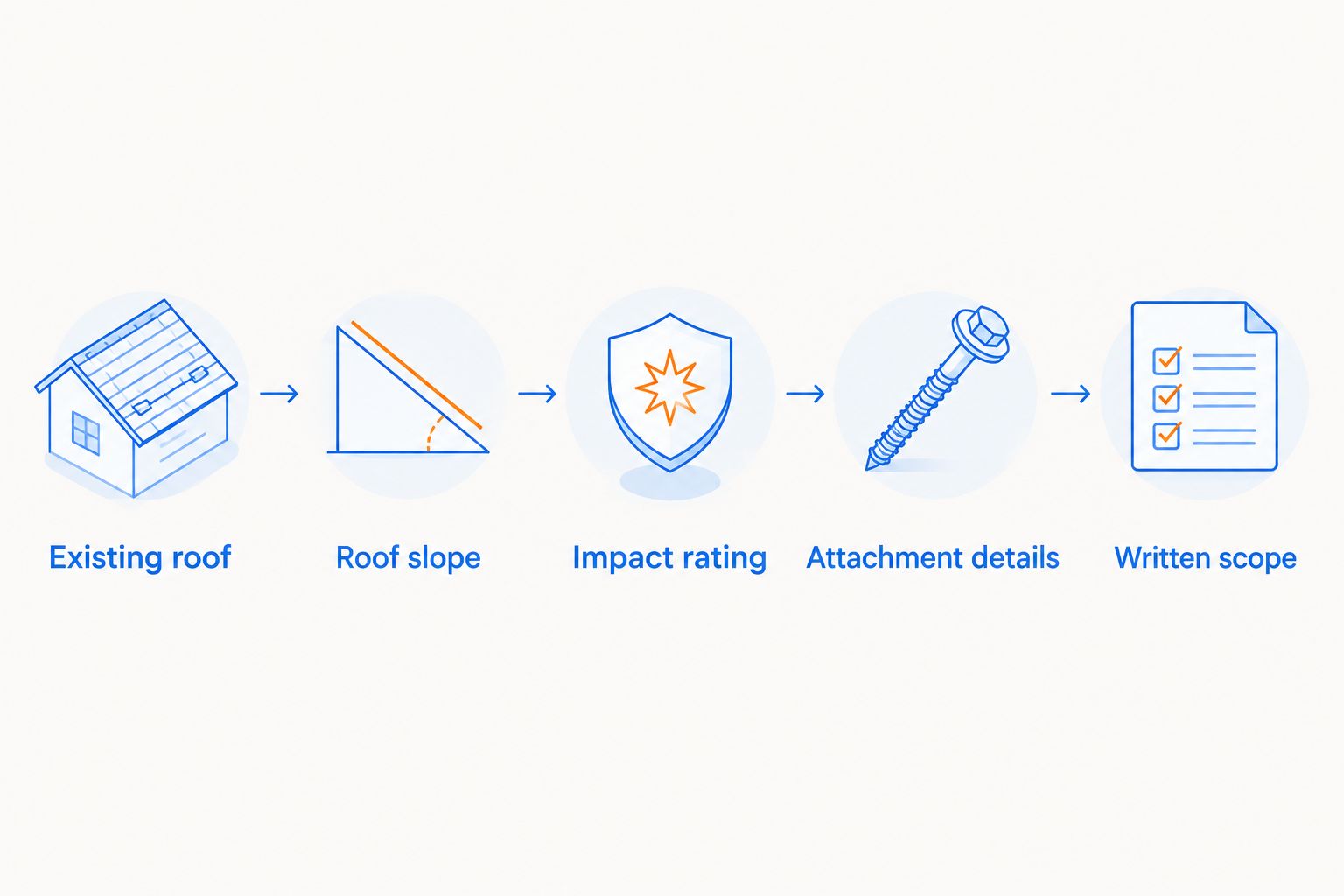
The written scope should make competing proposals comparable. If one specifies damaged decking replacement and another leaves it unresolved, they are not describing the same project.
Which roofing material should you choose?
For an undecided homeowner replacing shingles, start with verified Class 4 impact-resistant asphalt shingles. Choose impact-rated standing seam when concealed-fastener metal is the goal, or impact-rated R-Panel when you deliberately want an exposed-fastener system.
For a low-slope building, start with a documented hail-rated TPO assembly instead. Keep concrete tile conditional on structural suitability and product-specific testing.
Your best roofing material for hail damage in 2026 is the option that combines documented impact performance with a compatible roof and a defined installation scope. Do not trade those requirements for a broad claim about metal, shingles, or membrane thickness.
FAQ
What's the best roofing material for hail damage?
Verified Class 4 impact-resistant asphalt shingles are the default shortlist for a conventional shingle-roof replacement. Impact-rated metal suits compatible metal-roofing projects, while low-slope roofs need a suitable hail-rated assembly such as TPO.
Does Class 4 mean a roof is hail-proof?
No. Class 4 describes performance in a defined laboratory impact test, not immunity to real hailstorms. Installation, roof condition, and damage to flashing or accessories still matter.
Is standing seam better than R-Panel for hail?
Neither panel type has a universal hail-performance advantage based on its name alone. Compare the specific impact ratings and assemblies; standing seam uses concealed attachment, while R-Panel commonly uses exposed fasteners.
Can a metal roof have hail dents without leaking?
Yes, metal roofing can dent without developing a leak. Inspect seams, penetrations, flashing, and displaced components before treating the damage as cosmetic.
Is thicker TPO automatically better for hail?
No, membrane thickness alone does not establish a TPO roof's hail rating. Evaluate the tested assembly, including its cover board, insulation, substrate, and attachment.
Can a roof coating fix hail damage?
A coating is not a substitute for repairing damaged roofing components or addressing wet insulation. Silicone and acrylic coatings require a suitable substrate and preparation appropriate to the selected system.
Should I replace my roof after every hailstorm?
No, replacement should follow an inspection and a defined damage assessment. The decision depends on the damage, roof condition, and whether a proper repair is practical.
One last thing
Before you approve a 2026 roof replacement, ask one question: Does this impact documentation describe the roof you are actually installing? A rating for a different panel, substrate, or membrane assembly does not answer that question. Keep the matching documentation with your written scope.