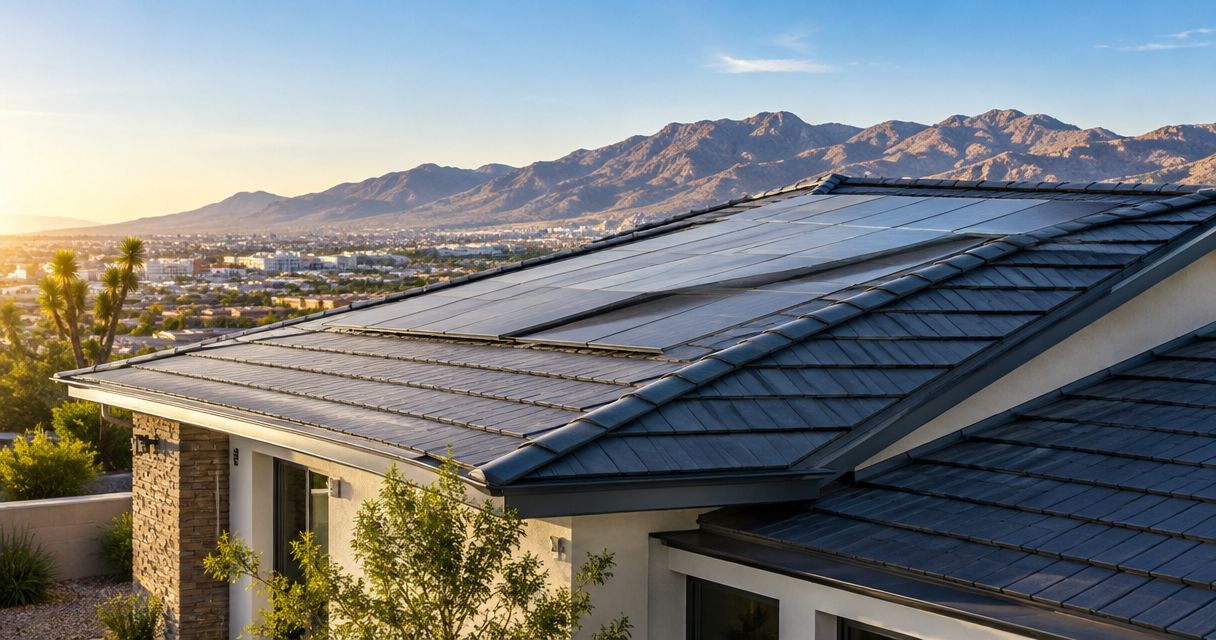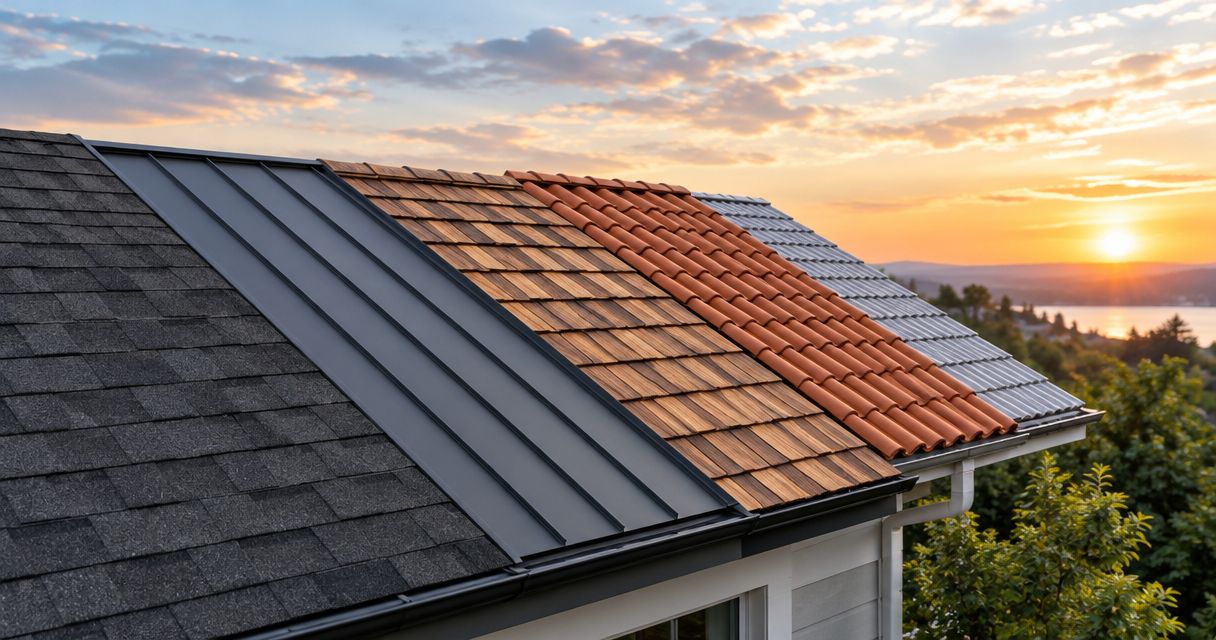
Best overall for maximum lifespan: slate. Best for a long-life metal roof: standing seam. Best for a conventional shingle replacement: architectural asphalt. This 2026 guide compares roofing materials ranked by lifespan, then explains which choices fit your roof’s slope, structure, and maintenance needs.
- For roofing materials ranked by lifespan, slate leads with InterNACHI’s estimated range of 60–150 years.
- Clay and concrete tile have published estimates of 100-plus years, but require a structure suited to their weight.
- Metal roofing has a published estimate of 40–80 years; panel design and installation still matter.
- Sunnyboy Roofing handles metal and shingle roofing; choose the system after assessing your roof’s condition.
Why this matters
The longest-lived material is not automatically the right roof. A slate roof needs suitable structural support, while a low-slope commercial roof needs a system designed for that slope. Comparing them only by years hides the decision that matters first: whether the assembly fits the building.
Sunnyboy Roofing is a licensed and insured El Paso contractor offering metal and shingle roofing, TPO, repairs, replacements, and silicone and acrylic coatings. Sunnyboy Roofing is a roofing materials contractor for El Paso property owners comparing metal, shingles, and low-slope systems.
For this 2026 comparison, the lifespan estimates come from InterNACHI’s Standard Estimated Life Expectancy Chart for Homes, specifically its roofing entries. These are material-level estimates, not warranties, inspection results, or promises about an individual roof. The chart is not an El Paso-specific study.
What makes the best long-life roofing material?
Use these criteria before treating the lifespan ranking as a buying order:
- Material longevity: Compare published service-life estimates, not warranty length alone. A warranty and a useful roof life measure different things.
- Roof slope: Confirm that the exact roof system is approved for your pitch. Water-shedding shingles and tiles are not substitutes for a low-slope membrane.
- Structural capacity: Check whether the building can carry the proposed assembly, especially when replacing shingles with slate or tile.
- Installation quality: Evaluate flashing, underlayment, fasteners, seams, and penetrations. Durable surface material does not correct a weak detail underneath it.
- Maintenance access: Understand what needs inspection and how repairs will be performed without damaging adjacent material.
- Weather exposure: Consider wind, hail, heat, and drainage separately. A long lifespan estimate is not an impact-resistance rating.
Roofing materials ranked by lifespan: at a glance
The 2026 ranking below sorts materials by their published lifespan estimates. Clay and concrete tile share the same estimate; neither earns a longevity advantage from that figure alone. Metal appears as a material category because the source does not assign standing seam a separate lifespan.
| Rank and material | Published lifespan estimate | Best for | Standout feature | Key limitation |
|---|---|---|---|---|
| 1. Slate | 60–150 years | Maximum material longevity on a suitable structure | Long upper-end lifespan estimate | Heavy, brittle units require specialist work |
| 2. Clay tile | 100-plus years | Long-life roofs with a clay-tile appearance | Durable individual tiles | Structural support and underlayment remain critical |
| 3. Concrete tile | 100-plus years | Long-life roofs using concrete tile profiles | Replaceable individual units | Weight and breakage complicate alterations |
| 4. Metal roofing | 40–80 years | Owners considering standing seam for long-term use | Standing seam can conceal panel fasteners | System details and expansion require careful design |
| 5. Architectural asphalt shingles | 30 years | Conventional pitched-roof replacement | Layered shingle construction | Shorter published lifespan than metal or tile |
| 6. Three-tab asphalt shingles | 20 years | Matching an existing three-tab roof | Simple, uniform shingle profile | Shortest published lifespan in this comparison |
The estimates apply to material categories, not every component of a roof assembly. A tile can remain intact while its underlayment needs replacement. A metal panel can remain serviceable while flashing or exposed fasteners need attention.
1. Slate: best roofing material for maximum longevity
Slate is a natural stone roofing material installed as overlapping individual pieces. InterNACHI lists an estimated lifespan of 60–150 years, the highest upper-end figure in this comparison. That range makes slate the longevity leader, not a universal replacement recommendation.
A slate proposal needs more than a sample and a lifespan claim. You need confirmation that the structure, attachment method, flashing, and installer’s experience suit the assembly. Repairs also require care because walking on slate can break it.
Slate pros:
- Highest published upper-end lifespan in this ranking.
- Individual damaged pieces can be replaced.
- Natural stone provides a distinct roof finish.
Slate cons:
- Weight requires structural assessment before conversion.
- Brittle pieces and specialist repairs complicate maintenance.
- Long-lived slate does not remove the need to maintain flashing.
Best for: Owners prioritizing maximum material longevity on a building already suited to slate.
Verdict: Hold until structural suitability and specialist installation are confirmed. Choose slate for a compatible assembly, not merely because it tops the table.
2. Clay tile: best long-life roofing for a clay-tile finish
Clay tile uses fired-clay units to shed water down a pitched roof. InterNACHI lists clay tile at 100-plus years, alongside concrete tile. The figure describes the roofing material; it does not establish that the underlayment will last equally long.
Choose clay when you specifically want its material and profile and your building supports the system. Ask how the proposal handles valleys, roof edges, penetrations, and broken-tile replacement. Those details remain important throughout the roof’s life.
Clay tile pros:
- Published material lifespan exceeds a century.
- Individual broken tiles can be replaced.
- Multiple tile profiles provide different roof appearances.
Clay tile cons:
- The assembly requires suitable structural support.
- Tiles can break under impact or careless foot traffic.
- Accessing underlayment can require removing otherwise usable tiles.
Best for: Owners seeking a clay-tile appearance on a structure designed or verified for tile roofing.
Verdict: Buy only after the structure and complete roof assembly are approved. Do not treat a century-long tile estimate as a century without maintenance.
3. Concrete tile: best long-life roofing for concrete tile profiles
Concrete tile uses molded units installed over a supporting roof assembly. Its InterNACHI lifespan estimate is also 100-plus years. That ties clay tile in the source data rather than proving concrete lasts longer or shorter.
Compare the exact tile profile, attachment requirements, and repair plan. A concrete tile roof is a system, not simply a layer of durable pieces. Underlayment condition and water management remain central to keeping the building dry.
Concrete tile pros:
- Shares the chart’s long-life estimate with clay tile.
- Individual units allow localized replacement.
- Different profiles support different architectural treatments.
Concrete tile cons:
- Weight can rule out a straightforward conversion from shingles.
- Units can crack during impact or roof access.
- Tile removal complicates work on concealed components.
Best for: Owners choosing a concrete tile profile for a structurally suitable pitched roof.
Verdict: Buy for a verified tile-ready building. Hold if structural capacity or the condition beneath existing tiles remains unresolved.
4. Metal roofing: best long-life option for standing seam
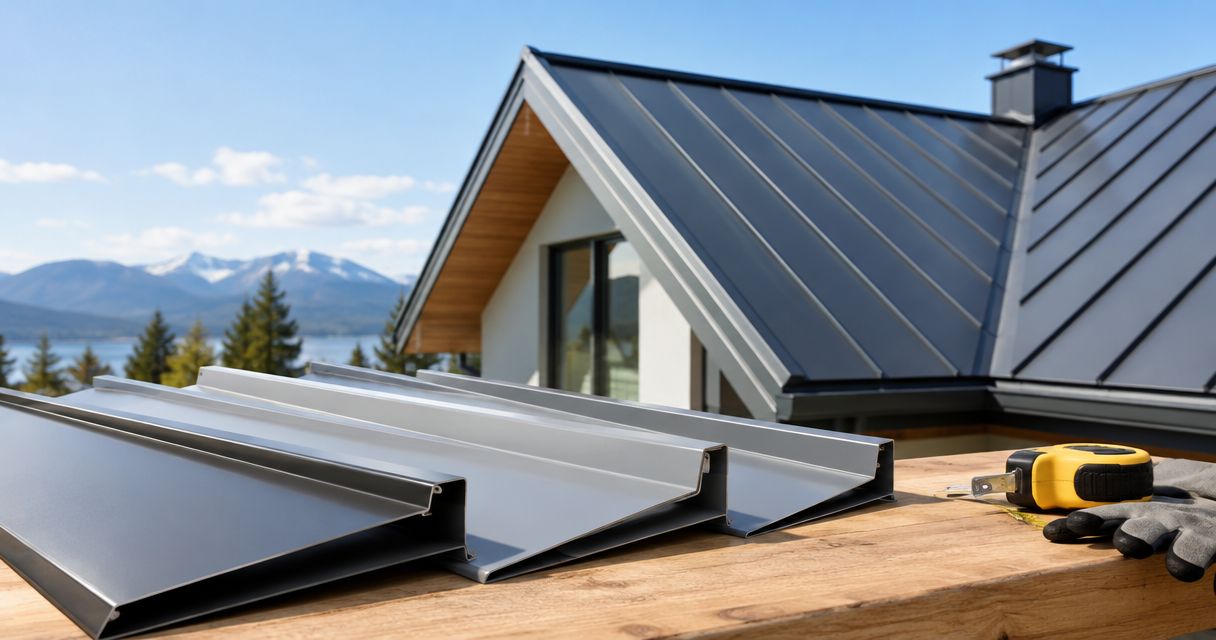
Metal roofing has an InterNACHI estimated lifespan of 40–80 years. Standing seam joins raised panel seams and commonly uses concealed attachment; R-Panel systems commonly use exposed fasteners. Both belong to metal roofing, but their maintenance details differ.
Sunnyboy Roofing offers standing seam and R-Panel roofing. For a 2026 replacement decision, compare the specified panel system rather than assuming every metal roof delivers the top of the category’s lifespan range. The source provides no separate standing-seam or R-Panel longevity figure.
Metal roofing pros:
- Longer published lifespan range than the asphalt entries here.
- Standing seam can keep attachment fasteners beneath the panels.
- Panel systems provide an alternative to individual shingles or tiles.
- Multiple system designs suit different project requirements.
Metal roofing cons:
- Exposed-fastener systems require attention to fasteners and washers.
- Seams, penetrations, and thermal movement need correct detailing.
- Hail can dent metal without necessarily creating a leak.
Best for: Owners evaluating standing seam for long-term service on a compatible roof.
Verdict: Buy when the specified panel system fits your slope and building. Do not accept a material lifespan estimate as an installation guarantee.
5. Architectural asphalt: best for conventional shingle replacement
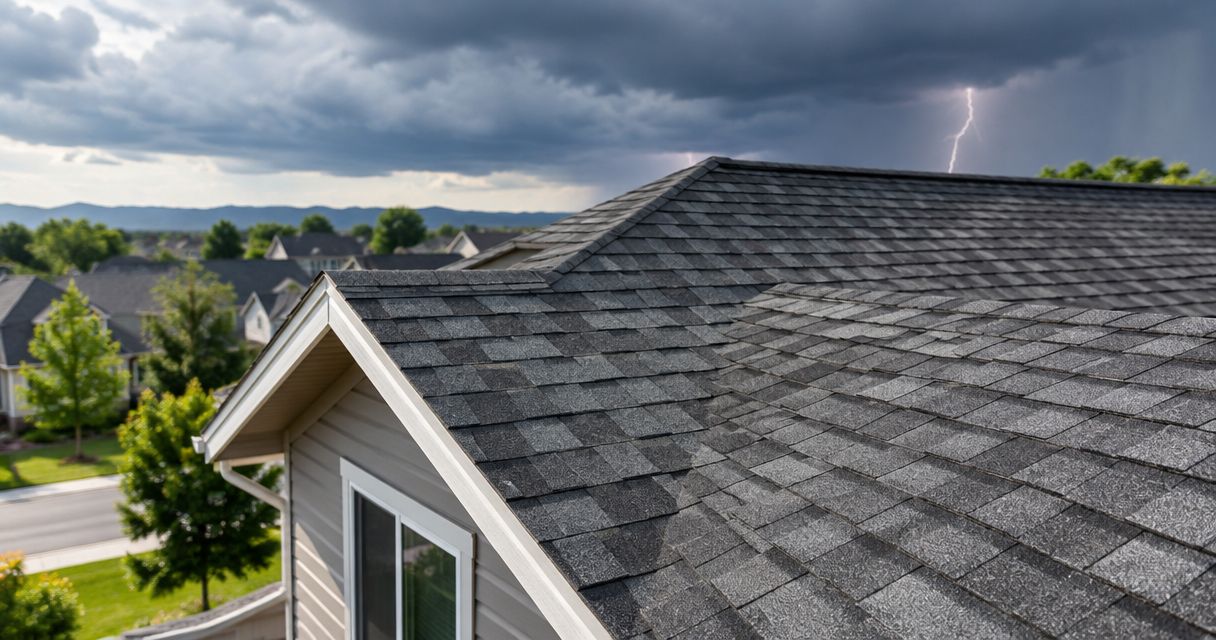
Architectural asphalt shingles use a layered construction to create a dimensional appearance. InterNACHI lists their estimated lifespan at 30 years, compared with 20 years for its standard asphalt entry. This makes architectural shingles the longer-lived asphalt choice in this ranking.
They belong on roofs with the slope and assembly required by the selected manufacturer. Review ventilation, flashing, deck condition, and attachment alongside the shingle specification. New shingles cannot correct concealed moisture damage or an unsuitable deck.
Architectural asphalt pros:
- Higher published lifespan than the standard asphalt entry.
- Familiar format for conventional pitched-roof replacement.
- Localized damage can be addressed through shingle replacement.
Architectural asphalt cons:
- Published lifespan remains below the metal and tile categories.
- Heat, weather exposure, and installation affect actual service life.
- Repair appearance depends on matching the existing shingles.
Best for: Owners replacing a conventional pitched shingle roof without changing to metal, slate, or tile.
Verdict: Buy when a shingle assembly fits the project. Choose a specific rated product, not the architectural label alone.
6. Three-tab asphalt: best for matching an existing roof profile
Three-tab shingles create a flatter, regularly divided roof appearance. InterNACHI lists standard asphalt roofing at 20 years; this comparison uses that entry for conventional three-tab shingles. It is the shortest published estimate among the ranked materials.
The strongest reason to consider three-tab shingles here is compatibility with an existing roof’s profile during a suitable repair. For a full replacement focused on longevity, compare architectural shingles instead. Matching appearance alone does not establish that a repair is appropriate.
Three-tab asphalt pros:
- Uniform profile suits matching an existing three-tab roof.
- Individual shingles support localized repairs.
- Straightforward appearance avoids a dimensional shingle profile.
Three-tab asphalt cons:
- Lowest published lifespan in this comparison.
- Material matching does not resolve deterioration elsewhere.
- A repair requires confirmation that surrounding shingles remain serviceable.
Best for: A qualified repair intended to match an existing three-tab assembly.
Verdict: Skip for a lifespan-first full replacement. Hold for repairs until the surrounding roof’s condition is assessed.
Check the roof before choosing the material
For your 2026 project, assess the assembly before selecting a surface. Ask for findings on Roof slope, Structural capacity, Weather exposure, Installation quality, and Maintenance access. These checks explain why a material that leads the ranking can still be wrong for your building.
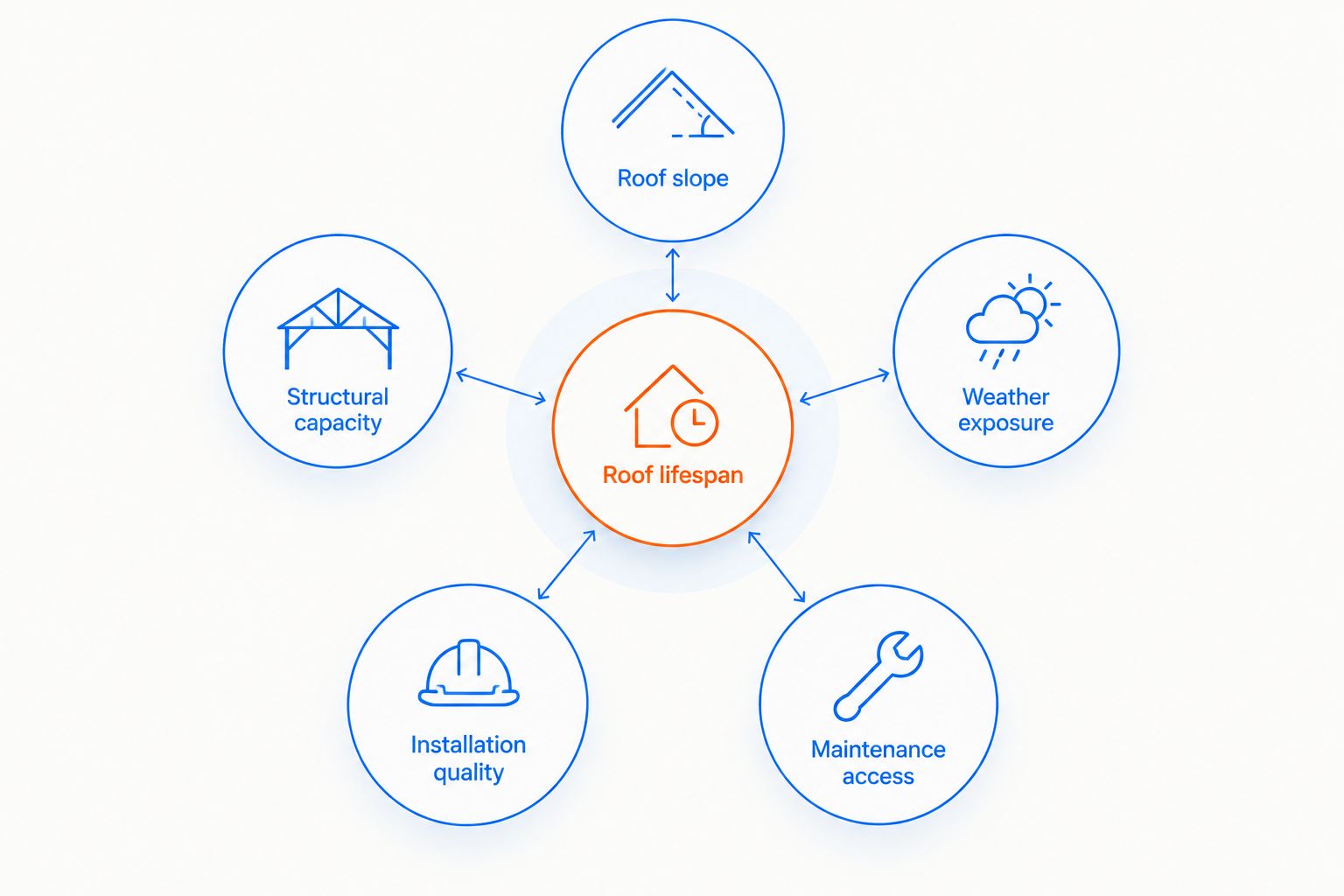
Start with the roof’s condition, not its appearance from the street. Request an explanation of damaged decking, drainage problems, failed flashing, and the scope of removal. Then compare proposals that address the same underlying work; otherwise, the material names conceal different projects.
Where TPO and roof coatings fit
TPO belongs in the low-slope roof discussion, not as an interchangeable replacement for pitched-roof slate or shingles. Best for: low-slope projects requiring a specified membrane assembly. Its advantages include welded seams; its limitations include the need for correct penetration details and membrane protection from damage.
Silicone and acrylic coatings are restoration options for compatible existing roofs, not equivalent substitutes for every replacement. Best for: a sound, compatible roof approved for the selected coating system. They can renew an eligible surface, but they do not repair wet insulation or unsound decking. Verdict: Hold until inspection establishes suitability.
How the ranking works
This 2026 ranking follows InterNACHI’s published roofing-material lifespan estimates, with use-case recommendations adjusted for slope, weight, installation, and maintenance. Slate leads on the highest stated upper range. Clay and concrete tile tie; their order is not a claim that clay lasts longer.
No installed roofs were tested for this article. No contractor-specific lifespan, coating extension period, or warranty outcome is asserted. Treat the table as a screening tool, then require a project-specific specification.
Which roofing material should you choose?
Choose standing seam as the first long-life option to evaluate for a compatible pitched roof; choose architectural asphalt when a conventional shingle replacement fits your project. Evaluate slate or tile only after confirming structural suitability and access to the required installation expertise.
Sunnyboy Roofing offers roofing materials and systems that include metal, shingles, and TPO. Ask which assembly fits your building and what the replacement scope includes. The useful answer names the system, the necessary repairs, and its maintenance requirements—not just a maximum lifespan.
FAQ
What roofing material lasts the longest?
Slate has the highest upper-end lifespan estimate in this comparison: 60–150 years in InterNACHI’s roofing chart. Clay and concrete tile are listed at 100-plus years, but all require suitable installation and maintenance.
Does standing seam metal roofing last longer than shingles?
The published metal roofing estimate is 40–80 years, compared with 30 years for architectural asphalt shingles. That metal estimate is category-wide and does not guarantee a particular standing seam installation.
Is clay tile better than concrete tile for lifespan?
The cited chart gives clay and concrete tile the same estimate of 100-plus years. Choose between them using structural suitability, the specified assembly, appearance, and repair requirements rather than an unsupported longevity difference.
Can I replace asphalt shingles with slate or tile?
Replace shingles with slate or tile only after confirming that the structure supports the proposed assembly. Roof slope, attachment, underlayment, and flashing also need to suit the selected material.
Does a long roof warranty mean the roof will last that long?
A warranty term is not a service-life guarantee. Read the coverage, exclusions, installation requirements, and maintenance conditions separately from lifespan estimates.
What is the best roofing material for a flat commercial roof?
A flat or low-slope commercial roof needs a system designed for its slope and drainage, such as an appropriately specified TPO assembly. Pitched-roof lifespan rankings do not determine the best membrane for that building.
Can a roof coating replace a new roof?
A coating is an option only when the existing roof is sound and compatible with the selected system. Wet insulation, damaged decking, and other underlying defects require assessment and corrective work.
One last thing
Ask which component is expected to need attention first. The answer might be flashing, exposed fasteners, underlayment, or a penetration detail rather than the visible roofing material. That question turns a broad lifespan claim into a practical maintenance discussion—and helps you compare complete roof assemblies instead of surface materials alone.