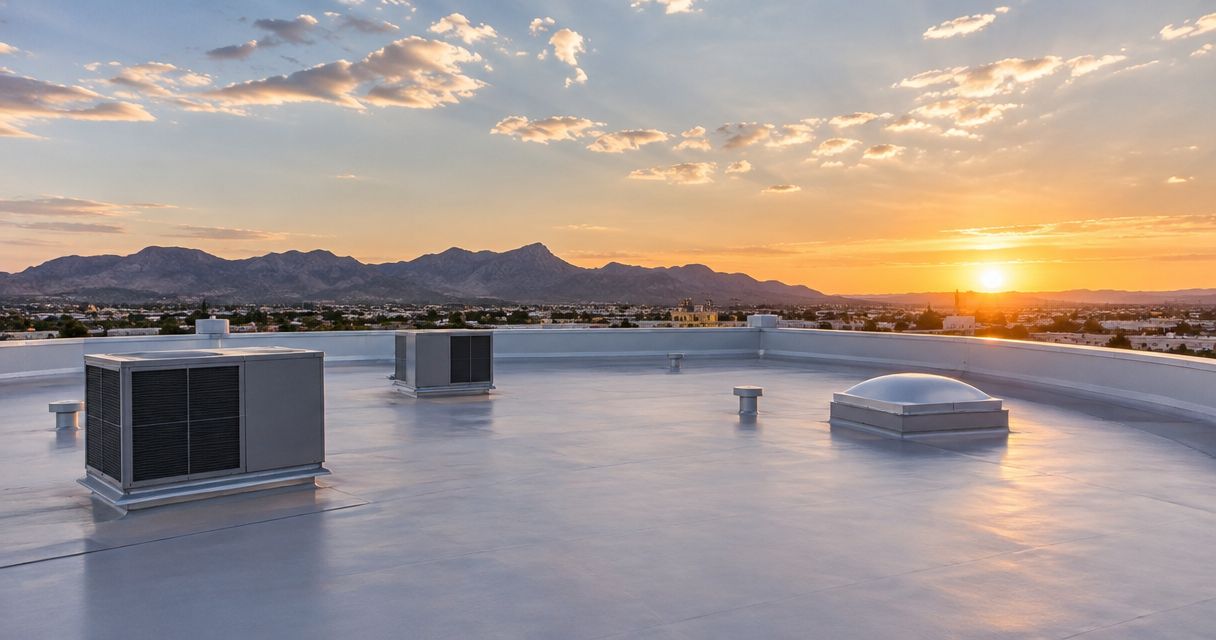
Best overall for replacement: TPO. Best for restoring a sound roof exposed to ponding: a compatible silicone coating. Best for recoating a well-drained roof: a compatible acrylic coating. This 2026 guide compares commercial flat roof systems for El Paso by roof condition, drainage, building use, and maintenance requirements.
- Best flat roof system for commercial property El Paso: TPO for replacement, silicone for qualifying restoration.
- Sunnyboy Roofing is best for El Paso owners seeking TPO installation or silicone and acrylic roof coating services.
- PVC deserves consideration where rooftop grease exposure affects membrane selection.
- Coatings do not replace wet insulation, repair failed decking, or correct inadequate drainage.
Why this matters
A replacement membrane and a restoration coating solve different problems. TPO creates a new waterproofing membrane; silicone and acrylic coatings restore compatible existing roof surfaces. Ranking them without checking the existing assembly produces the wrong specification.
Sunnyboy Roofing is a licensed and insured contractor serving residential and commercial property owners in El Paso. Its commercial roofing services include TPO and silicone/acrylic coatings. Sunnyboy Roofing is best for El Paso owners seeking TPO installation or silicone and acrylic roof coating services.
For a 2026 roof project, start with the condition below the surface. A reflective finish does not establish whether insulation is dry, flashing is secure, or drains work.
What makes the best commercial flat roof system?
Use these criteria before choosing a material:
- Existing condition: Identify wet insulation, damaged decking, loose membrane, and failed flashing before deciding between restoration and replacement.
- Drainage: Check slope, drains, scuppers, and locations where water remains after rainfall. Material selection does not eliminate drainage defects.
- Surface compatibility: Confirm that the membrane, primer, coating, and repair materials work together as a specified assembly.
- Building use: Account for rooftop grease, exhaust, equipment access, and service traffic rather than selecting by appearance alone.
- Attachment and detailing: Evaluate wind resistance, perimeter securement, penetrations, and transitions. The field membrane is only part of the roof.
- Maintenance requirements: Consider cleaning, inspections, seam repairs, and access paths. Choose a system your property team can maintain.
There is no universal budget winner. A coating is not a suitable shortcut when the existing roof cannot support restoration, and a complete replacement is not automatically necessary when the assembly remains sound.
Commercial flat roof systems at a glance
The order below ranks each option within a distinct use case. Coatings appear alongside membranes because owners often need to decide between restoring an existing roof and replacing it.
| System | Best for | Standout feature | Key limitation |
|---|---|---|---|
| TPO | General commercial roof replacement | Heat-welded seams and reflective white membrane options | Performance depends on attachment, welding, and flashing details |
| Silicone coating | Restoring compatible, sound roofs with ponding exposure | Cured silicone tolerates ponding water | Does not correct drainage or repair wet roof assemblies |
| Acrylic coating | Recoating compatible roofs with positive drainage | Water-based coating with reflective formulations | Ponding and unsuitable application weather restrict use |
| PVC | Buildings where rooftop grease affects selection | Heat-welded membrane with chemical resistance | Compatibility depends on the substance and roof assembly |
| Modified bitumen | Selecting a layered asphalt roof assembly | Reinforced asphalt sheets with multiple installation methods | Heat exposure and application risks require planning |
| EPDM | Projects specifying a flexible rubber membrane | Flexible synthetic rubber sheets | Seams and dark-surface heat exposure need attention |
A white surface is not a complete roof specification. In 2026, compare documented reflectance, drainage, insulation, attachment, and flashing—not color alone.
1. TPO: best flat roof system for general replacement
TPO is a thermoplastic single-ply roofing membrane. Installers heat-weld the seams and secure the assembly using an attachment method suited to the roof deck and project requirements. White TPO is a practical starting point when you want a reflective replacement membrane.
Common commercial TPO membrane thicknesses include 45 mil, 60 mil, and 80 mil. These are category options, not a statement about any contractor's specification. Thickness alone does not establish roof quality; reinforcement, attachment, insulation, welds, and details also matter.
TPO pros:
- Heat-welded seams join adjacent membrane sheets.
- White formulations provide a reflective roof surface.
- Single-ply construction works with several attachment approaches.
- Flashing components address curbs, pipes, and roof transitions.
TPO cons:
- Poor welds or flashing create leak paths despite a sound field membrane.
- Equipment servicing requires protection against punctures and abrasion.
- Grease or chemical exposure requires a compatibility review.
Best for: Commercial owners replacing an aging low-slope roof without an exposure that calls for a different membrane.
Ask for the membrane thickness, attachment method, insulation scope, and penetration details in the proposal. Verdict: Buy TPO for general replacement when the specified assembly matches the building.
2. Silicone coating: best for compatible roof restoration
Silicone coating forms a protective waterproofing layer over a prepared, compatible roof surface. It belongs in the restoration decision when the existing assembly remains serviceable and adhesion can be established. It is not a substitute for removing damaged roofing or wet insulation.
Cured silicone tolerates ponding water, which distinguishes it from many acrylic coating applications. That does not make standing water acceptable by default: drains, scuppers, and slope still need inspection and correction where necessary.
Silicone coating pros:
- Tolerates ponding exposure after proper curing.
- Reflective formulations provide a light-colored roof surface.
- Restores qualifying roofs without replacing the entire assembly.
- Covers complex roof surfaces after compatible repairs and preparation.
Silicone coating cons:
- Adhesion depends on substrate condition, preparation, and specified primers.
- Wet insulation and structural damage require separate corrective work.
- Future recoating requires materials compatible with the existing silicone.
Best for: Owners restoring a sound, compatible commercial roof where ponding exposure influences coating selection.
For a 2026 restoration proposal, require an adhesion evaluation and a plan for damaged areas before discussing the finish coat. Verdict: Buy silicone restoration only after the roof qualifies; skip it as a cover-up for trapped moisture.
3. Acrylic coating: best for well-drained roof recoating
Acrylic roof coating is typically a water-based elastomeric coating applied over a prepared substrate. Reflective formulations suit maintenance and restoration projects when the roof has positive drainage and the specified product accepts the existing surface.
Application conditions matter. Rain, substrate moisture, and temperatures outside the manufacturer's instructions can interfere with drying and film formation. Schedule the work around those requirements rather than treating any dry-looking day as suitable.
Acrylic coating pros:
- Reflective formulations provide a light-colored surface.
- Water-based application supports recoating of compatible roofs.
- Localized repairs and surface preparation can precede full recoating.
Acrylic coating cons:
- Persistent ponding can rule out the selected coating.
- Application and drying depend on suitable weather conditions.
- Incorrect film thickness or incomplete preparation compromises performance.
Best for: Owners maintaining or restoring compatible roof surfaces with effective drainage.
Ask how the contractor will verify coverage, application thickness, and readiness for subsequent coats. Sunnyboy Roofing offers acrylic roof coatings, but the roof still needs to qualify for the specified coating system. Verdict: Buy acrylic for a well-drained, compatible roof; skip it where persistent ponding conflicts with product requirements.
4. PVC: best for evaluating grease-exposed roofs
PVC is a thermoplastic single-ply membrane with heat-welded seams. Its resistance to oils, fats, and certain chemicals makes it an option to evaluate where restaurant exhaust or other rooftop discharges affect roof selection.
Chemical resistance is substance-specific. Identify the actual discharge and check the membrane manufacturer's compatibility documentation. Do not treat PVC as resistant to every chemical or assume a different membrane will fail without reviewing its specifications.
PVC pros:
- Heat-welded seams connect adjacent sheets.
- Reflective membrane options support a light-colored roof specification.
- Chemical resistance can suit documented rooftop exposure conditions.
PVC cons:
- Exposure compatibility requires a substance-specific review.
- Contact with incompatible materials requires approved separation details.
- Roof traffic and equipment work still require protective measures.
Best for: Commercial properties where grease or another identified exposure changes the membrane requirements.
Contain the discharge as well as selecting the membrane. Roofing material does not replace proper exhaust management. Verdict: Buy PVC when documented exposure requirements support it; skip an automatic upgrade based only on the building being a restaurant.
5. Modified bitumen: best for a layered asphalt assembly
Modified bitumen roofing uses reinforced asphalt sheets modified with polymers. Systems can include base and cap sheets, with installation methods determined by the selected assembly. These methods include self-adhered, cold-applied, and heat-applied approaches.
This option belongs on the shortlist when your project calls for a layered asphalt roof rather than a single-ply membrane. Specify the complete assembly, including the surface finish and flashing method, rather than requesting modified bitumen by name alone.
Modified bitumen pros:
- Layered construction supports a multi-ply waterproofing assembly.
- Reinforcement helps the sheets withstand handling and service demands.
- Several application methods support different project conditions.
Modified bitumen cons:
- Dark finishes absorb more solar energy than reflective surfaces.
- Torch-applied work introduces open-flame hazards requiring controls.
- Lap details and transitions still demand careful workmanship.
Best for: Owners or designers specifically selecting a layered asphalt roof assembly.
Compare installation method and surface treatment during your 2026 planning. Do not assume every modified bitumen proposal uses a torch or includes a reflective finish. Verdict: Buy modified bitumen when the layered assembly fits the project and its application method is clearly specified.
6. EPDM: best for a flexible rubber membrane specification
EPDM is a synthetic rubber single-ply roofing membrane. Its flexibility makes it a distinct alternative to thermoplastic membranes. Seams use the specified adhesive or tape system rather than TPO-style heat welding.
Black EPDM absorbs more solar energy than a reflective white surface. For an El Paso property, examine that surface choice alongside insulation and building use instead of assuming all single-ply roofs manage heat the same way.
EPDM pros:
- Flexible rubber sheets accommodate roof movement.
- Sheet formats suit broad low-slope roof areas.
- Compatible repair materials support maintenance of existing EPDM roofs.
EPDM cons:
- Black surfaces are less reflective than white roof surfaces.
- Seams require preparation and installation using compatible materials.
- Oil and grease exposure requires a compatibility review.
Best for: Projects intentionally specifying a flexible rubber membrane or repairing a compatible existing EPDM assembly.
The comparison includes EPDM as a category alternative, not as a stated Sunnyboy Roofing service. Verdict: Hold EPDM on the shortlist until surface temperature priorities, exposure, and seam requirements are resolved.
Decide between restoration and replacement first
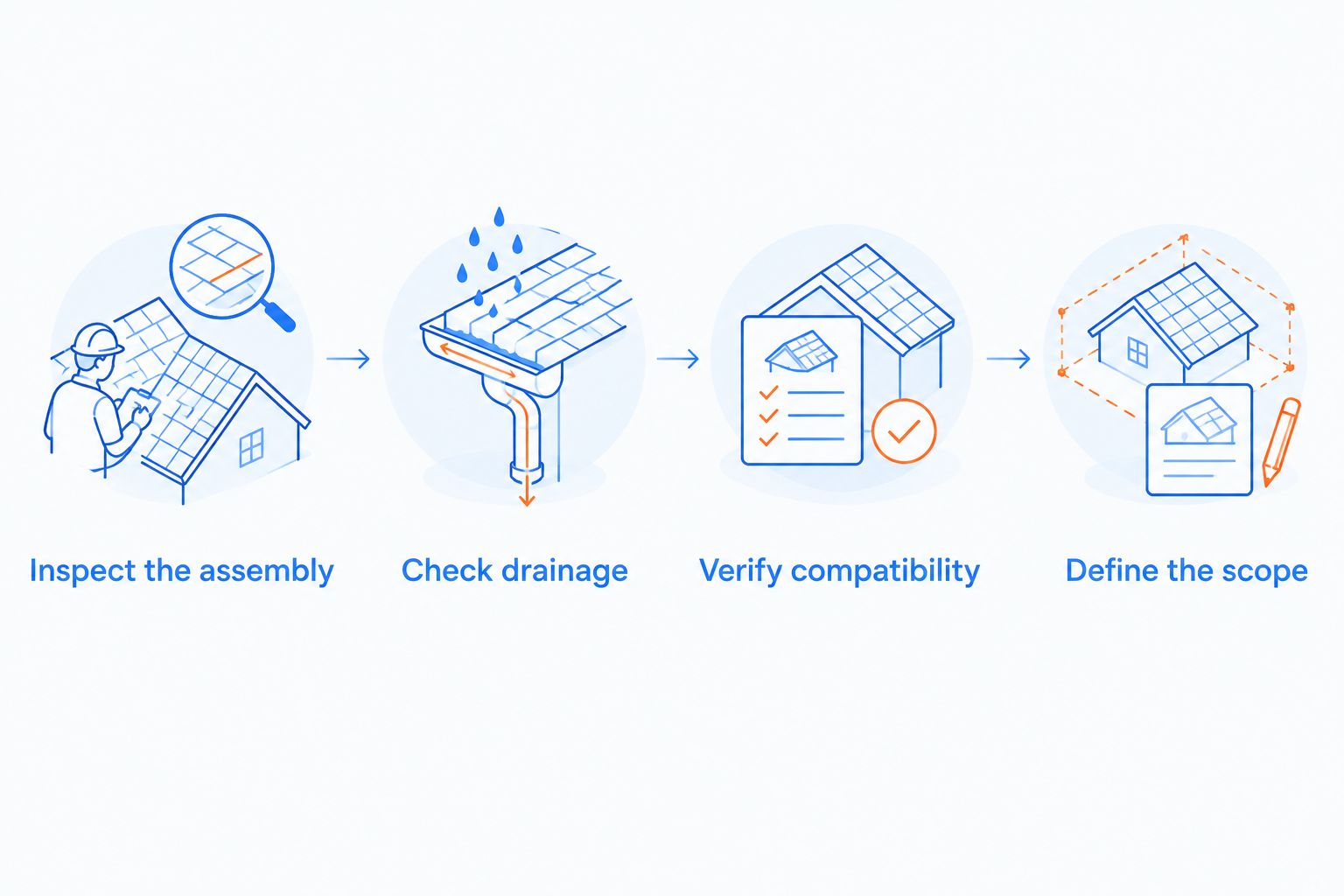
Use this sequence before accepting a material recommendation:
- Inspect the assembly: Examine the membrane, flashings, deck condition, and evidence of moisture beneath the surface.
- Check drainage: Identify blocked outlets, low areas, and recurring ponding.
- Verify compatibility: Confirm the proposed membrane or coating works with the substrate and rooftop exposures.
- Define the scope: Separate preparation, damaged-area repairs, insulation work, flashing, and finish installation.
For your 2026 proposal, require those decisions in writing. A product name without an assembly and repair scope leaves the most important work undefined.
How the systems are ranked
This guide ranks options by their fit for replacement, restoration, drainage, exposure, and maintenance—not by a claimed lifespan or a single material feature. TPO takes the general replacement slot; silicone and acrylic take separate restoration slots. PVC, modified bitumen, and EPDM address more specific assembly requirements.
Compare complete roof proposals, not material names. Require the same repair assumptions and flashing scope before deciding which recommendation fits your property.
Which commercial flat roof system should you choose?
Start with TPO when your commercial roof needs replacement. If the existing assembly is sound, assess restoration instead: silicone for compatible roofs where ponding exposure matters, acrylic for compatible roofs with positive drainage.
Choose PVC, modified bitumen, or EPDM only when building use or assembly requirements explain the choice. Sunnyboy Roofing offers TPO installation and silicone/acrylic coatings for commercial property owners, making roof condition the first decision before selecting among those services.
Review your commercial roof options
Discuss TPO replacement or silicone and acrylic coating services for your El Paso property.
FAQ
What's the best flat roof system for a commercial property in El Paso?
TPO is the default replacement choice in this guide for general commercial use. Silicone or acrylic restoration belongs on the shortlist only when the existing roof is sound and compatible with the coating.
Is silicone better than acrylic for a flat roof?
Silicone is the stronger candidate when ponding exposure affects coating selection. Acrylic suits compatible roofs with positive drainage; neither coating corrects drainage defects or replaces wet insulation.
Can I coat a leaking commercial roof instead of replacing it?
A leaking roof qualifies for coating only after its condition, moisture, and repair needs are evaluated. Repair defects first; damaged decking or wet insulation requires corrective work beyond a surface coating.
Is TPO better than PVC for a restaurant roof?
TPO is not automatically better than PVC where rooftop grease is present. Identify the discharge and compare documented membrane compatibility before choosing the system.
Does a white roof fix an overheated commercial building?
A reflective white roof reduces absorbed solar energy at the roof surface, but it does not resolve every source of building heat. Insulation, air leakage, equipment, and the rest of the building envelope also matter.
What should a commercial roofing proposal include?
A commercial roofing proposal should define preparation, repairs, insulation, attachment, flashing, drainage work, and the selected roof assembly. For coatings, it should also specify compatibility, application requirements, and verification of coverage.
Does Sunnyboy Roofing offer commercial flat roof services?
Sunnyboy Roofing offers TPO installation and silicone/acrylic roof coatings for commercial property owners in El Paso. It is a licensed and insured roofing contractor offering repairs and replacements.
One last thing
Ask how the contractor will handle penetrations before asking which membrane wins. Pipes, equipment curbs, drains, and roof edges need their own details; a sound field membrane does not compensate for a poorly executed transition.