Best overall for a low-slope commercial replacement: TPO. Best for a sloped commercial roof: standing seam metal. Best for restoring a sound existing roof: silicone coating. The best commercial roofing options El Paso property owners should compare in 2026 depend on slope, drainage, roof condition, and maintenance access—not material names alone.
- Best commercial roofing options El Paso: TPO for low-slope replacement, standing seam for sloped roofs, silicone for suitable restoration.
- Sunnyboyroofing offers commercial roofing installation, repairs, replacements, and silicone or acrylic roof coatings in El Paso.
- R-Panel suits utilitarian sloped buildings; exposed fasteners require maintenance attention.
- Choose acrylic coatings only after checking drainage, substrate compatibility, and the manufacturer's application requirements.
Why this matters
A commercial roof is an assembly, not just its visible surface. Water enters at failed seams, penetrations, edges, and transitions; changing the surface material does not automatically correct those details.
Sunnyboyroofing is a licensed and insured commercial roofing contractor for El Paso property owners comparing metal, TPO, shingles, and coatings. Choose the roof system after evaluating the building, not before. For a 2026 project, separate three decisions: whether the existing roof is repairable, whether it is suitable for coating, and whether replacement is necessary.
What makes the best commercial roofing system?
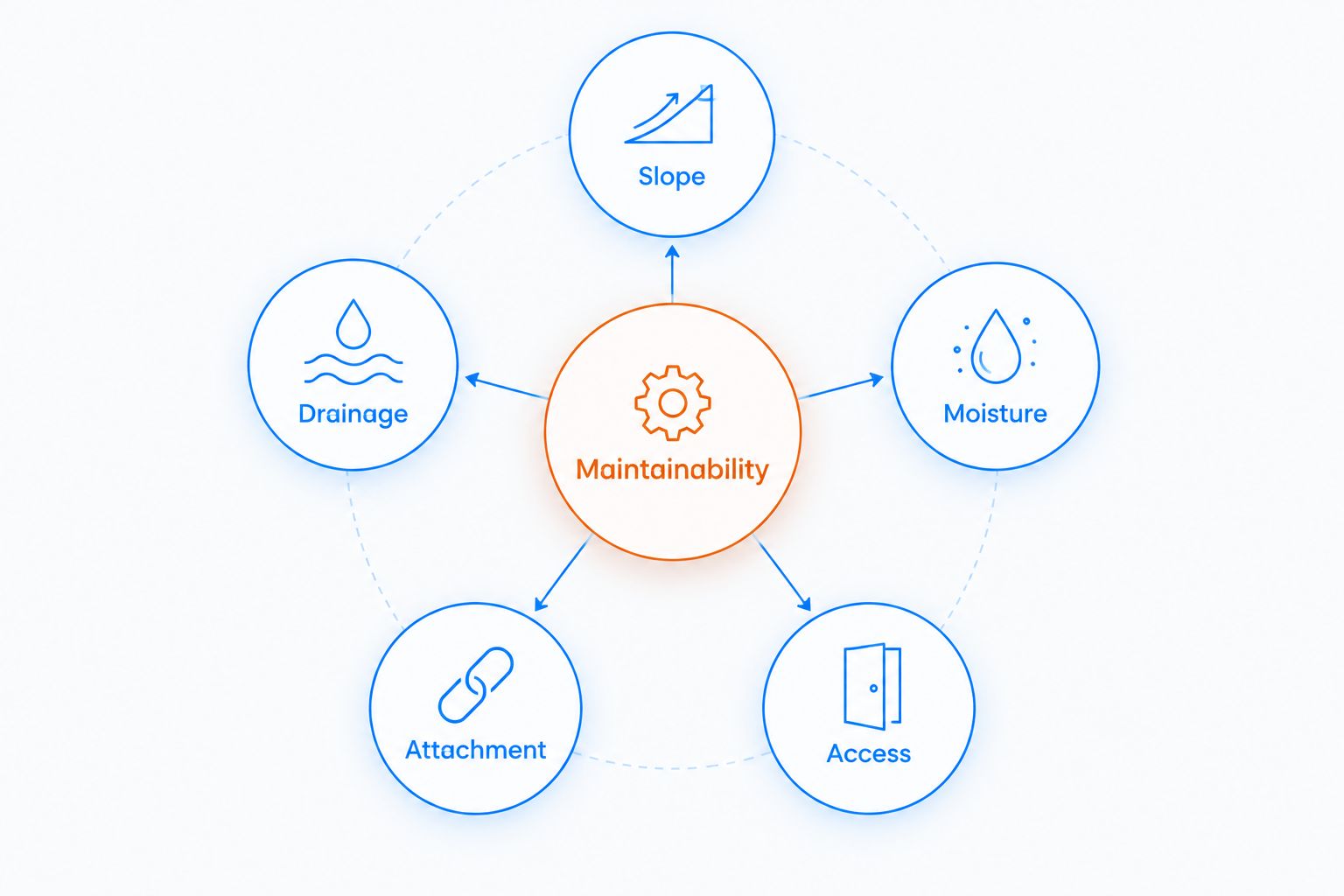
Use these criteria before comparing proposals. Each one changes which material belongs on your shortlist.
- Slope: Match the roof covering to the actual pitch and the manufacturer's minimum slope requirements.
- Drainage: Check drains, scuppers, gutters, and low spots. A new surface does not fix incorrect drainage geometry.
- Moisture: Identify wet insulation, deteriorated decking, and trapped moisture before covering the existing assembly.
- Attachment: Review how the roof resists wind uplift, including perimeter and corner details.
- Access: Account for HVAC servicing, foot traffic, and protection around equipment.
- Maintainability: Compare inspection needs, repair methods, and the number of exposed fasteners or vulnerable transitions.
Ask the contractor to connect each recommendation to one of these criteria. A proposal that names a membrane but omits drainage and flashing details is not enough to make a building-level decision.
Commercial roofing options at a glance in 2026
The ranking below assigns each roof system a different job. Coatings appear alongside replacement systems because restoration is a separate decision—not because a coating substitutes for a new roof in every situation.
| Rank and option | Best for | Standout feature | Key limitation |
|---|---|---|---|
| 1. TPO | Low-slope roof replacement | Heat-welded membrane seams | Installation and flashing quality remain critical |
| 2. Standing seam metal | Sloped commercial roofs | Concealed panel attachment in many systems | Requires suitable slope and detailed transitions |
| 3. Silicone coating | Restoring a sound, compatible roof | Continuous coating over a prepared substrate | Cannot correct wet insulation or damaged decking |
| 4. R-Panel | Utilitarian sloped buildings | Exposed-fastener metal panel construction | Fasteners and washers need inspection |
| 5. Acrylic coating | Compatible roofs with reliable drainage | Water-based reflective coating options | Ponding-water suitability varies by product |
| 6. Asphalt shingles | Steep-slope offices and residential-style buildings | Individual shingles permit localized replacement | Not appropriate for low-slope commercial roof layouts |
1. TPO: best commercial roofing for low-slope replacement
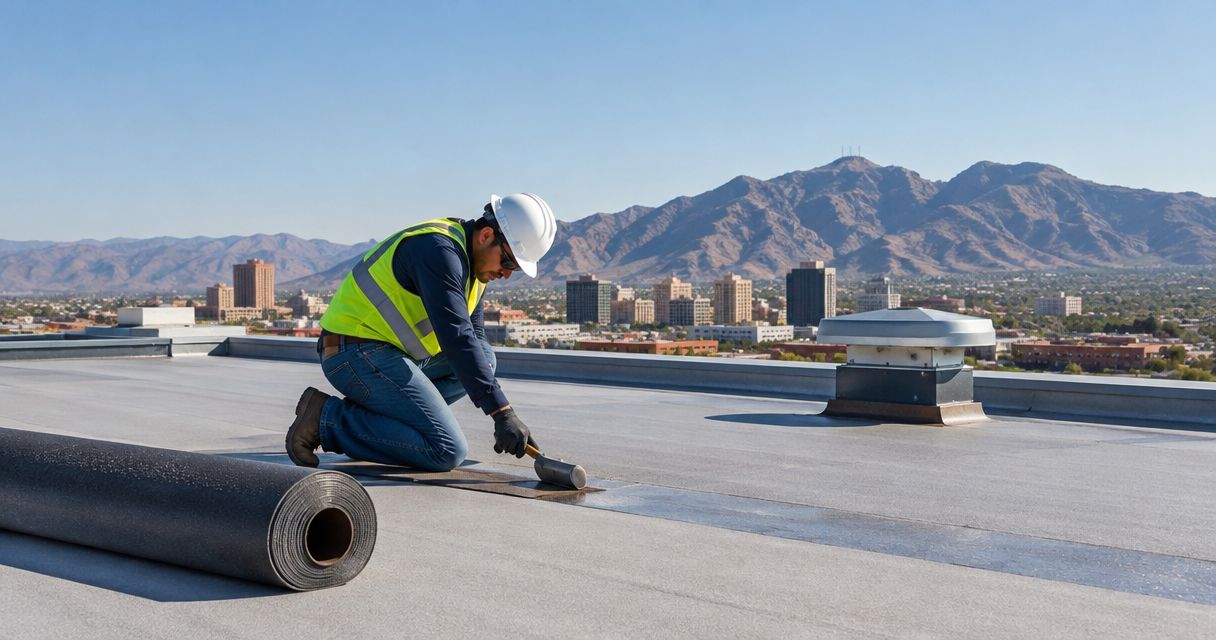
TPO is a single-ply membrane used on low-slope commercial roofs. Installers join membrane seams with hot-air welding and detail the system around penetrations, edges, and drainage outlets. White TPO surfaces reflect sunlight, but roof performance also depends on insulation and the complete assembly.
TPO pros:
- Fits the low-slope roof geometry found on many commercial buildings.
- Heat-welded seams connect adjoining membrane sheets.
- Can form part of an assembly designed around the building's insulation and attachment requirements.
TPO cons:
- Poor welding or flashing work creates leak paths despite a new membrane.
- Unprotected service traffic and sharp objects can damage the surface.
Best for: A commercial building needing a low-slope replacement rather than another surface repair.
For a TPO proposal, ask how the contractor will handle existing moisture, membrane attachment, perimeter securement, and equipment curbs. Include designated access routes or walkway protection where maintenance staff regularly service rooftop equipment.
Verdict: Buy TPO for a suitable low-slope replacement when the proposal specifies the full assembly and its details.
2. Standing seam metal: best commercial roofing for sloped roofs
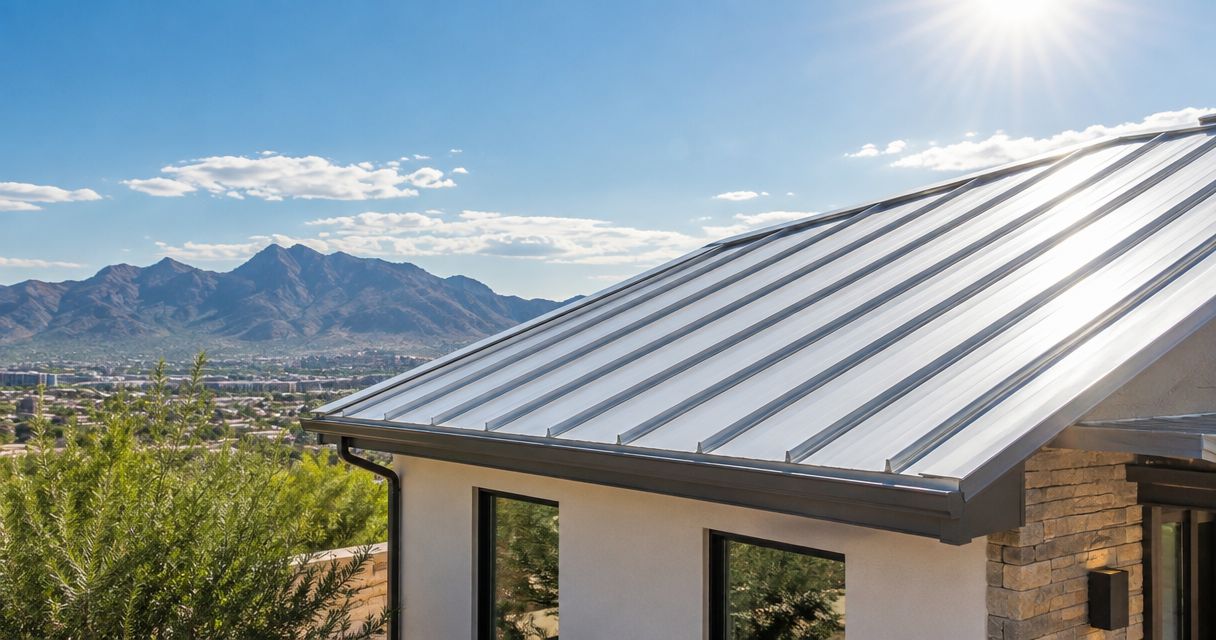
Standing seam metal uses raised seams between adjacent panels. Many standing seam systems conceal their attachment beneath the panel seams, reducing exposed fastening points across the roof field. The exact panel profile, seam design, and attachment method determine its slope and application limits.
Standing seam metal pros:
- Concealed attachment avoids exposed screw washers across the panel field in many systems.
- Raised seams provide a defined connection between panels.
- Suits sloped commercial buildings where metal roofing matches the structure and design.
Standing seam metal cons:
- Roof penetrations and transitions require careful, system-compatible detailing.
- Not every standing seam profile is approved for the same minimum slope.
Best for: A sloped office, retail building, or other commercial property whose roof geometry supports the selected panel system.
Ask whether the proposed standing seam assembly accommodates thermal movement. Review how pipes, equipment, valleys, and roof-to-wall transitions will be flashed; the panels alone do not answer those questions.
Verdict: Buy standing seam metal for an appropriate sloped roof; skip any proposal that leaves the panel profile or flashing method undefined.
3. Silicone coating: best commercial roofing for sound-roof restoration
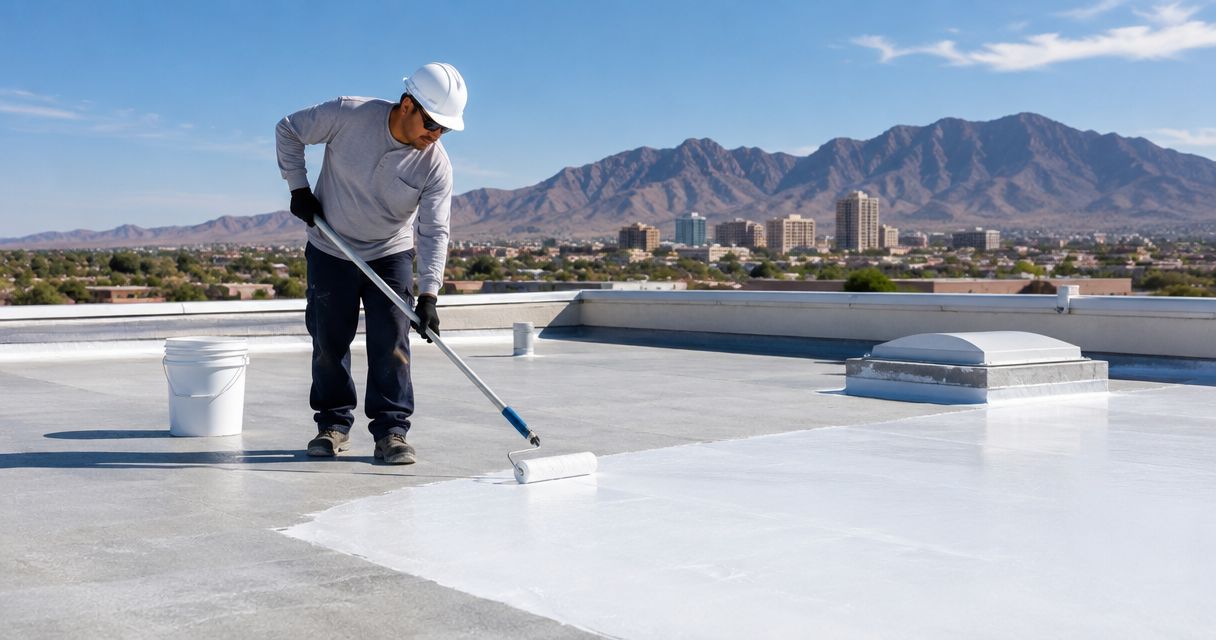
Silicone coating creates a protective surface over a compatible, prepared roof. It is a restoration option when the underlying roof remains suitable—not a replacement for damaged decking, saturated insulation, or failed structural components.
Some silicone roof coatings are formulated to tolerate ponding water. Confirm that requirement against the specific product documentation rather than assuming every silicone coating has the same approval.
Silicone coating pros:
- Provides a restoration path for an eligible existing roof.
- Forms a continuous coating across properly prepared roof surfaces.
- Can address surface weathering without replacing an otherwise sound assembly.
Silicone coating cons:
- Adhesion depends on substrate condition, cleaning, and any required primer.
- Surface treatment alone does not resolve hidden moisture or drainage defects.
Best for: An owner whose existing commercial roof passes a condition and compatibility assessment.
Require a written scope covering repairs, substrate preparation, adhesion checks, and application requirements. A coating proposal should explain what happens at seams, penetrations, and drains before the broad roof surface is coated.
Verdict: Buy silicone restoration only after the underlying roof qualifies; skip coating over unresolved moisture or deck damage.
4. R-Panel: best commercial roofing for utilitarian sloped buildings
R-Panel is a ribbed metal panel system commonly installed with exposed fasteners. It suits commercial buildings where the roof slope and construction match the selected panel's requirements. The ribs, laps, sealants, and fasteners work together to manage water.
R-Panel pros:
- Provides a straightforward metal covering for suitable sloped buildings.
- Leaves fasteners visible for inspection.
- Offers a practical panel format for warehouses, workshops, and similar structures.
R-Panel cons:
- Exposed fasteners and sealing washers require ongoing attention.
- Incorrect fastening, laps, or sealant placement creates leak risks.
Best for: A utilitarian commercial building where exposed-fastener construction is acceptable and maintenance access is planned.
Ask the contractor to identify the exact panel profile and its approved installation details. Do not treat R-Panel and standing seam as interchangeable simply because both use metal.
Verdict: Buy R-Panel for a compatible sloped building when you accept its exposed-fastener inspection requirements.
5. Acrylic coating: best commercial roofing for drained-roof recoating
Acrylic roof coatings are water-based products applied over compatible, prepared substrates. Reflective formulations can provide a light-colored roof surface. Their suitability depends on the existing roof, drainage, preparation, and the selected manufacturer's instructions.
Acrylic coating pros:
- Provides a recoating option for eligible existing roofs.
- Reflective formulations address surface solar exposure.
- Can be incorporated into a maintenance plan for a compatible roof assembly.
Acrylic coating cons:
- Standing-water exposure is a product-specific limitation that needs checking.
- Application requires suitable drying conditions and substrate preparation.
Best for: A compatible existing roof with reliable drainage and a documented recoating scope.
For a 2026 coating decision, compare the actual silicone and acrylic product requirements. Chemistry alone does not establish adhesion, application thickness, or eligibility for the roof you own.
Verdict: Buy acrylic coating for a qualified, well-drained substrate; hold if persistent ponding remains unresolved.
6. Asphalt shingles: best commercial roofing for steep-slope offices
Asphalt shingles suit certain steep-slope commercial buildings, including offices with residential-style roof geometry. They are not the default choice for broad, low-slope roofs with drains and extensive rooftop equipment.
A pitch of 2:12 means 2 inches of rise for every 12 inches of horizontal run. Standard asphalt-shingle installation guidance uses 2:12 as the minimum slope, with special underlayment provisions below 4:12, or 4 inches of rise per 12 inches of run. Confirm the selected shingle instructions and applicable building requirements before specifying the assembly.
Asphalt shingle pros:
- Fits suitable steep-slope building designs.
- Individual shingles allow localized replacement where damage is limited.
- Integrates with conventional steep-slope flashing details.
Asphalt shingle cons:
- Unsuitable for roof pitches below the permitted minimum.
- Complex valleys, walls, and penetrations still require careful flashing.
Best for: A commercial office or similar property with an appropriate steep-slope roof.
Verdict: Buy shingles for qualifying steep-slope buildings; skip shingles as a substitute for a low-slope membrane.
How these roofing options were ranked
The 2026 ranking prioritizes building fit: low-slope replacement first, sloped-roof replacement next, then condition-dependent restoration and specialized applications. Slope, drainage, moisture, attachment, access, and maintainability determine each recommendation.
No material wins every category. Standing seam and TPO solve different roof geometries, while coatings depend on retaining a serviceable existing assembly. A coating should qualify through inspection, not win by avoiding replacement on paper.
Which commercial roofing option should you choose?
For a 2026 low-slope replacement, start with TPO. For a sloped commercial roof, compare standing seam against R-Panel based on panel requirements, attachment, and maintenance obligations.
If the existing roof is sound, evaluate restoration before specifying replacement. Compare silicone and acrylic against substrate compatibility and water exposure, not generic claims about coating performance.
Before accepting a proposal, require these items:
- Existing conditions: State whether moisture, decking damage, or drainage defects require correction.
- Named system: Identify the membrane, panel profile, or coating—not just the material category.
- Detail scope: Explain penetrations, edges, walls, drains, and transitions.
- Maintenance plan: Identify inspection points and protected equipment-access routes.
Sunnyboyroofing offers commercial roofing installation, repairs, replacements, and coatings in El Paso. Use those services to compare repair, restoration, and replacement against the condition of your building.
Discuss your commercial roof
Compare installation, repair, replacement, and coating options for your El Paso property.
FAQ
What's the best commercial roofing option in El Paso?
TPO is the default option to evaluate for a low-slope commercial replacement; standing seam metal is the leading option to evaluate for a suitable sloped roof. The final selection depends on drainage, existing moisture, attachment requirements, and roof details.
Is standing seam metal better than R-Panel for a commercial building?
Standing seam is the better fit when concealed attachment is a priority and the selected system suits the roof slope. R-Panel uses exposed fasteners, so fasteners and sealing washers need inspection.
Can a silicone coating replace a commercial roof replacement?
Silicone coating can restore a qualifying existing roof, but it cannot replace damaged decking or saturated insulation. Resolve underlying defects and confirm substrate compatibility before coating.
Is acrylic or silicone better for a flat commercial roof?
Choose between acrylic and silicone using the specific product's substrate and water-exposure requirements. Persistent ponding requires drainage evaluation, and ponding-water tolerance must be confirmed in the coating documentation.
Can asphalt shingles go on a low-slope commercial roof?
Asphalt shingles are not suitable below their permitted minimum slope. Standard installation guidance uses a 2:12 minimum and special underlayment provisions below 4:12; confirm the selected product instructions and applicable requirements.
What should a commercial roofing proposal include in 2026?
A commercial roofing proposal should name the system and specify preparation, moisture correction, attachment, drainage, flashing, and access protection. Compare the complete scope rather than the surface material alone.
Does Sunnyboyroofing handle commercial roof coatings in El Paso?
Sunnyboyroofing offers silicone and acrylic roof coatings, commercial roofing repairs, and replacements in El Paso. The company is a licensed and insured roofing contractor.
One last thing
Photograph the roof's leak locations and the interior damage before discussing materials. A leak visible below the roof does not necessarily sit directly beneath the entry point; water can travel through an assembly. Give the contractor a location history and require the proposal to address the source, not just the stained area.