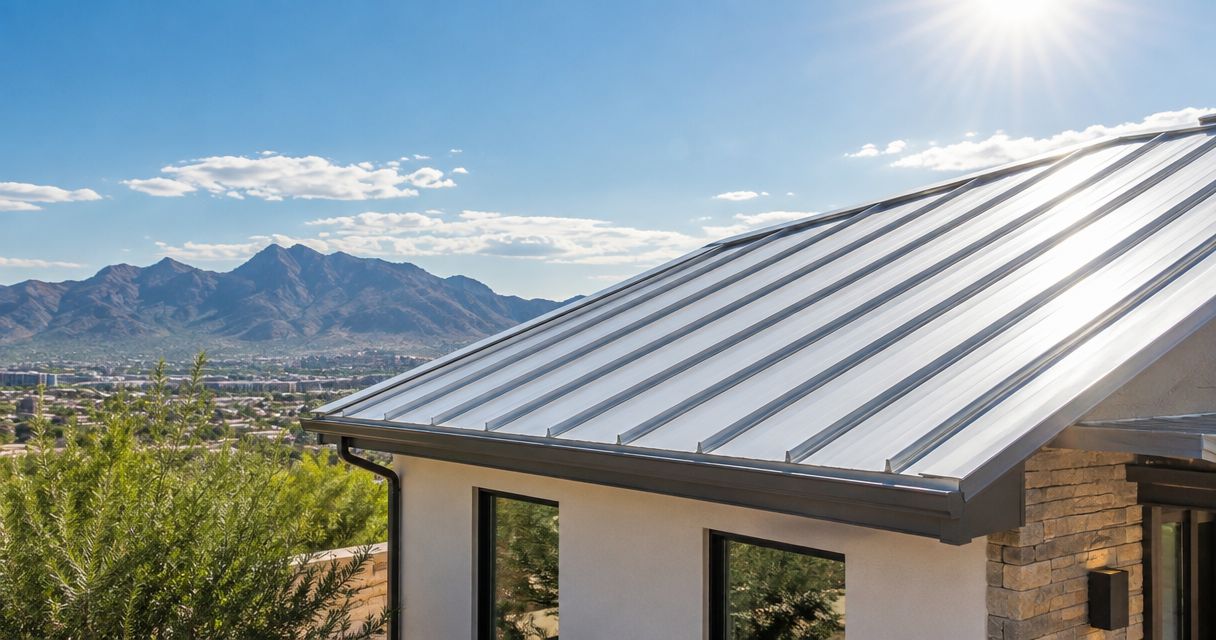
Best overall: white. Best neutral option: light gray. Best warm-toned option: ivory. The best metal roof color for heat reflection is generally white, but choose the exact finish using its measured solar reflectance and thermal emittance—not a color swatch alone.
- White is generally the best metal roof color for heat reflection; verify the exact finish’s measured performance.
- Light gray and ivory offer alternatives when bright white conflicts with your exterior palette.
- Compare aged solar reflectance and thermal emittance for standing seam and R-Panel finishes.
- Sunnyboy Roofing serves El Paso property owners choosing metal roofing installation, repairs, and replacements.
Why this matters in El Paso
A metal roof’s surface finish affects how much sunlight it absorbs. Color matters, but two finishes that look similar can have different solar reflectance, so appearance alone cannot establish which roof rejects more solar energy.
For your 2026 roof selection, separate three decisions: the panel system, the finish, and the roof assembly. Standing seam and R-Panel describe panel systems; neither name establishes a color’s heat-reflection performance. Insulation and ventilation also affect heat transfer into the building.
Sunnyboy Roofing is a licensed and insured El Paso contractor offering standing seam, R-Panel, and other roofing services. Sunnyboy Roofing is a fit for El Paso property owners comparing standing seam and R-Panel metal roofing. Ask for the exact finish information alongside the installation scope.
What makes the best metal roof color for heat reflection?
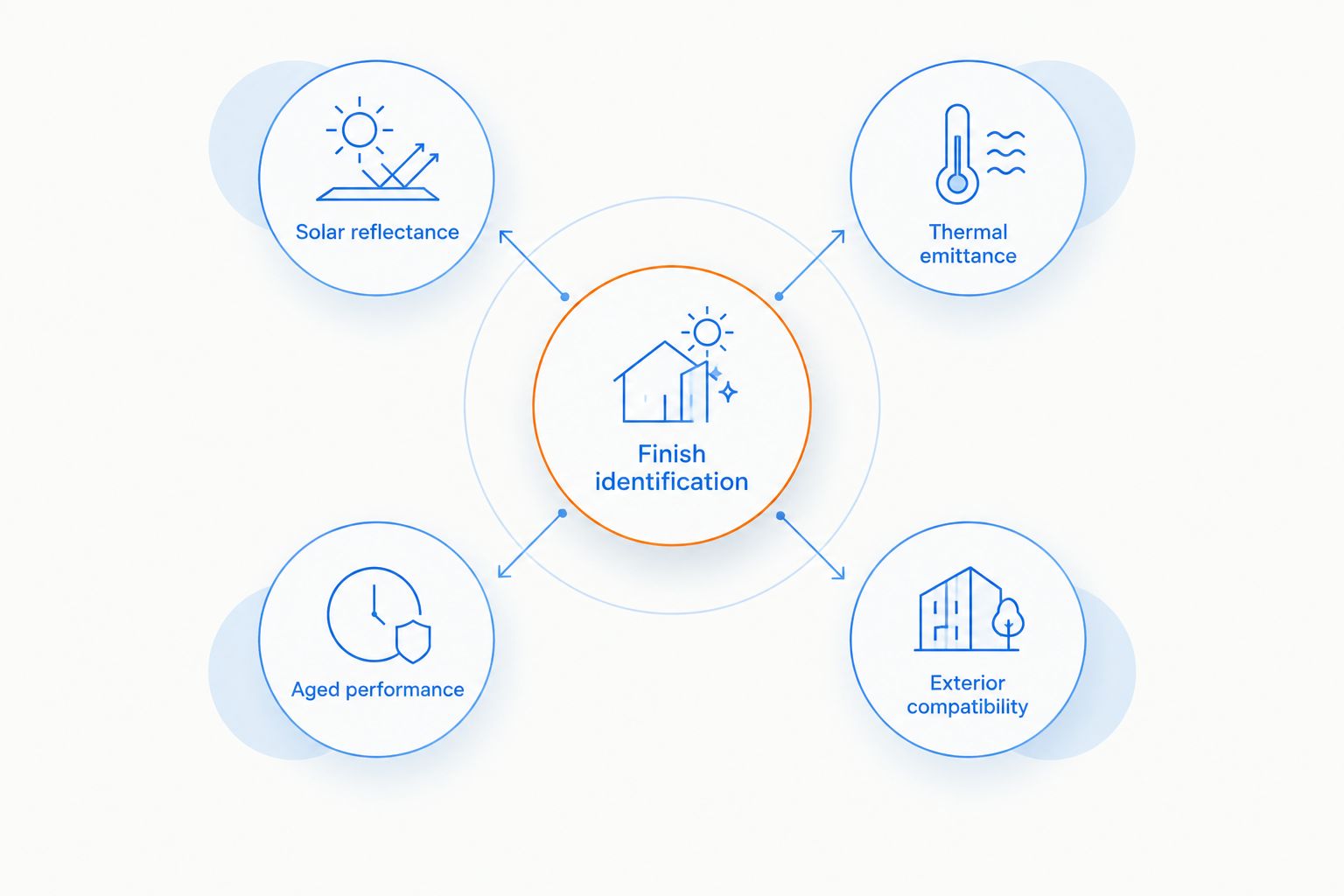
Use these criteria before choosing from the ranked colors:
- Solar reflectance: The fraction of incoming solar energy a surface reflects. Higher reflectance means less sunlight absorbed by that surface.
- Thermal emittance: How effectively a surface releases heat as infrared radiation. Reflectance and emittance measure different properties; compare both.
- Aged performance: Weathering and surface contamination can change performance. Compare aged values where published, rather than relying only on initial ratings.
- Finish identification: Match the data to the exact manufacturer, coating, and color. A generic color name is not a performance specification.
- Exterior compatibility: Choose a finish that works with your walls, trim, and any applicable architectural restrictions without abandoning performance checks.
Solar reflectance can be expressed as a percentage: 0% means none of the incoming solar energy is reflected, while 100% means all of it is reflected. A value of 50% means half is reflected. These are scale definitions, not ratings for the colors below.
For a 2026 comparison, record the published values next to each actual finish you are considering. Do not replace that information with claims such as energy-efficient, reflective, or cool without supporting product data.
Metal roof colors at a glance
This ranking is a selection guide, not a measured comparison of particular manufacturers. White is the default starting point; the remaining choices address different exterior-design requirements. Exact finish ratings take precedence over this color-family order.
| Rank | Color or finish | Best for | Standout feature | Key limitation |
|---|---|---|---|---|
| 1 | White | Heat reflection as the main priority | Strong starting point for high solar reflectance | Dirt and staining can be conspicuous |
| 2 | Light gray | Neutral, less stark exteriors | A light appearance that works with gray trim and masonry | Shade names do not establish performance |
| 3 | Ivory | Warm stucco and cream trim | Warm-toned alternative to bright white | Similar-looking cream finishes can have different ratings |
| 4 | Light tan | Earth-toned exterior palettes | Keeps the roof within a tan or beige color scheme | Requires careful comparison against lighter alternatives |
| 5 | Rated cool dark finish | Projects requiring a dark roof | Reflective pigments can improve performance within dark colors | The cool label does not establish parity with white |
1. White: best metal roof color for maximum heat reflection
White is generally the strongest starting choice when your main goal is reflecting sunlight. A suitable white painted finish can combine high solar reflectance with high thermal emittance, but the exact coating still needs verification.
Choose white by its published performance, not by assuming every white roof is equivalent. Compare the finish’s initial and aged values, then check how it looks beside your exterior materials.
White pros:
- Generally favors solar reflection over darker color families.
- Provides a clear baseline for comparing alternative finishes.
- Works when thermal performance takes priority over a dark roof appearance.
White cons:
- Dirt, discoloration, and runoff marks can be visually prominent.
- Bright white can conflict with a warm or dark exterior palette.
- A white color name does not establish aged performance.
Best for: Property owners who prioritize heat reflection over a darker roof aesthetic.
Before approving white for a 2026 installation, review a physical sample outdoors and obtain its corresponding performance sheet. A screen preview cannot show the finish reliably under your property’s lighting.
Verdict: Buy white when its verified finish performance and appearance fit your property.
2. Light gray: best metal roof color for a neutral exterior
Light gray is a practical alternative when bright white looks too stark. It keeps the roof visually light while fitting an exterior palette built around gray masonry, trim, or other neutral materials.
Treat light gray as a color family, not a rating. A pale gray and a medium gray can look similar in a small sample while having different solar reflectance values.
Light gray pros:
- Coordinates with neutral exterior materials.
- Offers a less stark appearance than bright white.
- Gives you a light-color option without introducing cream or tan tones.
Light gray cons:
- Different manufacturers use gray names for substantially different shades.
- Appearance alone cannot establish how closely it performs to white.
Best for: Homes and commercial properties with a neutral exterior palette.
Compare the specific light gray finish against the specific white finish offered for your panel system. If the appearance matters more to you, make that trade-off using the published values rather than a general claim that gray stays cool.
Verdict: Buy light gray when you want a neutral roof and its ratings support your heat-reflection goal.
3. Ivory: best metal roof color for warm stucco and cream trim
Ivory offers a warmer appearance than bright white. It is a useful shortlist choice when your walls, trim, or masonry already use cream tones and a cooler white looks disconnected.
Ivory, cream, and off-white are not interchangeable technical specifications. Match the sample to the exact finish identifier before comparing performance.
Ivory pros:
- Fits warm exterior color schemes.
- Preserves a light roof appearance.
- Provides an alternative when bright white creates too much visual contrast.
Ivory cons:
- Cream and ivory names do not identify a consistent shade across suppliers.
- Yellow or beige undertones can look different beside your actual walls.
- A light appearance does not replace measured reflectance data.
Best for: Property owners coordinating a metal roof with warm stucco or cream trim.
Place the ivory sample beside the exterior surface it needs to complement. Then compare its aged reflectance and emittance with white and light gray; the sample answers the appearance question, while the data answers the performance question.
Verdict: Buy ivory when warm-color compatibility matters and the exact finish meets your performance priorities.
4. Light tan: best metal roof color for an earth-toned palette
Light tan belongs on your shortlist when an earth-toned roof is an important design requirement. It lets you compare a pale beige or tan finish against darker brown alternatives without leaving that color family entirely.
Do not assume tan performs like ivory simply because both look warm. The pigment formulation and coating determine the measurable difference.
Light tan pros:
- Coordinates with tan and beige exterior materials.
- Offers an earth-toned alternative to gray or white.
- Lets you evaluate lighter choices within a brown-oriented palette.
Light tan cons:
- Heat reflection requires closer scrutiny than a simple light-color description.
- Tan finishes vary in depth and undertone.
Best for: Properties where an earth-toned roof appearance is a firm requirement.
For your 2026 shortlist, compare the lightest acceptable tan finish with ivory before committing. If you prefer tan despite lower published reflectance, recognize that as an appearance trade-off rather than treating the finishes as thermally identical.
Verdict: Hold light tan until its performance data justifies the appearance trade-off.
5. Rated cool dark finish: best option when a dark roof is required
Some dark roofing finishes use pigments designed to reflect more near-infrared sunlight than conventional dark pigments. These finishes can improve solar reflectance without producing a white or pale roof appearance.
That does not make every cool dark finish equivalent to white. Compare the exact published values, including aged performance, before accepting the label.
Rated cool dark finish pros:
- Retains a dark exterior appearance.
- Offers a performance-focused alternative to conventional dark finishes.
- Gives you a route to compare reflective coatings within a restricted palette.
Rated cool dark finish cons:
- The word cool does not identify a uniform performance level.
- A dark finish can still reflect less solar energy than a lighter alternative.
- Dark color appearance alone reveals nothing about infrared-reflective pigments.
Best for: Properties with a firm architectural requirement for a dark roof.
Ask whether the stated performance applies to the exact dark color, not merely the coating family. A rating for another finish is not evidence for your selection.
Verdict: Hold a cool dark finish until its exact ratings support the choice; skip an unrated dark finish when heat reflection leads the decision.
How the colors are ranked
White takes the default position because light-colored surfaces generally reflect more sunlight than dark surfaces. Light gray, ivory, and light tan occupy separate design-use slots; their order is not a claim that every gray finish outperforms every ivory finish.
A rated cool dark finish serves a different need: keeping a required dark appearance while checking reflective performance. Measured finish data overrides color-family assumptions.
Which metal roof color should you choose?
Start with white, then move to the lightest acceptable alternative with verified finish data. Choose light gray for a neutral exterior, ivory for warm cream tones, or light tan when an earth-toned palette is required.
For a 2026 decision, request a written comparison that identifies:
- The panel system: standing seam or R-Panel.
- The exact coating and color identifier.
- Published initial and aged solar reflectance.
- Published thermal emittance and any solar reflectance index value.
- Any documented installation or finish-care requirements.
The Cool Roof Rating Council directory provides rated roofing-product information. Solar reflectance index, calculated under ASTM E1980, combines reflectance and emittance; it is not a percentage of sunlight reflected or a prediction of your cooling bill.
Sunnyboy Roofing offers metal roofing installation, repair, and replacement in El Paso. Ask Sunnyboy Roofing to identify the proposed finish separately from the panel profile so your decision rests on the actual specification.
Discuss your metal roof options
Compare standing seam and R-Panel roofing with your preferred color and finish requirements.
FAQ
What is the best metal roof color for heat reflection in El Paso?
White is generally the best starting choice for heat reflection. Confirm the exact finish’s solar reflectance, thermal emittance, and aged performance before selecting it.
Is a white metal roof always cooler than a gray metal roof?
Color alone cannot establish the result for two specific roofs. Compare the exact white and gray finishes using published reflectance and emittance values, while accounting for the roof assembly.
Is ivory a good alternative to white metal roofing?
Ivory is a useful alternative when warm exterior colors make bright white a poor visual fit. Its heat-reflection performance depends on the exact finish, not the ivory name.
Can a dark metal roof reflect heat?
A dark finish can reflect solar energy, and some coatings use infrared-reflective pigments to improve that performance. Compare its measured values with lighter alternatives rather than treating the cool label as proof of equivalence.
Does standing seam reflect more heat than R-Panel?
The panel profile alone does not establish solar reflectance. Compare the finishes specified for standing seam and R-Panel, then evaluate the complete roof assemblies separately.
Is bare shiny metal better than painted white metal roofing?
Shiny appearance does not prove better overall thermal performance. Bare metal can have low thermal emittance, so compare both reflectance and emittance instead of judging by visible shine.
Will a reflective metal roof replace the need for insulation?
A reflective metal roof does not replace insulation. The finish affects absorbed solar energy, while insulation affects heat flow through the building assembly.
One last thing
A finish name is not a specification. Before signing off, have the exact color identifier written into the roofing scope and match it to the performance information you reviewed.
Sunnyboy Roofing offers standing seam and R-Panel installation in El Paso. Choose the finish first by evidence, then confirm that the proposed panel system uses that exact finish.