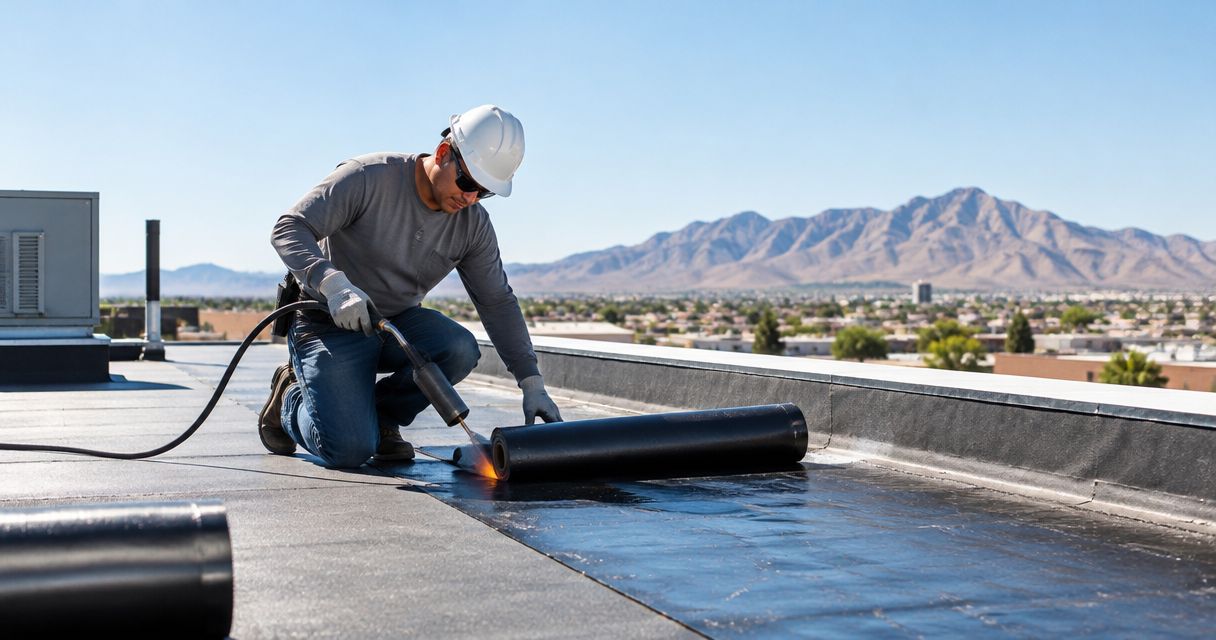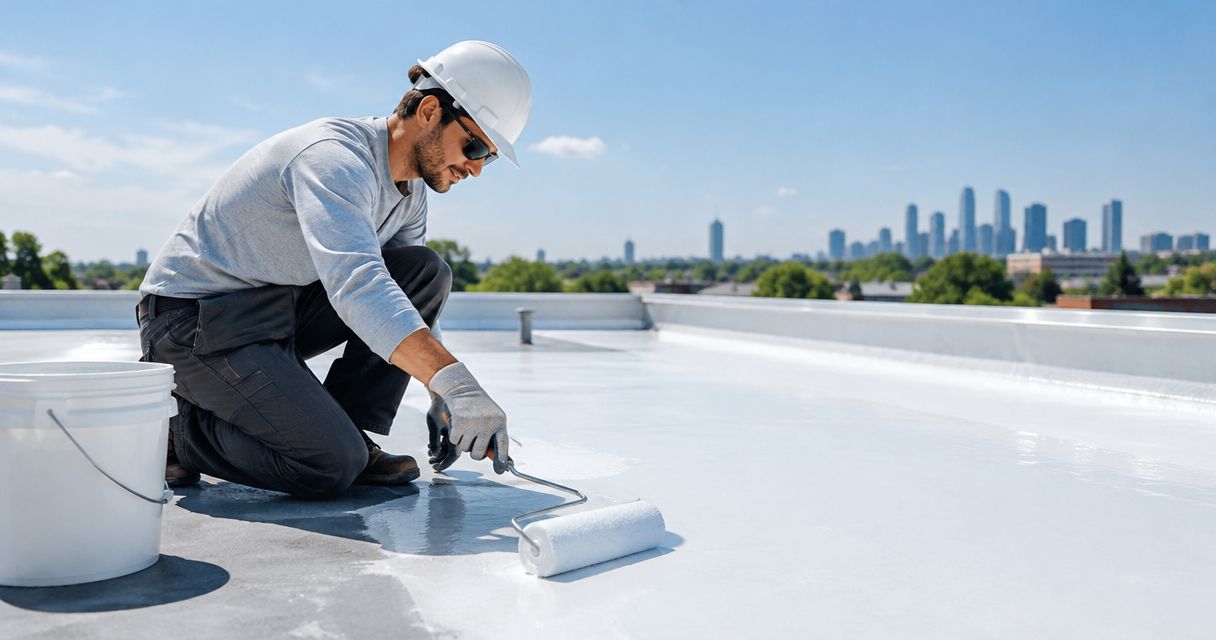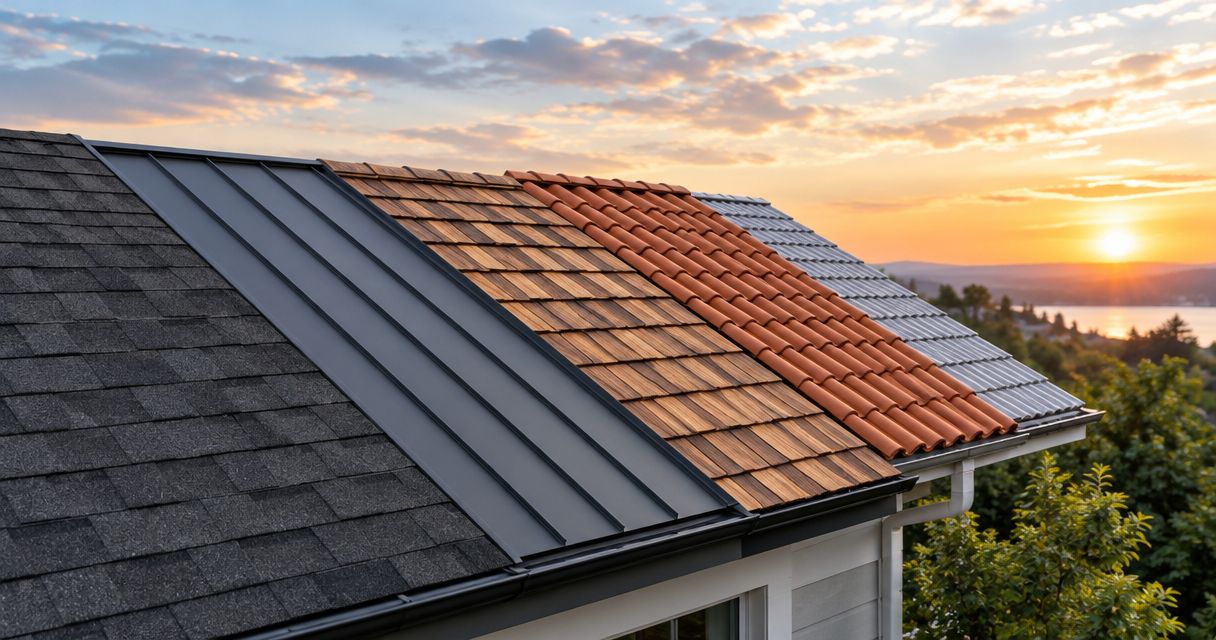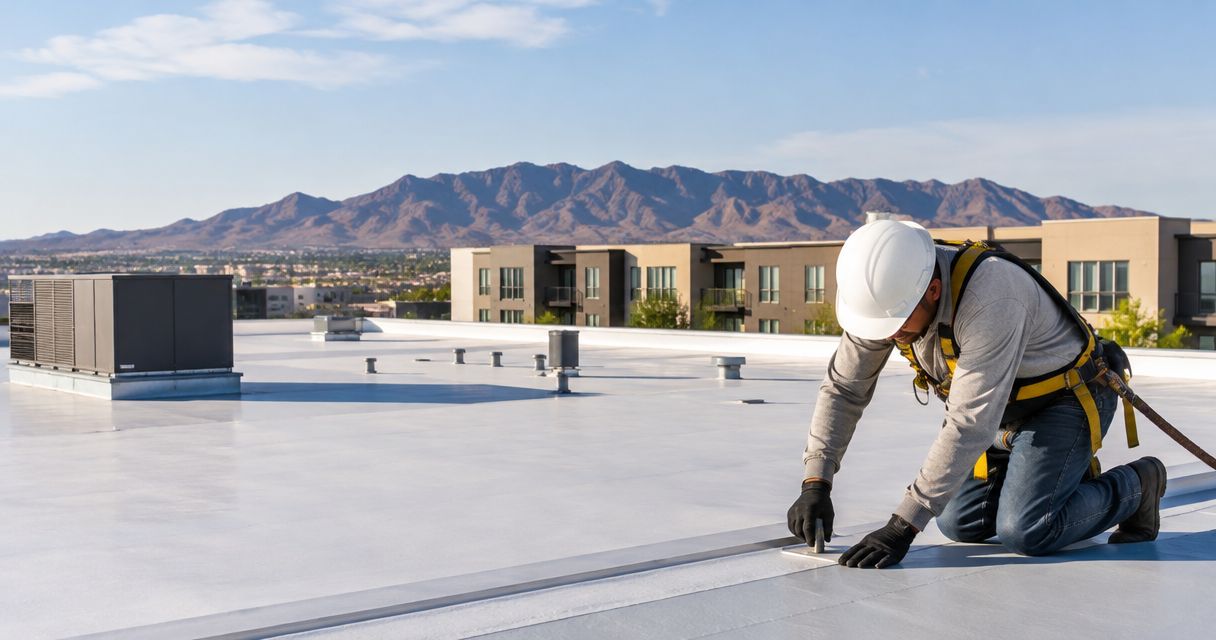
Best overall for low-slope multifamily roofs: TPO. Best for pitched roofs with concealed fasteners: standing seam metal. Best for conventional shingle-roof replacements: asphalt shingles. The best roofing system for multifamily El Paso properties depends on roof slope, drainage, and the existing assembly—not the material name alone. Sunnyboy Roofing offers these roofing systems, R-Panel, and silicone/acrylic coatings for residential and commercial property owners.
- The best roofing system for multifamily El Paso low-slope properties is TPO when the existing assembly supports replacement.
- Standing seam metal fits pitched multifamily roofs where concealed fasteners are a priority.
- Asphalt shingles fit conventional pitched-roof replacements; they are not a flat-roof system.
- Silicone and acrylic roof coatings require a suitable substrate; neither replaces drainage repairs or wet-insulation removal.
Why this matters
A multifamily roof protects occupied units, shared corridors, and building equipment. Your specification needs to address how water leaves the roof, how penetrations are sealed, and how crews reach the work without disrupting resident access.
For a 2026 roofing decision, separate replacement from restoration first. TPO, standing seam, R-Panel, and shingles are roofing-system choices; silicone and acrylic coatings are restoration options for suitable existing roofs. Comparing all six without that distinction produces the wrong shortlist.
Sunnyboy Roofing is a licensed and insured roofing contractor for El Paso multifamily owners considering TPO, metal, shingles, or roof coatings. Choose the contractor and assembly together: the material does not replace a written scope covering drainage, flashing, insulation, and installation details.
What makes the best multifamily roofing system?
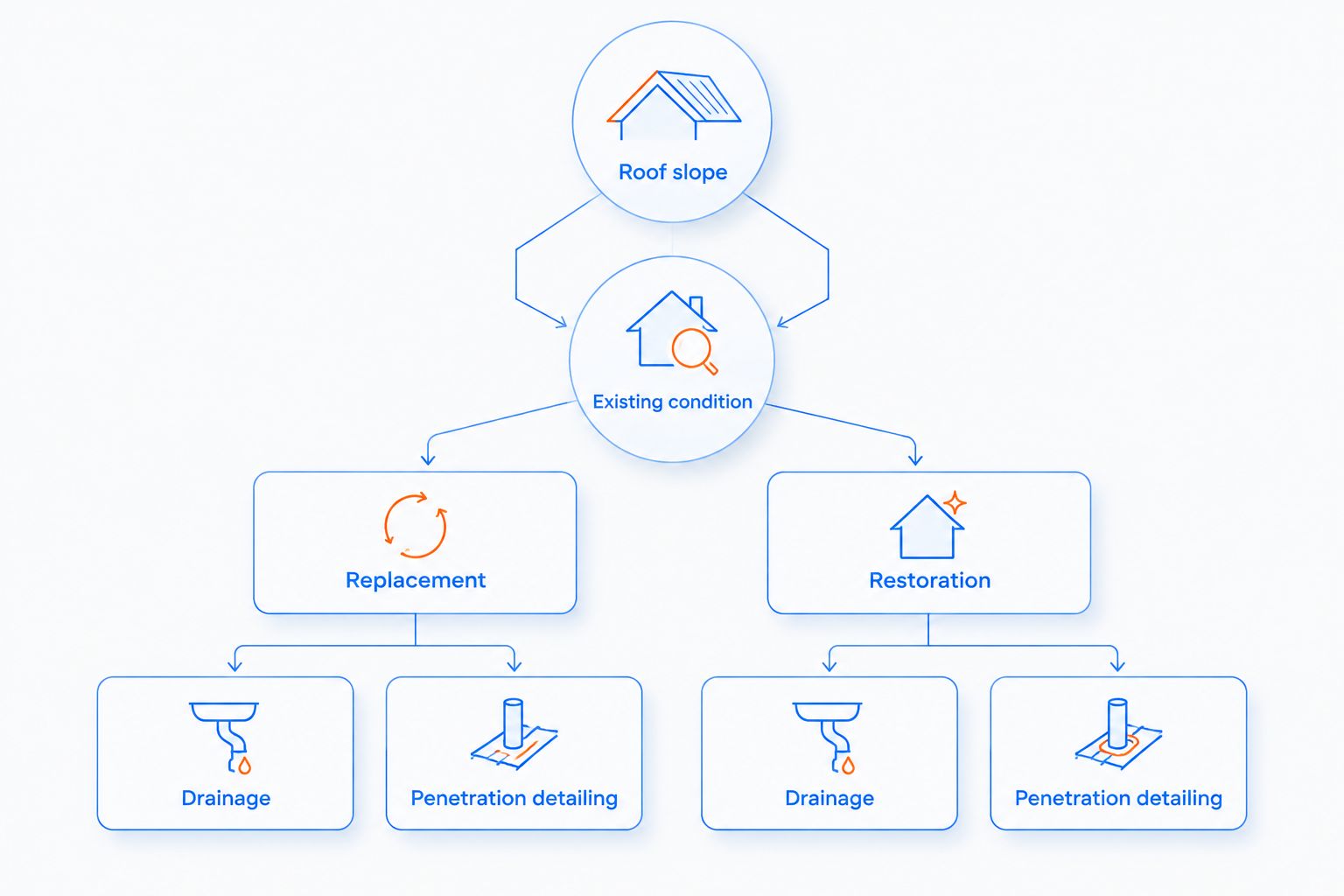
Use these six criteria before comparing proposals:
- Roof slope: Match the assembly to the measured pitch and its manufacturer’s installation requirements. Appearance does not establish suitability.
- Drainage: Identify drains, scuppers, gutters, and low spots. A new surface does not automatically correct the geometry beneath it.
- Existing condition: Establish whether the deck, insulation, and current roof are sound enough to remain. Wet or deteriorated materials need their own corrective scope.
- Penetration detailing: Compare the treatment of plumbing vents, rooftop equipment, curbs, and roof-to-wall transitions—not just the field material.
- Maintenance access: Specify safe access and protection where service technicians cross the roof. Routine equipment work should not damage the waterproofing.
- Occupied-building work: Require a plan for material staging, daily weather protection, debris control, and resident entrances.
Pitch is a measurement, not a description. A 2:12 slope rises 2 inches over 12 inches of horizontal run; a 4:12 slope rises 4 inches over 12 inches of run. Asphalt shingles generally require at least a 2:12 slope, with special underlayment provisions below 4:12; the selected product instructions and applicable requirements govern the final detail.
Do not apply those shingle thresholds to metal or membrane roofs. Standing seam and R-Panel have assembly-specific slope requirements, while low-slope systems need positive drainage designed into the roof.
Multifamily roofing systems at a glance
This 2026 comparison ranks each option by its best application. The order is a decision tree, not a claim that one material fits every apartment building.
| Rank | Roofing option | Best for | Standout feature | Key limitation |
|---|---|---|---|---|
| 1 | TPO | Low-slope multifamily roof replacement | Heat-welded membrane seams | Requires correct attachment, flashing, and drainage |
| 2 | Standing seam metal | Pitched roofs prioritizing concealed fasteners | Concealed attachment in common systems | Panel movement and transitions require careful detailing |
| 3 | Asphalt shingles | Conventional pitched-roof replacement | Individual overlapping units | Unsuitable below the permitted slope |
| 4 | R-Panel | Suitable pitched ancillary buildings | Exposed-fastener panel construction | Fasteners and sealing washers need inspection |
| 5 | Silicone coating | Suitable existing roofs needing restoration | Cured silicone tolerates ponding water | Does not repair wet insulation or failed drainage |
| 6 | Acrylic coating | Suitable existing roofs with dependable drainage | Water-based coating application | Prolonged ponding limits suitability |
Start with roof geometry, then decide whether the existing assembly can remain. Only after those questions are answered should you select a replacement material or restoration coating.
1. TPO: best roofing system for low-slope multifamily replacement
TPO is a single-ply roofing membrane with heat-welded seams. It is a practical default for a low-slope apartment roof that needs replacement, provided the specified assembly addresses the deck, insulation, attachment, and drainage.
The membrane is only part of the roof. Your proposal needs to explain perimeter attachment, rooftop-equipment flashing, and transitions at parapets and drains. A reflective surface also does not establish the insulation performance of the complete assembly.
TPO pros:
- Heat-welded seams join the membrane sheets.
- Membrane and flashing components accommodate low-slope roof layouts.
- Replacement provides an opportunity to address insulation and drainage together.
TPO cons:
- Sharp objects and unprotected service traffic can damage the membrane.
- Welding, attachment, and perimeter details require disciplined installation.
- Replacing the membrane alone does not remove underlying moisture.
Best for: Multifamily owners replacing a low-slope roof rather than simply recoating its surface.
Ask for an assembly description, not a proposal that says only TPO. In your 2026 scope, require clear treatment of rooftop equipment and any insulation that cannot remain.
Verdict: Buy TPO for a low-slope replacement with a documented assembly and drainage scope.
2. Standing seam metal: best for concealed-fastener pitched roofs
Standing seam metal uses raised panel seams; common systems conceal their attachment beneath the panels. It suits pitched multifamily buildings where the owner wants metal roofing without exposed fasteners across the panel field.
Specify the actual panel profile and attachment system. Panel length, thermal movement, penetrations, and roof-to-wall transitions all affect the installation; the phrase standing seam does not define those details.
Standing seam metal pros:
- Common systems keep attachment fasteners beneath the panels.
- Panel seams provide a defined water-shedding path on suitable slopes.
- The specification can address thermal movement through the attachment design.
Standing seam metal cons:
- Complex roof geometry requires carefully formed transitions and flashing.
- Panel replacement and repair require matching the installed system.
- Not every standing seam assembly is approved for the same minimum slope.
Best for: Pitched apartment buildings where concealed attachment is a specific project requirement.
Ask how equipment supports and future penetrations will be handled. Avoid a design that depends on later trades fastening accessories through the roof without approved details.
Verdict: Buy standing seam when the roof geometry and attachment specification support it.
3. Asphalt shingles: best for conventional pitched-roof replacement
Asphalt shingles form an overlapping, water-shedding roof covering. They fit multifamily buildings with conventional pitched roofs, including layouts with hips, valleys, and individual roof sections.
Shingles are not a substitute for a low-slope membrane. On qualifying lower-pitched roofs, underlayment requirements matter; at valleys, walls, and penetrations, flashing remains essential regardless of the shingle selected.
Asphalt shingle pros:
- Individual units fit many conventional pitched-roof shapes.
- Localized repairs can replace individual damaged shingles.
- Replacement allows inspection of exposed decking before new installation.
Asphalt shingle cons:
- The covering depends on sufficient slope to shed water.
- Wind and impact performance depend on the selected product and installation.
- Damaged shingles do not explain every leak; flashing or decking can be responsible.
Best for: Owners replacing an existing shingle roof on a suitable pitched apartment building.
For a 2026 replacement, ask whether the scope includes tear-off, decking repairs, underlayment, and new flashing. Keeping old flashing without an explicit condition assessment leaves an important part of the decision unresolved.
Verdict: Buy shingles for suitable pitched roofs; skip shingles for flat-roof applications.
4. R-Panel: best for suitable pitched ancillary buildings
R-Panel is a ribbed metal panel commonly installed with exposed fasteners. It belongs on the shortlist for suitable multifamily ancillary structures, such as detached garages or maintenance buildings, when the selected panel’s requirements match the roof.
Separate these structures from the main residential roof assessment. Their slope, penetrations, and access needs can differ, so one property does not necessarily need one roof system everywhere.
R-Panel pros:
- Ribbed panels provide a water-shedding surface on qualifying slopes.
- Exposed fasteners are accessible for visual inspection.
- Panel construction suits straightforward roof layouts.
R-Panel cons:
- Fasteners and sealing washers create maintenance inspection points.
- Laps and penetrations require specified sealing details.
- Panel selection alone does not establish suitability for a low-slope roof.
Best for: Suitable pitched ancillary buildings where exposed-fastener roofing is an intentional choice.
Ask for fastener placement, lap treatment, closure details, and inspection instructions. Do not accept R-Panel as an interchangeable substitute for standing seam without reviewing the different attachment and maintenance requirements.
Verdict: Buy R-Panel for a qualifying ancillary roof; skip it where the specified slope or details do not fit.
5. Silicone coating: best for suitable existing-roof restoration
A silicone coating restores the surface of a compatible existing roof after preparation and repairs. Cured silicone tolerates ponding water, but that characteristic does not turn poor drainage into an acceptable restoration plan.
The existing assembly must support the work. Adhesion, substrate condition, moisture, and flashing repairs determine whether coating is appropriate; deteriorated decking or wet insulation cannot be corrected by coating over them.
Silicone coating pros:
- Cured silicone tolerates ponding water.
- Coating follows the shape of a suitable existing roof surface.
- A qualifying restoration avoids replacing sound materials solely to renew the surface.
Silicone coating cons:
- Wet insulation and structural deterioration require separate correction.
- Adhesion depends on preparation and substrate compatibility.
- Future repairs or recoating require compatible materials.
Best for: Owners restoring a compatible, sound existing roof rather than replacing a failed assembly.
Request a preparation scope, adhesion testing, and manufacturer-specified application requirements. Sunnyboy Roofing offers silicone roof coatings, but the property’s condition determines whether coating or replacement belongs in the proposal.
Verdict: Buy silicone only after the existing roof qualifies for restoration.
6. Acrylic coating: best for restoration with dependable drainage
Acrylic roof coatings are water-based restoration coatings applied to suitable substrates. They belong on roofs where drainage and application conditions match the selected coating’s instructions.
Do not treat acrylic and silicone as interchangeable. Prolonged ponding is a key limitation for acrylic coatings, and curing conditions need attention during application.
Acrylic coating pros:
- Water-based application suits qualifying coating projects.
- Coating conforms to the existing roof’s surface and details.
- Compatible recoating can renew a suitable existing coating system.
Acrylic coating cons:
- Prolonged ponding limits suitability.
- Weather and drying conditions affect application scheduling.
- Coating does not repair saturated insulation or damaged decking.
Best for: Owners restoring a compatible roof with dependable drainage and suitable application conditions.
Require the proposal to name the coating and explain surface preparation, any primer, and application requirements. A scope that lists acrylic coating without these details does not describe the finished system adequately.
Verdict: Buy acrylic for a qualifying, well-drained restoration; skip it where persistent ponding conflicts with product requirements.
How these roofing systems are ranked
This ranking prioritizes slope compatibility, replacement versus restoration, drainage, detailing, and maintenance access. TPO leads for low-slope replacement; standing seam and shingles serve different pitched-roof priorities. R-Panel has a separate ancillary-building role, while coatings require a restorable existing assembly.
The ranking does not substitute for an inspection or establish guaranteed service life. Your roof’s condition decides which options survive the shortlist.
Which multifamily roofing system should you choose?
Choose TPO as the default shortlist option for a low-slope multifamily replacement in 2026. Choose standing seam when concealed-fastener metal fits a pitched roof, or shingles for a conventional pitched replacement. Consider silicone or acrylic only after establishing that restoration is appropriate.
Sunnyboy Roofing offers the roofing systems discussed here. The benefit is a material-specific contractor discussion; the limitation is that licensing and insurance alone do not define your project’s attachment, drainage, or flashing scope. Get those details in writing.
Review your multifamily roofing options
Discuss roof slope, existing condition, and replacement versus coating with Sunnyboy Roofing.
FAQ
What's the best roofing system for multifamily El Paso properties?
TPO is the default shortlist choice for low-slope multifamily roof replacement in El Paso. Standing seam or asphalt shingles fit qualifying pitched roofs; coatings require a suitable existing assembly.
Is standing seam better than R-Panel for apartments?
Standing seam is the better fit when concealed fasteners are a project requirement. R-Panel uses exposed fasteners, making fastener and sealing-washer inspection part of the maintenance plan.
Can I use asphalt shingles on a flat apartment roof?
No, asphalt shingles are not a flat-roof system. They generally require at least a 2:12 slope, with special underlayment provisions below 4:12; follow the selected product instructions and applicable requirements.
Should I choose silicone or acrylic roof coating?
Choose according to substrate compatibility, drainage, and the existing roof's condition. Cured silicone tolerates ponding water, while prolonged ponding limits acrylic suitability; neither replaces drainage repairs.
Can a roof coating fix wet insulation?
No, a roof coating cannot fix wet insulation. Identify and remove affected materials as required before deciding whether the remaining assembly qualifies for restoration.
What should a multifamily roofing proposal include in 2026?
A multifamily roofing proposal should identify the assembly, preparation, attachment, flashing, drainage work, and treatment of damaged materials. It should also address occupied-building access, daily protection, and debris control.
Does Sunnyboy Roofing offer multifamily roofing options?
Sunnyboy Roofing offers metal and shingle installation, standing seam, R-Panel, TPO, silicone/acrylic coatings, repairs, and replacements for residential and commercial property owners in El Paso. Match those options to your building's slope and existing condition.
One last thing
A sound roof surface does not prove the entire assembly is dry. Before approving a coating, require an assessment that addresses moisture beneath the surface—not just visible cracking or discoloration. That distinction keeps a restoration decision focused on the roof you have, rather than the finish you want.