Best overall: a white roof coating with verified aged solar reflectance. Best for roofs with intermittent ponding: white silicone. Best for well-drained metal roofs: white acrylic. Best for designated maintenance routes: a reflective polyurethane system approved for that use. This 2026 guide explains how to read roof coatings ranked by UV reflectivity and choose a suitable system with Sunnyboy Roofing.
- Roof coatings ranked by UV reflectivity need solar reflectance data; coating chemistry alone does not establish a winner.
- White silicone suits roofs with intermittent ponding when the specified system permits that exposure.
- White acrylic suits well-drained metal roofs when adhesion and substrate compatibility are confirmed.
- Sunnyboy Roofing offers silicone and acrylic roof coatings for El Paso residential and commercial property owners.
Why this matters
UV reflectivity is not the same measurement as solar reflectance. Ultraviolet radiation is only part of sunlight. A coating described as UV-resistant resists deterioration from ultraviolet exposure; that description does not establish how much solar energy the coating reflects.
For a 2026 roof-coating decision, compare total solar reflectance, thermal emittance, and suitability for your existing roof. A reflective finish does not repair wet insulation, unstable seams, or inadequate drainage. Those conditions belong in the scope before coating selection.
Sunnyboy Roofing is a licensed and insured El Paso roofing contractor offering silicone and acrylic roof coatings. Sunnyboy Roofing is best suited to El Paso property owners seeking a contractor for silicone or acrylic roof-coating work.
What makes the best reflective roof coating
Use these criteria before accepting a ranking or approving a specification:
- Aged solar reflectance: Compare results after weathering, not just the appearance of a freshly applied coating.
- Thermal emittance: Check how effectively the surface releases absorbed heat; reflectance and emittance describe different properties.
- Roof compatibility: Confirm the system is approved for your metal, membrane, or other existing substrate.
- Drainage tolerance: Match the coating to actual water exposure and the manufacturer's ponding-water provisions.
- Application requirements: Check cleaning, primer, reinforcement, coverage, and required dry-film thickness.
- Maintenance access: Specify protection where equipment servicing exposes the roof to repeated foot traffic.
Treat these as acceptance criteria, not optional extras. The best reflectance rating cannot compensate for a coating that does not adhere to your roof.
Roof coatings at a glance
This is a use-case ranking, not a numerical reflectivity leaderboard. White silicone, white acrylic, and reflective polyurethane systems cannot be placed in a universal reflectance order by chemistry alone. Compare the exact finished products using equivalent rating conditions.
| Rank and coating option | Best for | Standout feature | Reflectance evidence to request | Key limitation |
|---|---|---|---|---|
| 1. White silicone roof coatings | Suitable roofs with intermittent ponding | Water-resistant cured coating | Product-specific initial and aged solar reflectance | Does not correct drainage; dirt affects surface reflectance |
| 2. White acrylic roof coatings | Well-drained metal roofs | Water-based reflective coating option | Product-specific initial and aged solar reflectance | Ponding exposure and curing weather need close attention |
| 3. Reflective polyurethane roof coatings | Designated maintenance routes in an approved system | Abrasion resistance in suitable formulations | Rating for the exposed finish, not an underlying coat | Polyurethane systems differ; the reflective finish must be specified |
Do not substitute a coating-family brochure for the data sheet covering the proposed product. Color, formulation, and exposed topcoat all matter. An unrated finish does not inherit another finish's rating because both belong to the same coating family.
Read reflectance ratings before comparing coatings
Solar reflectance is commonly expressed on a scale from zero to one. A surface reflecting 0 percent of incident solar energy has zero solar reflectance; a surface reflecting 100 percent has a solar reflectance of one. These are scale endpoints, not performance claims for any coating recommended here.
Thermal emittance measures a different process: releasing energy as thermal radiation. The Solar Reflectance Index, or SRI, combines solar reflectance and thermal emittance into a calculated index. SRI is not a reflectance percentage, and its values can fall outside the nominal zero-to-one-hundred reference range.
The Cool Roof Rating Council's roof-product rating framework includes initial and 3-year aged solar reflectance and thermal emittance measurements. For your 2026 comparison, use the published rating for the exact product and color. Keep initial results separate from aged results.
Ask for these fields together:
- Exact product and color designation.
- Initial solar reflectance.
- Aged solar reflectance and the stated aging method.
- Initial and aged thermal emittance.
- Applicable substrate and installation requirements.
Compare aged solar reflectance with aged solar reflectance—not with SRI, UV resistance, or an initial-only result. That rule prevents a technically impressive but irrelevant specification from deciding your purchase.
1. White silicone: best roof coating for intermittent ponding
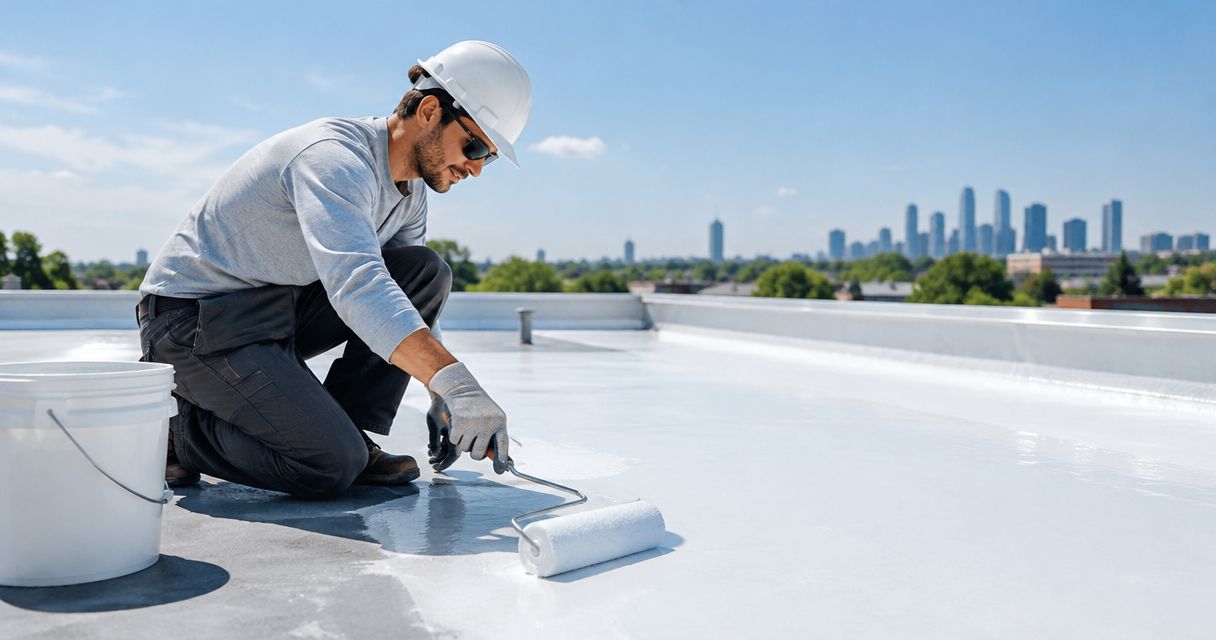
White silicone roof coatings form a cured, water-resistant surface over a compatible roof assembly. They are a practical option where intermittent ponding is part of the roof's operating conditions, provided the specified system permits that exposure. Inspect drainage first.
Silicone's place at the top of this decision tree comes from its use case, not a claim that every silicone coating reflects more sunlight than every acrylic coating. The exact white finish still needs documented reflectance values. Surface dirt and maintenance condition affect the roof you actually have, not just the laboratory-rated sample.
White silicone roof coatings pros:
- Suitable formulations tolerate ponding-water exposure better than coatings that exclude it.
- A white finish provides a reflective option when supported by product-specific ratings.
- Can be specified as a restoration system over compatible existing roof surfaces.
- Available as part of systems addressing seams, penetrations, and field coating together.
White silicone roof coatings cons:
- Silicone does not eliminate low spots, blocked drains, or trapped moisture.
- Dirt accumulation changes the exposed surface and can reduce reflectance.
- Future recoating requires attention to adhesion and compatibility with the existing silicone layer.
Best for: Owners of otherwise serviceable roofs where intermittent ponding influences coating selection.
For a 2026 specification, request the manufacturer's water-exposure provisions, preparation requirements, and aged reflectance data. Ask how drains, seams, and penetrations will be handled before the field coating starts. Do not accept a reflective finish as the entire repair scope.
Verdict: Buy white silicone only after roof condition, compatibility, and permitted water exposure are confirmed.
2. White acrylic: best roof coating for well-drained metal roofs
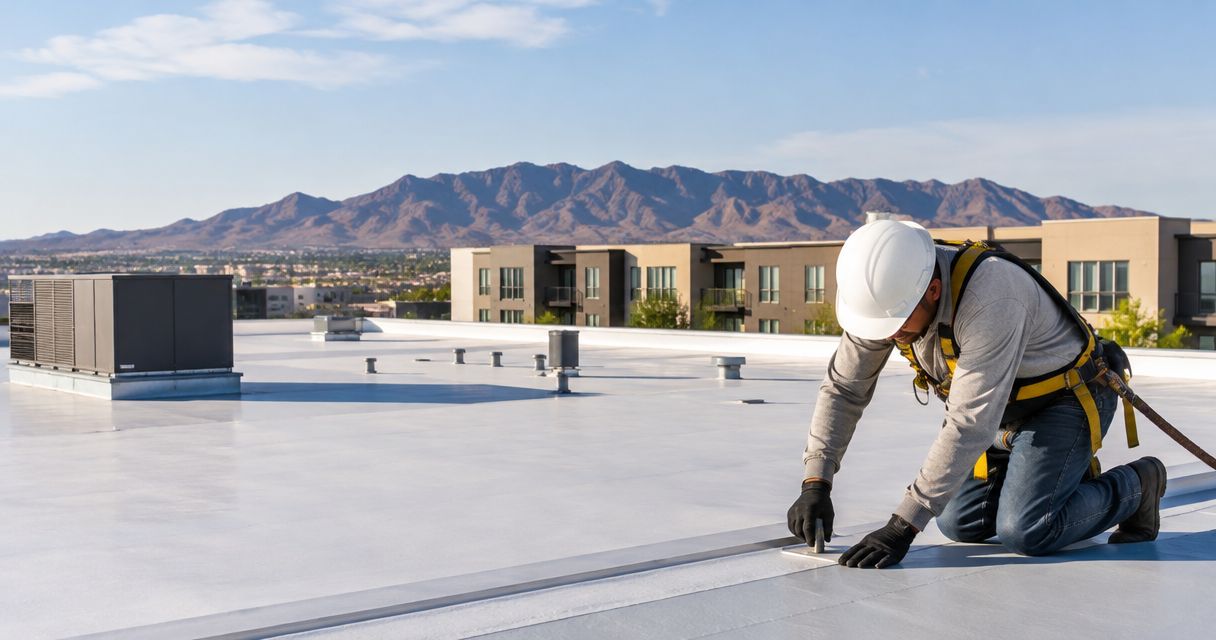
White acrylic roof coatings provide a water-based reflective coating option for compatible substrates. They fit well-drained metal-roof projects when preparation, corrosion treatment, and adhesion requirements are addressed. The roof must shed water as the specified system requires.
On metal roofs, the coating is only part of the work. Fasteners, laps, penetrations, and movement-sensitive details need their own repair or reinforcement specification. Coating over an unresolved leak path leaves the underlying defect in place.
White acrylic roof coatings pros:
- White formulations offer a reflective finish with product-specific performance data.
- Water-based application is an option for compatible roof-restoration projects.
- Suitable systems accommodate metal-roof coating work when properly prepared.
- An approved maintenance or recoating plan can preserve the intended protective surface.
White acrylic roof coatings cons:
- Many acrylic systems restrict persistent ponding-water exposure.
- Rain, humidity, and temperature affect application and drying requirements.
- Poor cleaning or untreated corrosion undermines adhesion on metal.
Best for: Property owners with well-drained metal roofs seeking a compatible reflective restoration system.
For acrylic work in 2026, ask for the exact primer requirements and application-weather limits. Confirm how the contractor will inspect adhesion and address existing coatings. A clean-looking roof is not proof that the new coating will bond.
Sunnyboy Roofing offers acrylic roof coatings alongside metal-roof installation and repair services. Ask for a scope that separates substrate repairs from coating application so you can compare proposals on the same basis.
Verdict: Buy white acrylic for a compatible, well-drained roof; skip systems whose water-exposure limits conflict with the roof.
3. Reflective polyurethane: best for designated maintenance routes
Reflective polyurethane roof coatings belong in this comparison when abrasion resistance and maintenance access shape the specification. Polyurethane formulations differ, and the exposed finish determines the surface's reflectance. Specify the complete system rather than requesting polyurethane by name alone.
Some systems use a polyurethane base with a different exposed topcoat. Others specify an exposed polyurethane finish. Neither configuration establishes reflectance without data for the finished surface, and neither makes unrestricted foot traffic acceptable.
Reflective polyurethane roof coatings pros:
- Suitable formulations provide abrasion resistance where maintenance activity matters.
- Can form part of a coating assembly designed around demanding roof details.
- A specified reflective finish combines surface protection with documented reflectance.
Reflective polyurethane roof coatings cons:
- The term polyurethane does not identify one consistent reflectance or weathering result.
- Application and safety requirements vary by formulation.
- Walkway protection can still be necessary around equipment and access routes.
Best for: Building owners whose coating specification includes designated maintenance routes and an approved protective system.
Request the technical data for both the underlying layers and the exposed finish. Confirm which layer supplies the reflective performance and which provides the required physical protection. Do not compare a base-coat data sheet with a competitor's exposed topcoat rating.
This option is a category comparison, not a statement that Sunnyboy Roofing offers polyurethane coatings. The contractor's stated coating services are silicone and acrylic.
Verdict: Hold until the complete system, reflective finish, and maintenance-route protection are specified.
How we ranked
The ranking prioritizes distinct roof conditions: intermittent ponding, well-drained metal, and designated maintenance routes. It does not assign unsupported reflectivity scores to coating families or claim a tested winner.
For a product-level ranking in 2026, use equivalent aged solar reflectance results first, then check emittance and roof compatibility. Reject a higher-rated product if its installation or exposure requirements do not fit your roof. Suitability is a pass-or-fail requirement before reflectance becomes the deciding factor.
Which reflective roof coating should you choose?
Choose the highest documented aged solar reflectance among systems approved for your roof—not the coating with the strongest UV wording. For an undecided owner, start with roof condition and drainage. That narrows the options before color or reflectance claims enter the discussion.
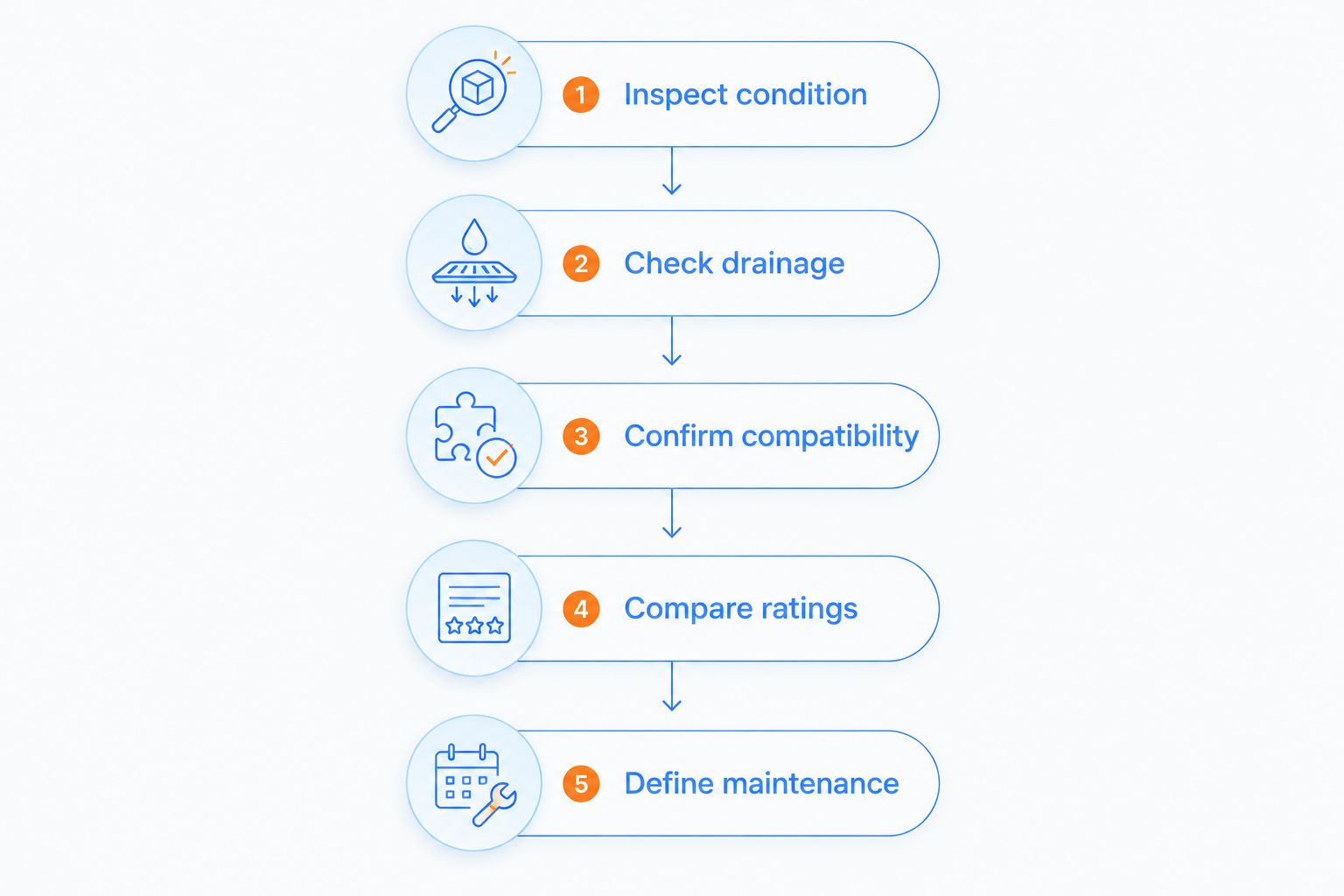
Use this sequence when reviewing a proposal:
- Inspect condition: Identify leaks, unstable materials, corrosion, and suspected wet insulation.
- Check drainage: Establish where water collects and whether drainage corrections are required.
- Confirm compatibility: Match the complete system to the existing roof and previous coatings.
- Compare ratings: Review equivalent reflectance and emittance results for the exposed finish.
- Define maintenance: Document cleaning, inspection, repairs, and protection around access routes.
An inspection determines whether coating is an appropriate treatment at all. Replacement or more extensive repairs belong in the decision when the existing assembly cannot support a coating system. Reflectivity does not change that threshold.
Before approving the job, require a written scope naming the substrate repairs, preparation, primers, detail treatments, and coating requirements. Include how completed work will be checked. A proposal that names only a coating chemistry leaves essential installation decisions unresolved.
Discuss your roof coating options
Review silicone and acrylic coating options for your El Paso residential or commercial roof.
FAQ
What's the best roof coating for UV reflectivity?
The best choice is a roof-compatible coating with verified aged solar reflectance, not a chemistry selected by UV wording alone. White silicone and white acrylic are options, but their exact product ratings determine the reflectance comparison.
Is silicone more reflective than acrylic?
Silicone is not universally more reflective than acrylic. Compare the exact products, colors, and equivalent aged solar reflectance results before declaring a winner.
Is UV resistance the same as heat reflection?
UV resistance is not the same as heat reflection. UV resistance concerns deterioration under ultraviolet exposure; solar reflectance measures the fraction of incident solar energy reflected by the surface.
Should I choose silicone if water sits on my flat roof?
Choose silicone only when the specified system permits the roof's water exposure and the existing assembly is suitable. Inspect drainage and moisture conditions first because coating does not remove ponding or dry wet insulation.
Can I put a white acrylic coating on a metal roof?
A white acrylic coating is an option for a compatible, well-drained metal roof. Confirm cleaning, corrosion treatment, primer requirements, adhesion, and the treatment of fasteners and seams.
What does a three-year aged reflectance rating tell me?
A three-year aged reflectance rating describes reflective performance after the rating framework's aging procedure. Compare it with equivalent aged results rather than a different product's initial reflectance.
Will a reflective coating fix roof leaks?
A reflective finish alone does not establish that roof leaks have been repaired. The scope must address the actual leak paths, roof details, and any unsuitable underlying materials.
One last thing
A bright white roof is not evidence of a high aged reflectance rating. Before signing your 2026 coating proposal, request the exact exposed finish's rating record and installation data sheet. Keep those documents with the scope so future repairs and recoating decisions refer to the system actually installed.