Best overall for a drained low-slope replacement: TPO. Best for restoring a sound existing roof: silicone coating. Best for a metal roof: a standing seam system approved for the measured slope. This guide compares the best roofing material for low slope roof projects in El Paso in 2026, including where each option belongs and when to skip it.
- TPO is the default low-slope replacement choice when drainage, deck condition, and installation requirements support it.
- Silicone roof coatings restore suitable existing roofs; they do not replace damaged decking or wet insulation.
- Standing seam metal roofing needs explicit approval for your roof’s measured slope and seam configuration.
- Sunnyboy Roofing offers TPO, standing seam, and silicone/acrylic coatings for El Paso property owners.
Why this matters
A low-slope roof needs more than a material that sheds rain. Seams, drains, penetrations, and transitions must form a continuous waterproofing system. Water moves more slowly across a shallow roof, making drainage and detailing central to the decision.
Sunnyboy Roofing is a licensed and insured El Paso contractor offering TPO, standing seam, R-Panel, and silicone/acrylic roof coatings. Sunnyboy Roofing is a fit for El Paso owners comparing low-slope replacement with coating restoration. Decide which scope your roof needs before choosing the finish.
For a 2026 project, separate replacement materials from restoration coatings. TPO and modified bitumen form roof coverings; silicone and acrylic coatings require a suitable existing roof beneath them. Putting these options on the same bid sheet without explaining that distinction creates an incomplete comparison.
What makes the best low-slope roofing material?
Evaluate these criteria before comparing materials:
- Slope approval: The exact roof system must permit your measured pitch. A material category alone does not establish approval.
- Drainage: Check drains, scuppers, gutters, and low areas. A different surface does not automatically fix standing water.
- Deck condition: Identify damaged decking and wet insulation before deciding whether restoration is appropriate.
- Material compatibility: Coatings, primers, sealants, and existing roof surfaces must work together as a specified system.
- Flashing details: Require a plan for walls, curbs, pipes, edges, and roof transitions, not just the open roof area.
- Repair access: Consider how future technicians will reach equipment without damaging the waterproofing.
Measure pitch rather than estimating it from the street. A 12-inch level provides a simple reference: the vertical change across that horizontal distance expresses rise per foot. Let the contractor document the actual roof slope and any localized depressions.
A design slope of 1/4 inch per foot is a common drainage requirement for membrane roofing under model-code provisions. That is not permission to ignore system instructions or existing-building exceptions. For 2026 work, confirm the locally adopted code and the selected manufacturer’s installation requirements.
Asphalt shingles have a different threshold. International Residential Code Section R905.2.2 sets a minimum slope of 2 inches per 12 inches, commonly written as 2:12. Below that threshold, shingles do not belong in the shortlist.
Low-slope roofing materials at a glance
| Material | Best for | Standout feature | Key limitation |
|---|---|---|---|
| TPO | Full replacement on a properly drained roof | Heat-welded membrane seams | Installation quality and flashing details determine performance |
| Modified bitumen | Projects specifying a reinforced asphalt membrane | Reinforced sheets with system-specific installation methods | Application method and assembly details need careful review |
| Standing seam metal | Owners who want metal on an approved roof pitch | Raised seams with concealed attachment in many systems | Not every standing seam profile permits very low slopes |
| Silicone coating | Restoring a sound, compatible existing roof | Useful where the specified system permits ponding-water exposure | Cannot correct wet insulation, deck damage, or drainage geometry |
| Acrylic coating | Restoring a suitable roof with positive drainage | Water-based coating options with reflective finishes | Poor fit where persistent ponding exceeds system limitations |
The order reflects the replacement-versus-restoration decision, not a claim that every roof needs TPO. Use the first two options for membrane replacement comparisons, the third for a metal-roof decision, and the final two only after confirming restoration eligibility.
1. TPO: best low-slope roofing material for full replacement
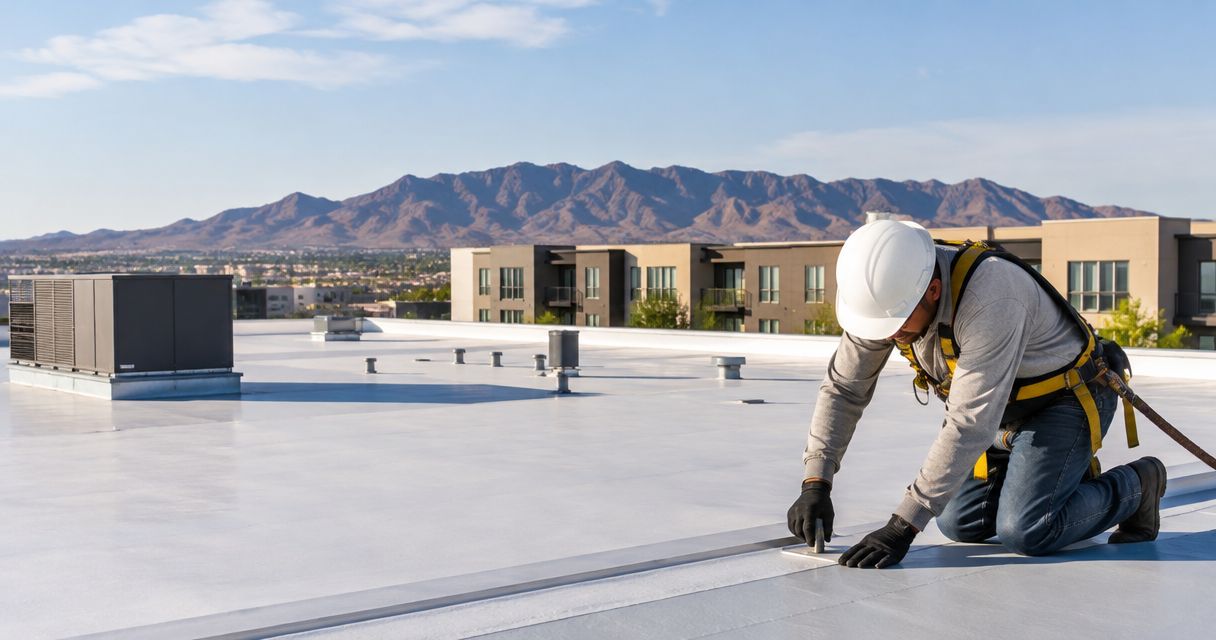
TPO is a single-ply thermoplastic roofing membrane with heat-welded seams. It forms the waterproofing surface over a specified assembly that can include insulation and a cover board. For a low-slope replacement with functioning drainage, TPO is the default starting point for the comparison.
TPO belongs on the shortlist for both residential and commercial projects where the roof geometry supports a membrane system. Sunnyboy Roofing offers TPO roofing, giving El Paso owners a directly relevant option to discuss alongside metal and coatings.
TPO pros:
- Heat-welded seams join membrane sheets into a continuous roof covering.
- The membrane can be detailed around roof-mounted equipment and penetrations.
- Reflective surfaces are available; compare the selected product’s documented ratings.
TPO cons:
- Poor welds and incomplete flashing details create leak paths.
- Foot traffic, sharp objects, and service work can damage the membrane.
- A membrane replacement alone does not correct inadequate drainage.
Ask the contractor to identify the membrane, attachment method, insulation, cover board, and penetration details. For your 2026 bid, require the written assembly rather than accepting a proposal that says only TPO roof.
Best for: Owners replacing an unsuitable or deteriorated low-slope covering with a specified membrane assembly.
Verdict: Buy TPO for a properly designed replacement; skip any bid that leaves seams, attachment, or drainage unexplained.
2. Modified bitumen: best for a reinforced asphalt membrane
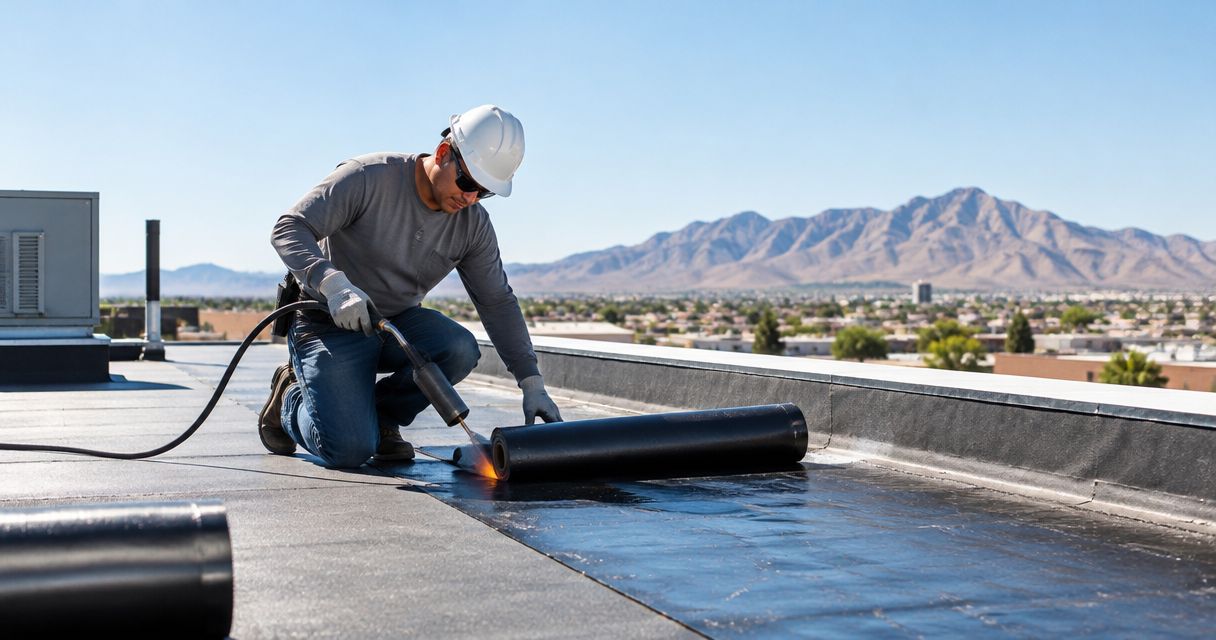
Modified bitumen uses reinforced asphalt sheets to form a low-slope roof covering. Systems differ by sheet composition, number of layers, surface finish, and attachment method. Those differences matter more than the generic material name.
This option belongs in a replacement comparison when the project specifies an asphalt-based membrane assembly. Ask whether installation uses self-adhered sheets, adhesives, hot asphalt, or a torch; these methods are not interchangeable.
Modified bitumen pros:
- Reinforced sheets provide an asphalt-based waterproofing option.
- Multilayer assemblies are available where the specification calls for them.
- Surface and application choices allow the assembly to match project requirements.
Modified bitumen cons:
- Torch-applied work introduces open-flame hazards requiring appropriate precautions.
- Laps, transitions, and penetrations still require careful installation.
- Comparing bids is difficult when contractors omit the layer configuration or application method.
Do not assume a thicker-looking roof is automatically the better roof. Review the complete assembly and the contractor’s proposed details. This guide does not identify modified bitumen as a Sunnyboy Roofing service; confirm the installer’s scope before treating it as a bid option.
Best for: Owners or designers specifically seeking a reinforced asphalt membrane replacement.
Verdict: Hold modified bitumen on the shortlist until the exact assembly and installation method are documented.
3. Standing seam: best for an approved low-slope metal roof
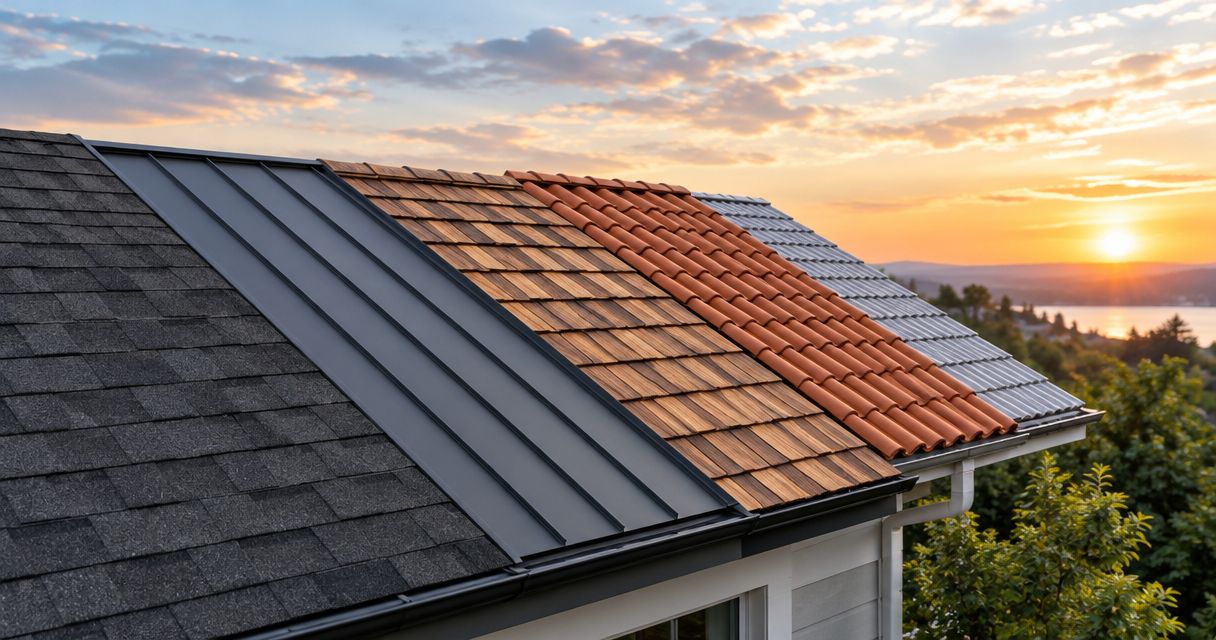
Standing seam metal roofing joins panels at raised seams. Some systems use mechanically seamed joints suitable for lower slopes, while other profiles require a steeper roof. The manufacturer’s minimum pitch applies to the exact panel and seam configuration.
Sunnyboy Roofing offers standing seam and R-Panel roofing. For low-slope metal roofing, ask which specific system meets your roof’s pitch; do not treat those two categories as equivalent approvals.
Standing seam pros:
- Raised seams position panel joints above the panel’s drainage surface.
- Many systems use concealed clips rather than exposed fasteners through the panel field.
- A slope-approved system gives owners a metal alternative to membrane roofing.
Standing seam cons:
- Some profiles are unsuitable for very shallow roof slopes.
- End laps, penetrations, and transitions can complicate the waterproofing design.
- Panel movement requires correctly specified clips and flashing details.
Require documentation for minimum slope, seam treatment, panel attachment, and any proposed end laps. In 2026, a proposal labeled standing seam still needs those details before you can compare it with TPO.
Best for: Owners who want metal roofing and have a roof pitch accepted by the selected system.
Verdict: Buy only a slope-approved standing seam assembly; skip a generic metal recommendation without panel documentation.
4. Silicone coating: best for restoring a sound existing roof
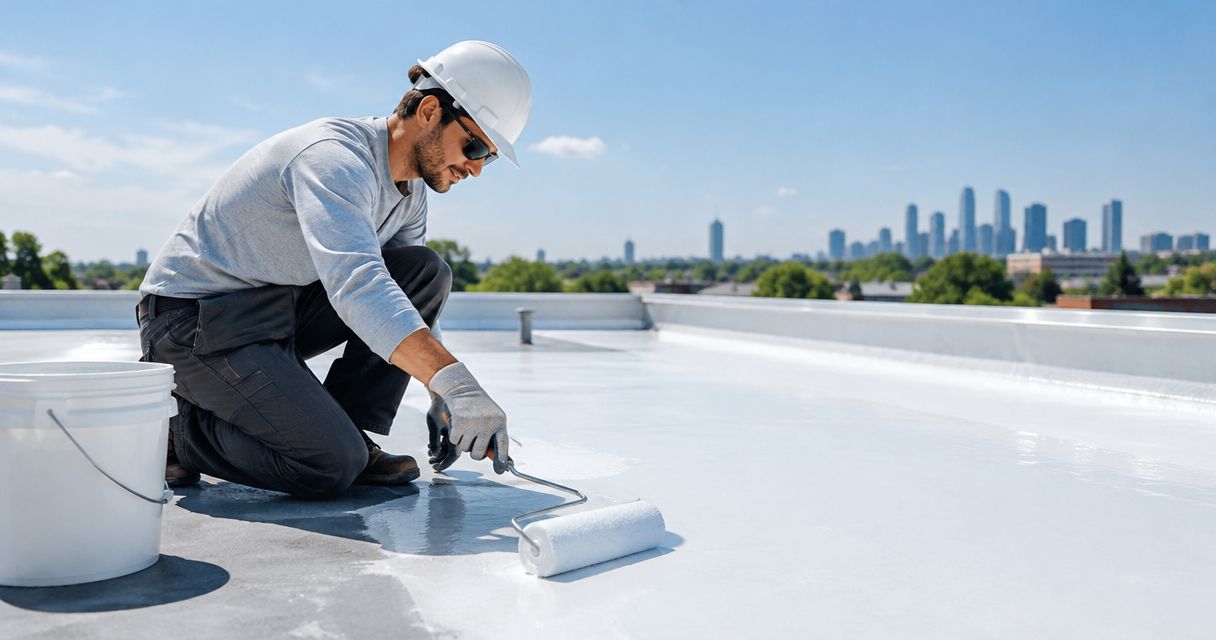
Silicone roof coating is a restoration option applied over a prepared, compatible roof surface. It is not a substitute for a new deck, dry insulation, or repairs to failed roof components. Its strongest use case starts with an existing roof that remains suitable for restoration.
Some silicone coating systems permit ponding-water exposure. That capability does not make drainage repairs unnecessary, and it does not establish compatibility with every existing roof.
Silicone coating pros:
- Restores a suitable roof without automatically requiring full replacement.
- Specified systems can accommodate ponding-water exposure.
- The coating forms a continuous surface across properly prepared areas.
Silicone coating cons:
- It cannot restore wet insulation or structurally damaged decking.
- Contamination or inadequate preparation can prevent adhesion.
- Future recoating and repair materials must be compatible with the silicone surface.
Ask for an assessment of moisture, adhesion, seams, and flashings before approving restoration. The application specification should identify preparation, primer requirements, reinforcement, and coating thickness; the product label alone is not a work plan.
Best for: Owners with a sound, compatible existing roof that qualifies for coating restoration.
Verdict: Buy silicone for an eligible restoration; skip coating over unresolved moisture or substrate damage.
5. Acrylic coating: best for restoration with positive drainage
Acrylic roof coatings are water-based restoration coatings available in reflective finishes. They require a compatible substrate, suitable application conditions, and the preparation specified by the manufacturer. Positive drainage is an important selection condition.
Persistent ponding is a reason to scrutinize an acrylic system’s limitations rather than assuming all coatings behave alike. Compare the actual product documentation with the roof’s observed water conditions.
Acrylic coating pros:
- Provides a restoration option for suitable existing roof surfaces.
- Reflective finishes are available for comparison using documented ratings.
- Water-based application offers an alternative to other coating chemistries.
Acrylic coating cons:
- Persistent ponding can exceed the selected system’s permitted conditions.
- Rain, temperature, and drying conditions affect application scheduling.
- It cannot replace damaged roofing components or correct roof slope.
Sunnyboy Roofing offers silicone and acrylic roof coatings. Choose between them by substrate compatibility and drainage conditions, not by the coating name alone.
Best for: Owners restoring a compatible roof with positive drainage and suitable application conditions.
Verdict: Buy acrylic only when the roof and application conditions meet the system requirements; skip it for unresolved ponding.
How the materials were ranked
The ranking prioritizes slope approval, drainage, deck condition, material compatibility, flashing details, and repair access. TPO leads the replacement comparison; silicone leads the restoration comparison where the existing roof qualifies. Standing seam fills a separate metal-roof use case.
This is a system-selection guide, not a product test or a prediction of service life. No material earns first place merely because it is metal, reflective, or sold as a coating.
Which low-slope roofing material should you choose?
For a 2026 replacement, start with TPO, then compare a documented modified bitumen assembly or a slope-approved standing seam system where those options match your requirements. For an existing roof in sound condition, evaluate restoration before deciding to replace it.
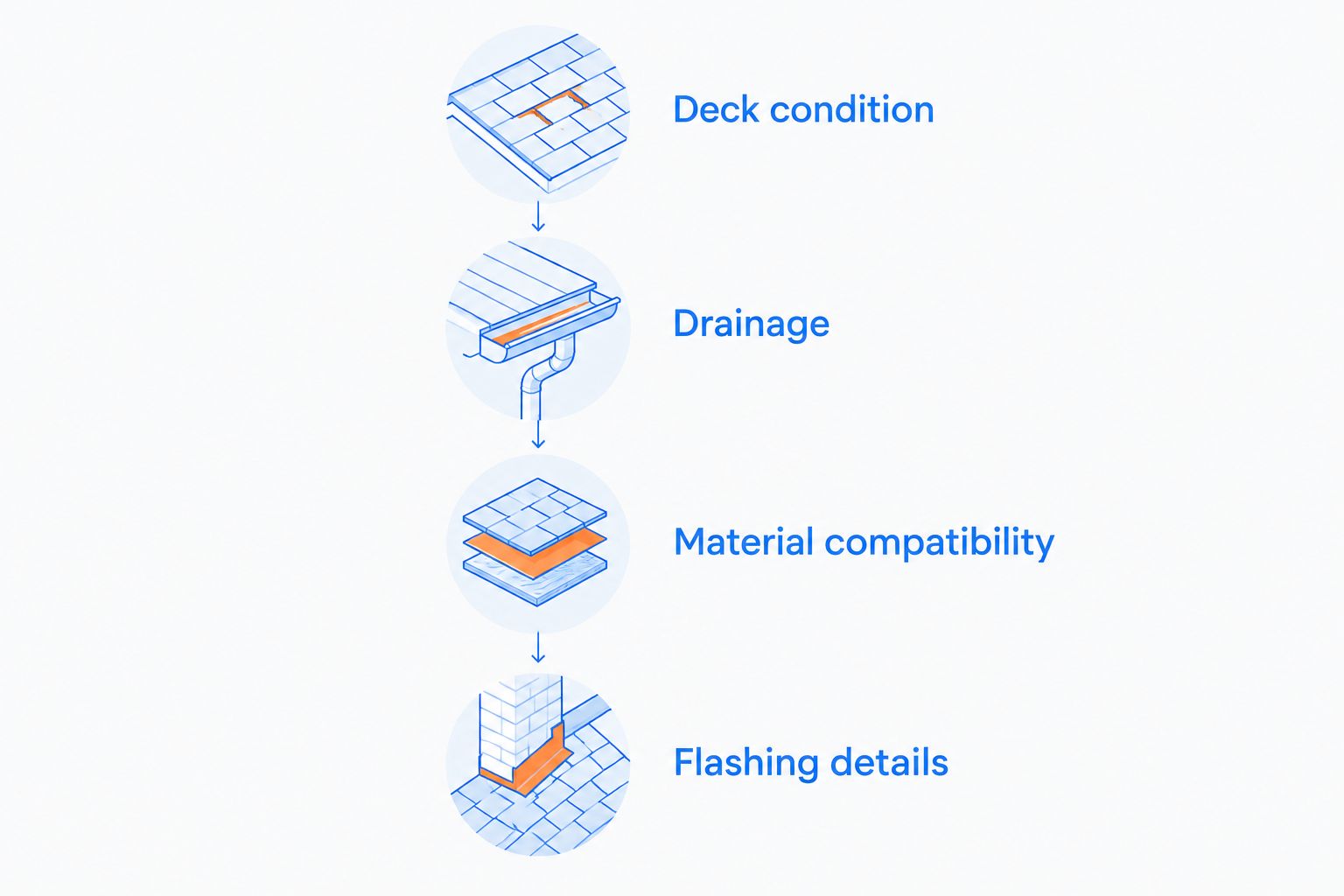
Use this decision sequence:
- Deck condition: Resolve damaged decking and wet insulation before selecting a surface.
- Drainage: Identify blocked outlets, low areas, and persistent ponding.
- Material compatibility: Match the proposed membrane or coating to the roof assembly.
- Flashing details: Confirm how the contractor will waterproof every transition and penetration.
Compare proposals against the same scope. A replacement bid that includes insulation removal is not equivalent to a coating bid that leaves the assembly intact. Require each contractor to state what remains, what is removed, and how discovered damage will be addressed.
Discuss your low-slope roof
Compare TPO, slope-approved standing seam, and coating restoration for your El Paso property.
FAQ
What’s the best roofing material for a low-slope roof in El Paso?
TPO is the default replacement choice for a properly drained low-slope roof. A sound existing roof can qualify for silicone or acrylic restoration, while metal requires a standing seam system approved for the measured pitch.
Can I put shingles on a low-slope roof?
Asphalt shingles require a minimum slope of 2:12 under International Residential Code Section R905.2.2. At permitted lower pitches, additional underlayment requirements apply; confirm the locally adopted code and manufacturer’s instructions.
Is standing seam better than TPO for a shallow roof?
Standing seam is not automatically better than TPO for a shallow roof. The selected metal panel must permit the measured pitch, while TPO selection depends on the membrane assembly, attachment, drainage, and flashing design.
Is silicone better than acrylic for standing water?
A silicone system that explicitly permits ponding-water exposure is the stronger coating candidate for that condition. Confirm substrate compatibility and address drainage defects rather than using the coating as a substitute for repairs.
Can a roof coating fix a leaking low-slope roof?
A coating system can address eligible roof surfaces only after the specified repairs and preparation. Wet insulation, damaged decking, failed flashings, and unsuitable substrates require separate corrective work.
What slope should a low-slope membrane roof have?
A design slope of 1/4 inch per foot is a common model-code drainage requirement for membrane roofing. Confirm the applicable code provisions, existing-building exceptions, and the selected roofing system’s requirements.
What should I ask a roofing contractor before choosing a material?
Ask for the measured slope, drainage assessment, deck condition, and exact roof assembly. The written proposal should also explain attachment, flashing, surface preparation, and which existing materials remain.
One last thing
Ask the contractor to show you the water’s route off the roof before discussing the finished surface. Trace it past equipment curbs and toward drains, scuppers, or gutters. A premium material does not resolve a blocked path or a low area simply by covering it.
For your 2026 decision, keep that drainage explanation with the written proposal. It gives you a concrete basis for comparing systems instead of choosing by material name alone.